Peshmerga Veterans Recall Battle of Sihela Nine Years Later
Nine years after the Battle of Sihela, Peshmerga veterans recall the 2017 fighting, 22 fallen comrades and their pledge to defend the Kurdistan Region.
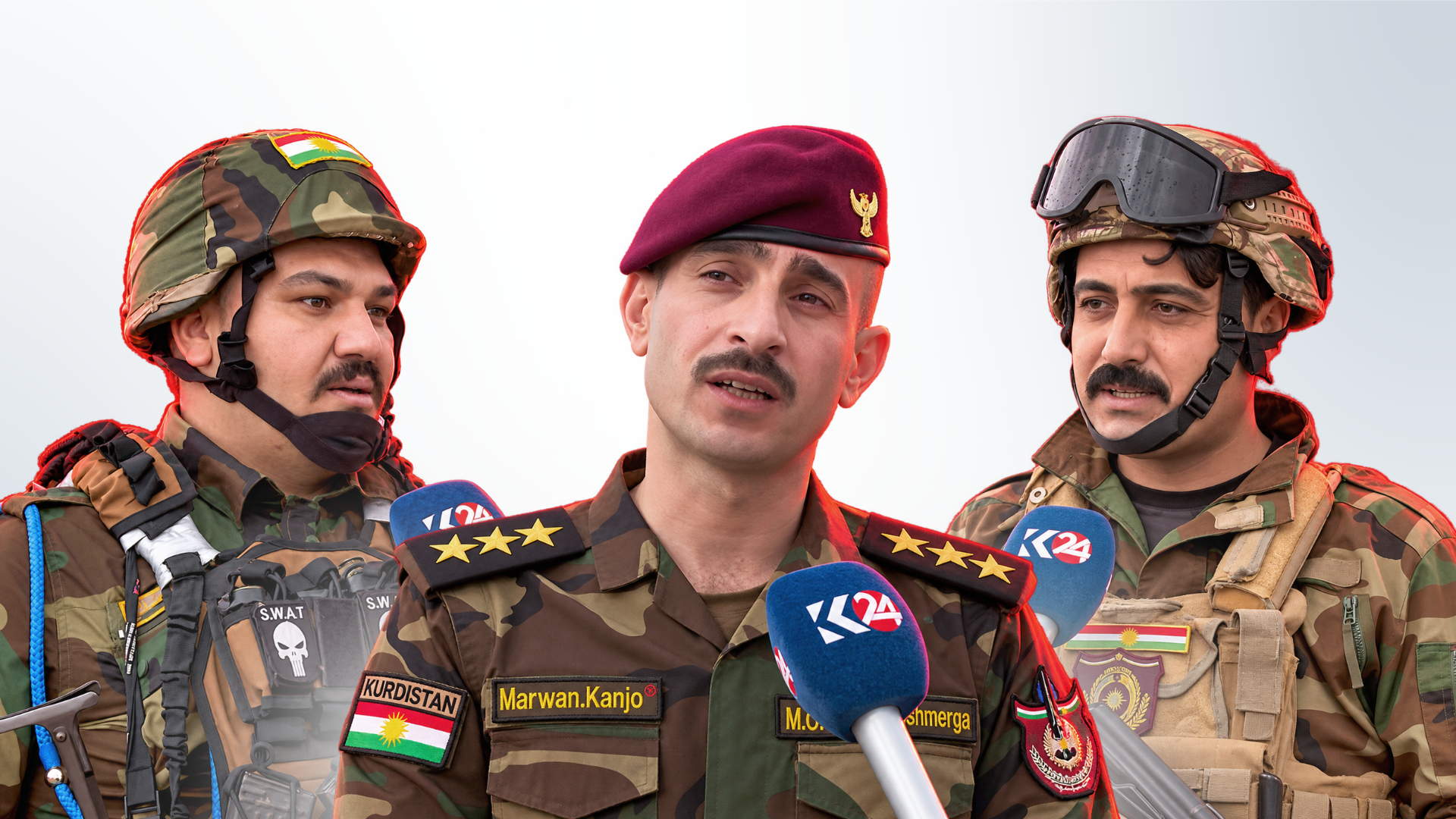
ERBIL (Kurdistan24) - Nine years after confronting Iraqi forces and Popular Mobilization Forces (PMF) fighters on the Sihela front, Peshmerga veterans have recalled the intensity of the October 2017 battle and renewed their commitment to defending the territory where 22 of their comrades lost their lives.
"I fought that day as well, and my leg was wounded in that battle," one Peshmerga said during the anniversary commemoration. "God willing, we will never surrender our land."
The testimonies, recorded for the ninth anniversary on Monday, Oct. 26, reflect how the clash remains a defining memory for those who held the Kurdish defensive positions. Their accounts emphasize the sacrifices of the Peshmerga and their belief that the fighting was about protecting the Kurdistan Region during a direct confrontation with Iraqi federal forces.
According to Kurdistan24's account, Iraqi troops and PMF fighters advanced against Peshmerga positions at Sihela on Oct. 26, 2017, from three directions. Kurdish fighters resisted the attack and halted the advance. The fighting claimed the lives of 22 Peshmerga officers.
A second Peshmerga framed the anniversary as a commitment to those who lost their lives.
"Our message is that this land of ours — this sacred land upon which the blood of the martyrs has been shed — will never be surrendered," he said, pledging that those defending it would not abandon their positions even at the cost of their lives.
For Peshmerga Marwan Kanjo, the conditions of the battle made the defense particularly demanding. Kurdish forces had recently emerged from irregular warfare against ISIS, he recalled, but at Sihela they faced an organized army supported by substantial military resources.
"We had just emerged from the experience of irregular warfare against the ISIS gangs," Kanjo said. "Then, in this battle, we found ourselves facing a regular army and very large forces advancing against us."
Kanjo identified Ain Uwais as a crucial part of the defensive line because the attacking forces approached from Zummar. He estimated that more than 1,000 shells fell on an area he described as approximately one kilometer in size. The figure reflects his recollection of the bombardment and has not been independently verified.
He said the Peshmerga were at a disadvantage in equipment but maintained the resolve to continue fighting. Their ability to hold their positions, he argued, depended on morale, steadfastness and confidence in the cause they believed they were defending.
"Because the defensive line that had been established, and the decision that had been made, was a matter of survival or extinction," Kanjo said.
He described the positions as a defense of Kurdistan's achievements, its people and those who had previously died in its conflicts.
Other commanders interviewed by Kurdistan24 have described the scale of the confrontation.
Sheikh Ali Gali Romani, commander of the Peshmerga's Western Tigris Front, told correspondent Bewar Hilmi that the attacking force comprised more than 30,000 personnel and 800 military vehicles spread over approximately 50 kilometers.
Sheikh Ali said Peshmerga fighters destroyed two Abrams tanks and other military vehicles. Brigade commander Khalaf Kanjo recalled Peshmerga, Asayish internal security personnel and other Kurdish forces working together, while regiment commander Ibrahim Omar said strikes against tanks and Humvees disrupted the advance.
Those descriptions present the battle from the perspective of the Kurdish defenders.
Kurdistan24's anniversary reporting also cited more than 250 deaths among the attacking forces, but the casualty figures, estimates of troop strength and accounts of equipment destroyed have not been independently corroborated. No separate Iraqi government or PMF account was included in that reporting.
The confrontation came during a turbulent period following the Iraqi military's takeover of Kirkuk and Khurmatu on Oct. 16, 2017. Six days before Sihela, fighting at Pirde on Oct. 20 claimed the lives of seven Peshmerga.
The commemoration has also drawn attention to the families of those martyred.
Hoshang Wahid Bakozi, whose father, Peshmerga commander Wahid Bakozi, sacrificed his life defending Sihela, has spoken of the importance of his father's legacy.
At the Pirde anniversary, Bakhtiar Azad, whose father sacrificed his life there, urged Kurdish political parties to show unity in protecting the Kurdistan Region's constitutional standing.
For those who fought at Sihela, Monday's remembrance was as much about their continuing commitment as the battle itself.
Nine years later, Peshmerga remain at their defensive positions, according to Kurdistan24's anniversary coverage, while veterans continue to describe the front as land they pledged not to surrender.