Joint List Recommends Eisenkot as Israel’s Next Prime Minister
The Joint List will recommend Gadi Eisenkot to President Isaac Herzog as prime minister, giving the Yashar chairman 67 recommendations in the 120-seat Knesset.
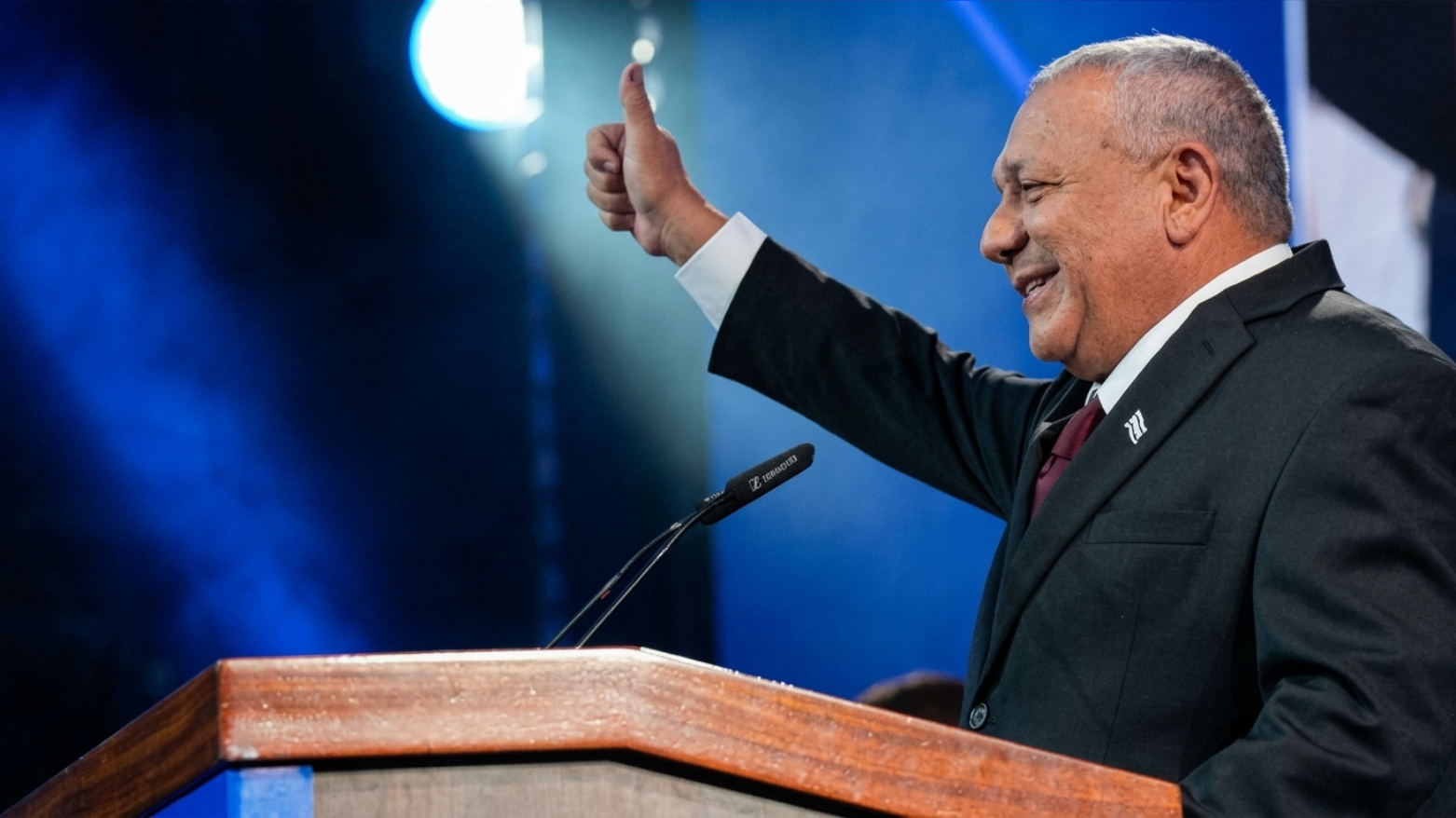
ERBIL (Kurdistan24) - The Arab-led Joint List said on Thursday that it will recommend Yashar chairman Gadi Eisenkot to President Isaac Herzog as Israel’s next prime minister. Eisenkot already had the backing of more members of the Knesset, Israel’s parliament, than Prime Minister Benjamin Netanyahu, but the alliance’s support will bring him recommendations from 67 members of the next Knesset, a majority of the body, according to The Times of Israel.
The Joint List said the unanimous decision of its three factions came “in response to the public demand to prevent Netanyahu and his government from returning to power.”
It said backing Eisenkot was important even though the opposition bloc has so far failed to show sufficient willingness to “confront Netanyahu’s path, as well as to fight incitement against Arab citizens and attempts to undermine the legitimacy of their political decision.”
“Although Eisenkot has received more recommendations than Netanyahu, we believe it is important to widen the gap between them,” the Joint List said. It argued that the move could strengthen the chances of replacing the government and reduce the prospect of a unity government that would keep Netanyahu in power.
What the Knesset recommendations mean
Parties have been presenting their recommendations to Herzog in consultations on who should lead the next government.
The recommendations do not themselves constitute a governing coalition, but Herzog considers them when deciding which lawmaker to task with forming one.
They also do not necessarily mean that the parties backing Eisenkot will ultimately join his coalition.
The Oct. 27 election left Netanyahu’s bloc with 53 seats, while the Jewish opposition parties secured 48 and the Arab-led parties won 19.
Once the Joint List’s 11 lawmakers formally submit their recommendation, Eisenkot is expected to have the backing of 67 lawmakers, above the 61-seat majority threshold.
According to The Times of Israel, the 67 comprise the Jewish-led opposition bloc with 48 seats (Yashar, Together, The Democrats, and Yisrael Beytenu), Ra’am with eight, and the Joint List with 11. Ra’am had already announced its support for Eisenkot.
During the party’s consultations at the president’s residence, its leader, Mansour Abbas, said, “Arab society, myself on an individual level, and Arab citizens—we are a bridge. Let us not destroy this bridge.”
Netanyahu’s right-wing endorsement tally, meanwhile, fell to 46 seats, down from his bloc’s election total of 53, after United Torah Judaism (UTJ) abstained.
Ultra-Orthodox party withholds its backing
UTJ, which holds seven seats, chose not to endorse any candidate during its consultations with Herzog. The Times of Israel described the move as a major fracture in the party’s long-standing alliance with Netanyahu.
The party’s leaders directed both of its factions not to endorse a candidate: Degel HaTorah, which represents Lithuanian ultra-Orthodox Jews and holds four seats, and Agudat Yisrael, which represents Hasidic ultra-Orthodox Jews and holds three.
According to the report, the leadership withheld support over frustration at Netanyahu’s failure to pass long-promised legislation enshrining military service exemptions for yeshiva students.
UTJ representatives told Herzog that their backing for any future administration remains strictly contingent on securing those exemptions.