Israeli President Tasks Eisenkot With Forming New Government
Israeli President Isaac Herzog tasked Gadi Eisenkot with forming a new government after the Oct. 27 election, as neither main bloc won a clear majority.
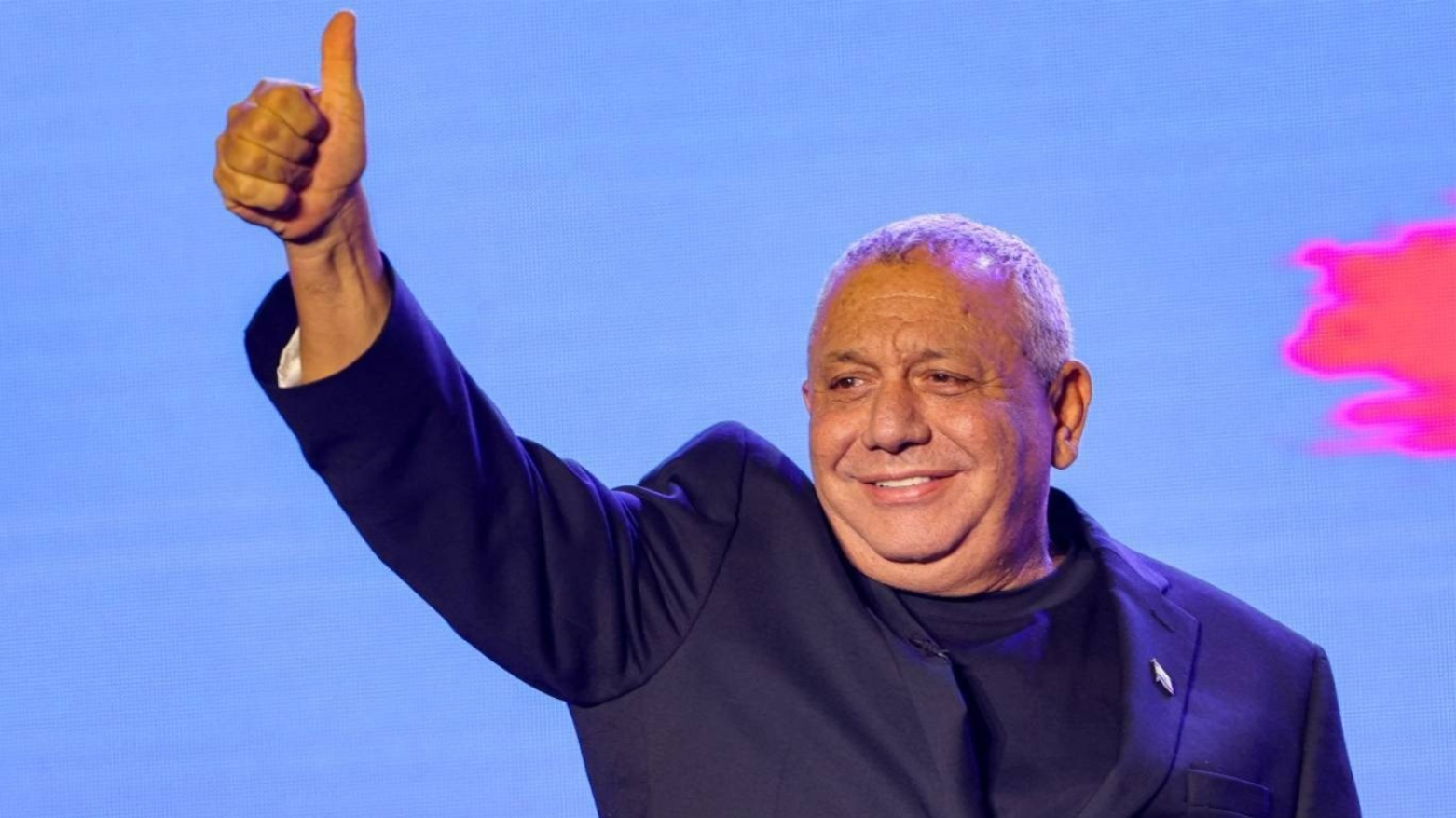
ERBIL (Kurdistan24) - Israeli President Isaac Herzog on Saturday, tasked Gadi Eisenkot, head of the opposition bloc that gained an advantage in the October parliamentary elections, with forming a new government. Many see the move as an opportunity to unseat Prime Minister Benjamin Netanyahu, the longest-serving premier in Israel’s history.
Herzog said he reached the decision after consultations with all lawmakers during the week. Neither of the two main camps, Netanyahu’s bloc and Eisenkot’s bloc, secured a clear parliamentary majority in the Oct. 27 vote that would let it form a government alone. The country remains sharply polarized by Netanyahu’s far-right rule, as he leads military campaigns on several fronts for a third year.
According to a statement from Herzog’s office, Eisenkot’s appointment will take place Sunday afternoon, Nov. 8, at an official ceremony at the president’s residence in Jerusalem.
Eisenkot received recommendations from parties representing 67 members of the 120-seat Knesset, compared with only 46 whose parties recommended Netanyahu’s bloc.
The bloc led by Eisenkot, a former military commander and newcomer to politics, showed flexibility on the conscription of ultra-Orthodox Jews (Haredim). That opened the door to an alliance with their parties, a prospect previously seen as unlikely, and it now gives him enough votes to form a governing coalition. Throughout his campaign, Eisenkot sought to win over centrist and liberal voters.
Recommendations in his favor also included members of Israel’s Arab minority, who made significant gains in the election. Right-leaning factions within the opposition object to relying on Arab votes.
Arab citizens of Israel are the sons and grandsons of 160,000 Palestinians who remained on their land after the creation of the state of Israel in 1948. They make up about 20 percent of the population today.
Herzog, who began his career in the Labor Party, which is now almost absent from the political scene, had indicated he wanted to push for a national unity government bringing together Jewish Israelis from across the spectrum.
Eisenkot had warned Netanyahu against launching a new war on Iran in coordination with US President Donald Trump. He argued that such a step could help the Israeli prime minister push toward a unity government or buy time until new elections.
Netanyahu faces corruption charges that could lead to imprisonment if he leaves office. He is also subject to an arrest warrant from the International Criminal Court over the Gaza war, a court whose authority he rejects.
Netanyahu had called for a unity government, but the opposition held to its demand that he be removed first. He has long attacked the opposition for merely raising the possibility of allying with Arab lawmakers.
In a recorded speech on Saturday, Netanyahu said, “Such a government, reliant on Islamists, will dismantle the state of Israel from within, just as is happening in European countries, only far worse.” He was referring to protests taking place in some European countries.
Shortly afterward, the Yashar (Straight) party led by Eisenkot called on members of Netanyahu’s Likud party and its allies to join a coalition under his leadership. “If Likud and its allies are suddenly interested in unity and forming a broader government, they are invited to announce the dissolution of their alliance with the extremists… and their readiness to join a government headed by Eisenkot,” the party wrote in a post on X.
Avigdor Liberman, a member of the opposition bloc, said he will not ally with Eisenkot if he relies on the votes of Arabs in Israel.
The Yisrael Beytenu leader said Friday, Nov. 6, that he would not back down from rejecting an alliance with Israeli Arab parties. He urged the opposition to negotiate with the ultra-Orthodox Jewish parties, despite his sharp criticism of them for years over their members’ avoidance of military service.
The exemption of the Haredim from military service has provoked widespread resentment among other Israelis, as reservists were forced to serve multiple tours during the wars Israel has fought since the Hamas attack on Oct. 7, 2023.
For years, Netanyahu relied on the two main ultra-Orthodox parties. They withdrew from his government without trying to topple it after he refused to pass a law enshrining the Haredi exemption from military service.
In a statement Saturday, Eisenkot said he remains committed to the principle of “compulsory service for all.” He clarified, however, that such service could be civilian, which would give an opportunity to integrate the Haredim.
He called on parties to join him “now or at a later stage,” a reference to the possibility that he could initially form a minority government backed by lawmakers who do not join it from the start.
Once Herzog formally tasks him, Eisenkot will have 28 days to form the government, with the possibility of a 14-day extension. If he fails to form one, the president may assign another figure to the task.