ICP Leader Stresses Importance of Prime Minister Barzani's Baghdad Visit
Iraqi Communist Party leader Raed Fahmi says Kurdistan Region Prime Minister Masrour Barzani's Baghdad visit is crucial for resolving budget disputes, confronting drone attacks and addressing Iraq's economic crisis.
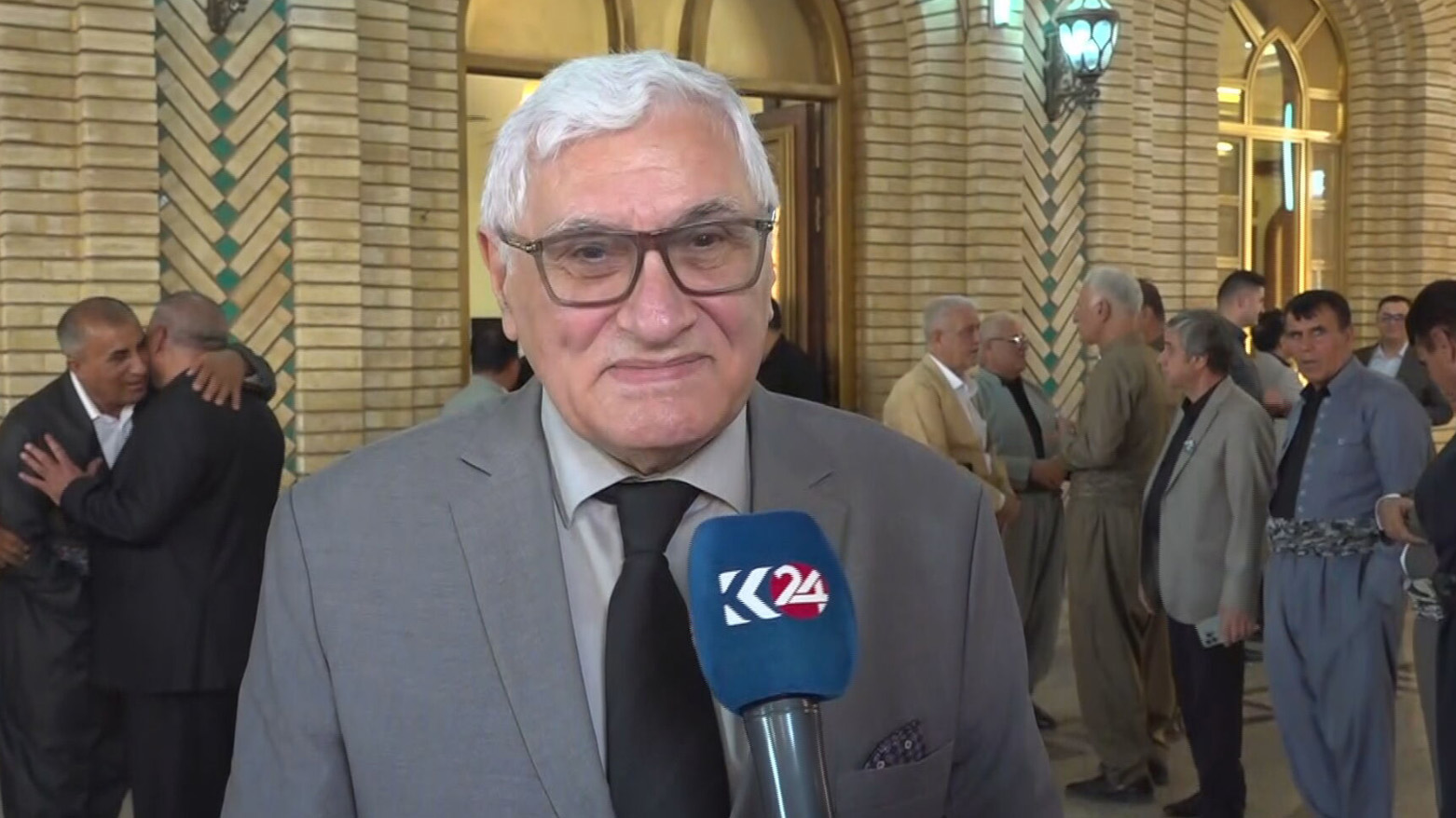
ERBIL (Kurdistan24) - Raed Fahmi, Secretary of the Central Committee of the Iraqi Communist Party (ICP), has described Kurdistan Region Prime Minister Masrour Barzani's visit to Baghdad on Monday as particularly important, saying Iraq's mounting economic difficulties, regional tensions and security threats demand closer cooperation between the federal and Kurdistan Regional governments.
Speaking exclusively to Kurdistan24, Fahmi said the visit comes at a sensitive time, with the conflict between the United States and Iran and the possibility of further escalation affecting Iraq's political and economic outlook. Declining government revenues, he added, are complicating preparations for the federal budget.
His remarks came as Prime Minister Barzani traveled to the Iraqi capital on Nov. 9, 2026, for meetings with Prime Minister Ali Faleh al-Zaidi and senior political figures, with the Kurdistan Region's financial entitlements and longstanding disagreements between Erbil and Baghdad on the agenda.
Budget Disputes and Population-Based Allocations
Fahmi said recurring disagreements over the Kurdistan Region's share of the federal budget have persisted across successive governments and parliamentary terms, leaving an essential financial question unresolved.
He called for a settlement based on measurable criteria rather than competing political interpretations, identifying the Region's population as a central consideration.
"The time has come to end political hesitation and differing political interpretations," he said, urging officials to use clear, technical and objective standards, particularly the latest population census, to determine the Region's allocation.
Fahmi argued that the financial pressures arising from the broader crisis should be shared fairly between Baghdad and Erbil, with particular attention to protecting citizens from the consequences of falling revenues.
KRG spokesperson Peshawa Hawramani told Kurdistan24 that Prime Minister Barzani would discuss the draft federal budget law and the Region's financial entitlements with al-Zaidi and leaders of Iraqi parties and alliances.
The visit is also intended to advance mechanisms for addressing disputes through the Iraqi Constitution, existing agreements and political understandings.
The budget, salary payments and oil revenues have repeatedly strained relations between the two governments. Fahmi's appeal for population-based calculations reflects his view that the recurring dispute requires a lasting formula rather than another temporary political compromise.
Drone Attacks as a National Security Concern
Fahmi also addressed recent drone attacks targeting the Kurdistan Region, warning against treating them as a security problem affecting Erbil alone.
He described the attacks as challenges to Iraq's sovereignty and security as a whole, saying both governments must assume responsibility for preventing further incidents and taking appropriate action against those responsible.
For Fahmi, the link between security and the economy reinforces the need for coordinated action. Threats facing the federal government can affect the Kurdistan Region, just as instability in the Region can have consequences for the country as a whole.
A Roadmap Rather Than a Single Meeting
While emphasizing the significance of Prime Minister Barzani's visit, Fahmi cautioned against expecting one round of talks to resolve disputes accumulated over many years.
He saw willingness to engage from Baghdad's leadership and called for a similar approach from Erbil.
Such cooperation, he argued, could produce "a practical roadmap" for addressing the issues gradually and establishing a more stable relationship between the two governments.
"Any crisis facing the federal government will have negative repercussions on the Kurdistan Region, and vice versa," Fahmi said, underscoring the need to coordinate efforts rather than approach the challenges separately.
Prime Minister Barzani's visit is his second to Baghdad this year. He previously traveled to the capital in May for talks on political relations and shared financial issues, including the Region's budget entitlements.
Protecting Citizens' Livelihoods
Fahmi concluded by warning that declining revenues and difficult living conditions were placing pressure on families throughout Iraq, including the central and southern provinces and the Kurdistan Region.
If the forthcoming budget includes austerity measures, he said, the additional burden could deepen hardship for citizens already struggling with economic pressures.
He urged negotiators to make the protection of livelihoods a priority alongside debates over government allocations and institutional responsibilities.
His assessment places the importance of Monday's meetings not only in whether officials can narrow the Erbil-Baghdad divide, but also in whether their discussions begin to produce practical solutions for people affected by the continuing disputes.