Security Sources Warn of Possible Armed Clash Between Baghdad and Kataib Hezbollah
Iraqi PM Ali al-Zaidi's dispute with Kataib Hezbollah intensifies over weapons, border crossings and government contracts amid warnings of armed confrontation.
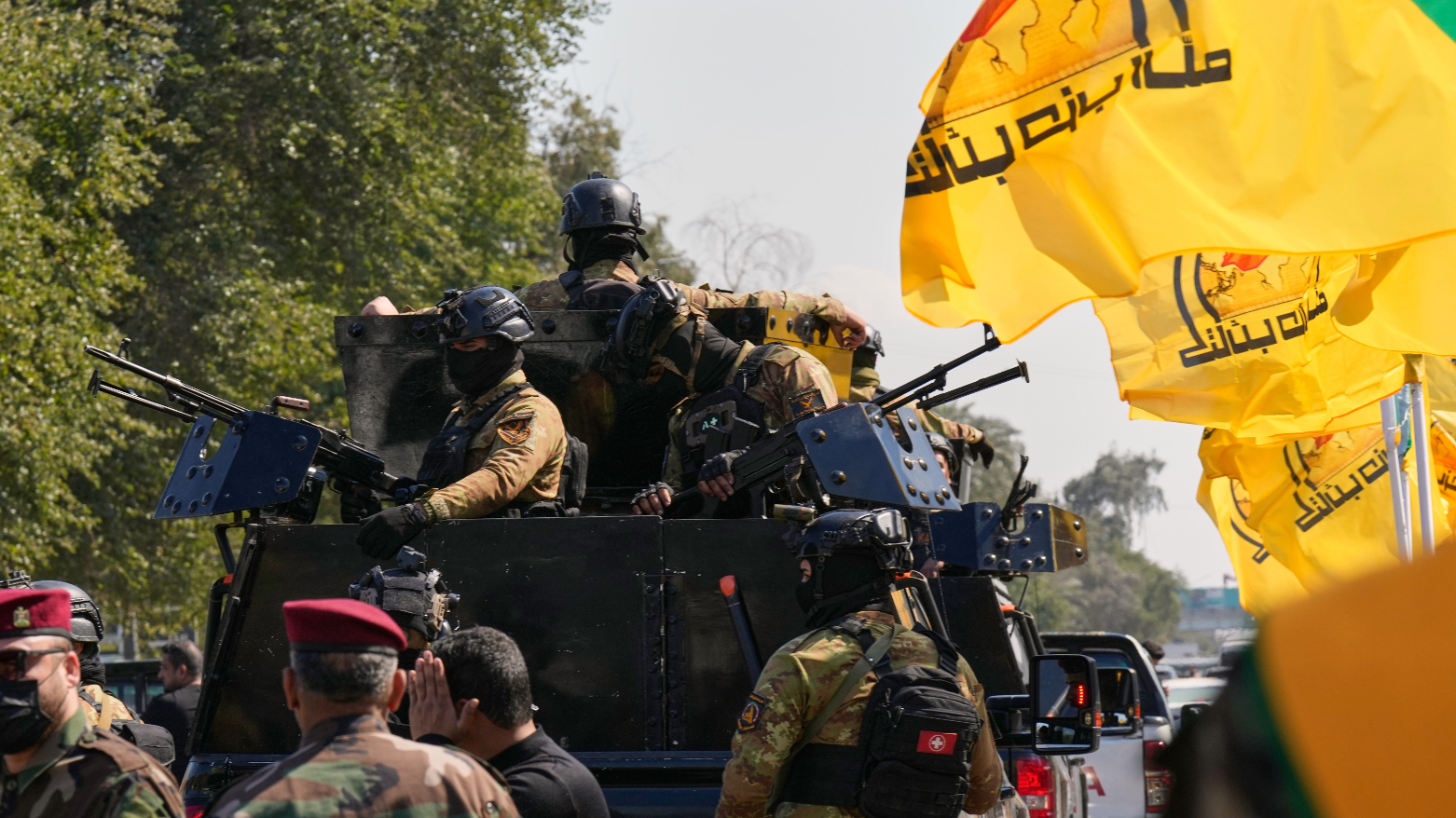
ERBIL (Kurdistan24) - Tensions between Iraqi Prime Minister Ali al-Zaidi and Iran-backed Kataib Hezbollah have intensified over government contracts, control of a border crossing with Iran and efforts to bring weapons under state authority, with security sources warning that the dispute could escalate into an armed confrontation.
Sources speaking to Kurdistan24 described a widening disagreement as al-Zaidi moves to restrict financial activities allegedly linked to armed factions. Political figures within the Coordination Framework have sought to mediate, although no agreement has been announced.
Border Crossing at Center of Dispute
According to information obtained by Kurdistan24, the continued closure of the al-Shib border crossing with Iran is a principal source of the confrontation. The crossing had previously been under Kataib Hezbollah's influence, sources said, making the government's decision a point of contention.
Tensions deepened further following an arrest warrant issued by a Rusafa court for the son of Abu Hussein al-Hamidawi, Kataib Hezbollah's secretary-general. The information available does not specify the alleged offense or the outcome of the legal proceedings.
The developments have unfolded alongside exchanges of accusations between the prime minister and the armed group, whose refusal to surrender its weapons remains a major obstacle in Baghdad's efforts to consolidate state control over armed factions.
Airport Contracts and Financial Pressure
Al-Zaidi has ordered the cancellation of contracts involving three companies operating at Mosul International Airport over alleged links to armed groups. The decision is among several measures that sources say have intensified his confrontation with Kataib Hezbollah.
He also instructed the Military Industrialization Authority to deal directly with manufacturers rather than intermediary companies connected to armed organizations.
Kurdistan24's sources said the activities affected by those decisions had provided significant revenue to Kataib Hezbollah over several years. The precise financial amounts were not disclosed, and the allegations about the commercial relationships were not independently established in the information available.
On Nov. 4, Iraq's Federal Integrity Commission opened an investigation into government contracts suspected of channeling money to armed groups operating outside state authority. An investigation does not itself establish wrongdoing by any particular company or faction.
The dispute has thus developed beyond the question of weapons, encompassing the government's control over public contracts, border crossings and economic activities allegedly associated with armed factions.
Mediation Amid Warnings of Confrontation
A security source told Kurdistan24 that the accumulation of disputes had heightened concern about a possible armed clash. The source cited assessments by military commanders and intelligence reporting that linked the risk to efforts to restrict Kataib Hezbollah's financial resources.
Those assessments were warnings about a potential outcome, not confirmation that either side had decided to initiate fighting.
The prime minister has also warned that the force of law could be used against weapons outside state authority. Sources interpreted the warning as an indirect message to Kataib Hezbollah.
A source within the Coordination Framework said its constituent parties were divided over the prime minister's approach. Mediation efforts have taken place in recent days, the source said, but al-Zaidi had not accepted the proposals presented.
According to the same source, the prime minister rejected a proposed written agreement between the Coordination Framework and Kataib Hezbollah under which the group would surrender its weapons in return for government positions.
No agreement on disarmament or political appointments has been reported.
The unresolved dispute now leaves the Coordination Framework attempting to contain tensions while al-Zaidi continues to press measures concerning state authority and financial arrangements. Security sources remain concerned about escalation, but no armed confrontation was confirmed in the accounts obtained by Kurdistan24.