Peace Returns to Goharz as Years of Türkiye-PKK Clashes Give Way to Calm
Türkiye-PKK peace efforts bring renewed calm to Amedi's Goharz village, allowing residents to resume farming as hundreds of abandoned villages await recovery.
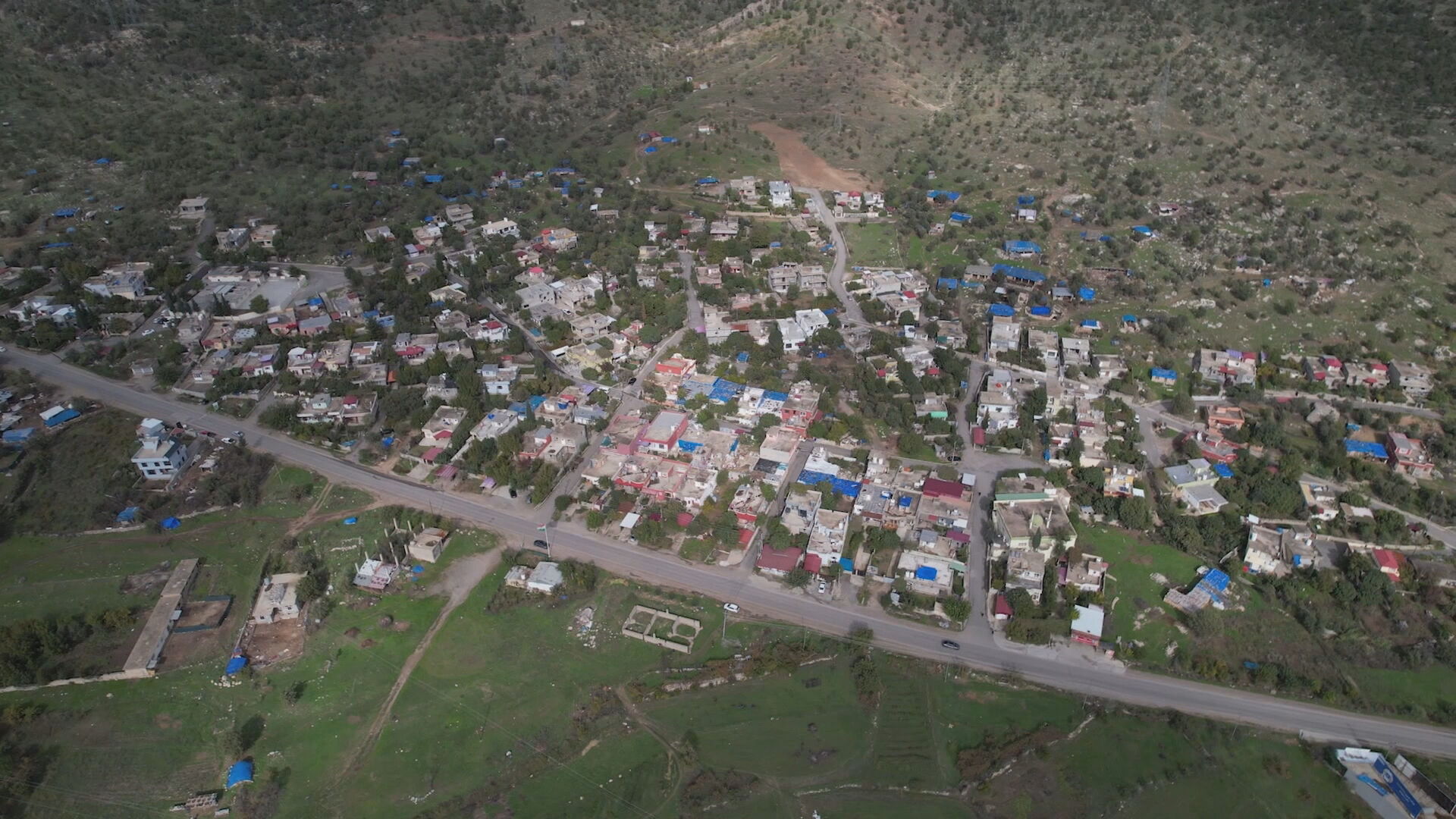
ERBIL (Kurdistan24) - For years, shepherd Ahmed Saadullah could barely venture beyond the paved road near his home in Duhok province's Amedi district. Airstrikes and artillery fire made the surrounding hills dangerous, keeping him and his flock within roughly 200 meters of the road.
Now, as fighting between the Turkish military and the Kurdistan Workers' Party (PKK) subsides amid efforts toward peace, he is once again moving across the slopes around Deraluk, grazing his animals in places he previously feared entering.
His return to the hills offers a glimpse of how reduced hostilities are changing daily life in Goharz, a village whose residents have spent years living with the threat of shelling.
Goharz, in Amedi district, was struck by shellfire more than 36 times during years of conflict between Turkish forces and the PKK, according to local accounts gathered by Kurdistan24 correspondent Bewar Hilmi.
For the families who remained, the danger reached beyond the surrounding mountains. Shells struck near homes and orchards, making ordinary activities such as tending crops, raising animals and earning a living hazardous.
"Shells used to fall among the houses and in the orchards, and no one dared go out to earn a living," resident Ibrahim Mullah Ahmed told Kurdistan24.
"Today, the situation has changed completely, and we live in genuine peace without any fears," he said.
More than 160 families now live in Goharz, where residents say the reduction in fighting has brought renewed movement through the streets, farming activity and local trade.
The change is particularly significant for households whose livelihoods depend on access to land. Going into an orchard or taking livestock to pasture no longer carries the same immediate fear described by residents during the years of bombardment.
Cautious Hope
The relative calm comes against the backdrop of efforts to end the long-running conflict between Türkiye and the PKK. For communities in the Kurdistan Region's border districts, the consequences of that conflict have often been felt directly, even though residents are not parties to the fighting.
Shakir Goharzi, another resident, said the quieter surroundings have allowed villagers to begin recovering a sense of normal life.
"The silence of the guns has allowed the villagers to breathe again," he told Kurdistan24, describing stability as something the community had awaited for years.
Goharzi hopes the improvement will last. He called for military activity and armed presence to be removed permanently from residential areas, so that rebuilding and improvements to public services can proceed.
Residents' accounts describe a marked easing of danger in Goharz, rather than a guarantee that the broader border area is free of security risks.
The damage from decades of conflict extends far beyond one village. Local figures from Duhok province indicate that more than 300 villages in Amedi district were evacuated over the years, with insecurity preventing residents from returning and holding back reconstruction.
As tensions ease, some residents are gradually returning to their land. The Kurdistan Regional Government is also planning road construction and infrastructure rehabilitation in affected areas, according to the local reporting.
Such work is important to the prospect of reviving agriculture, commerce and tourism in villages long affected by hostilities. Yet the plans are not the same as completed projects, and communities still need sustained security before a wider recovery can take hold.
In Goharz, the immediate change is already visible in more ordinary terms: a shepherd walking farther from the road, families returning to their fields and streets no longer defined by the sound of explosions.
For residents who have endured years of conflict, those moments are a measure of what the peace process could mean if calm endures.
Bewar Hilmi, Kurdistan24 correspondent from Amedi, contributed to this report.