Iraqi PM Zaidi Rejects Sulaimani Delegation's Demands, Kurdistan24 Reports
Iraqi PM Ali al-Zaidi reportedly refused to meet a Sulaimani delegation seeking regional status, while election officials denied links to a signature drive.
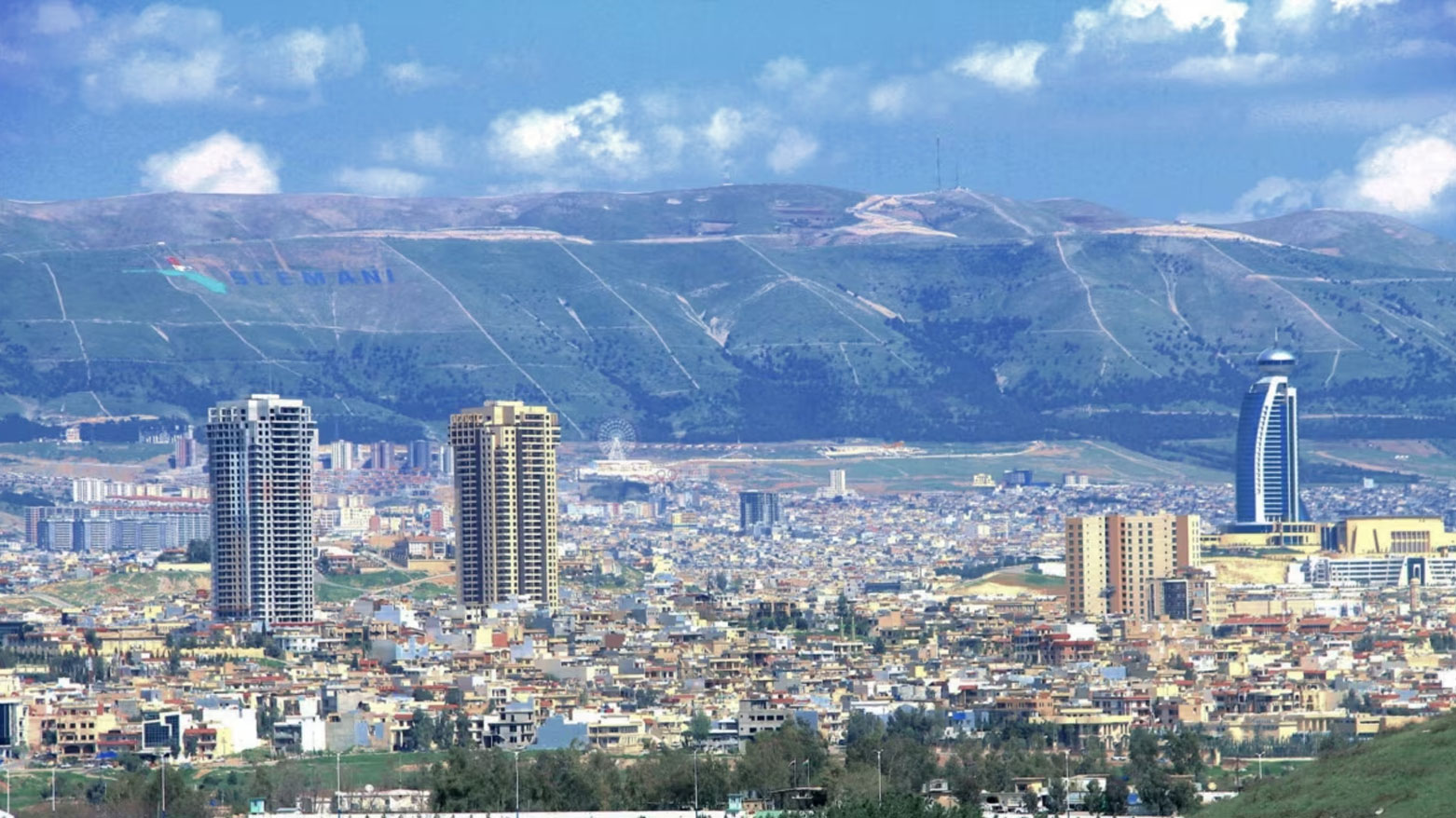
ERBIL (Kurdistan24) - Iraqi Prime Minister Ali al-Zaidi refused to meet a delegation from Sulaimani that sought separate regional status, an administration and a budget for the province, Kurdistan24 news anchor Kovan Ezzat reported during Tuesday's noon bulletin.
The delegation, comprising Iraqi President Nizar Amedi, Patriotic Union of Kurdistan (PUK) leader Bafel Talabani and New Generation Movement leader Shaswar Abdulwahid, met leaders of Iraq's Coordination Framework in Baghdad on Monday evening, November 16.
Zaidi attended the Framework's regular meeting but did not join its subsequent discussion with the visitors.
According to Ezzat, the delegation sought three changes: recognition of Sulaimani as a separate region, the establishment of its own government and the allocation of a separate budget. He said all three proposals were rejected and the visitors returned without securing an agreement.
"I am not ready to meet the delegation that came in the name of Sulaimani," Ezzat quoted Zaidi as telling the Framework's members.
The prime minister also opposed dividing the Kurdistan Region, according to the anchor's account. Ezzat attributed to Zaidi a declaration of support for the Region's territorial and institutional unity, adding that any response concerning Sulaimani's demands would have to comply with the law.
The account distinguishes between two meetings in Baghdad.
Zaidi participated in the Coordination Framework's own session before the Sulaimani delegation was received, leaving its members to convey his reported position to the visitors. Ezzat said Framework figures likewise favored preserving the Kurdistan Region as a single entity.
One participant, as quoted by Ezzat, cautioned against becoming involved in disputes between the Kurdistan Democratic Party (KDP) and the PUK, suggesting that the rival parties might eventually reach an agreement.
Another reportedly raised the possibility of addressing budget matters at the provincial level, although Zaidi insisted that any such arrangement must follow the law.
The Coordination Framework's public statement confirmed the meeting with Amedi, Talabani and Abdulwahid and emphasized dialogue and political stability. It did not publicly detail the three demands or the refusals described by Ezzat.
Separately, National Wisdom Movement spokesman Sami Jizani told Kurdistan24 that the Framework's parties support Kurdish unity and stability.
Kurdistan24's Baghdad correspondent Dilan Barzan separately reported that Coordination Framework leaders rejected requests for a distinct budget and for Sulaimani's affairs to be separated from the Kurdistan Region.
The Framework's written statement, however, did not announce a formal decision on those proposals.
The dispute has also moved onto the streets of Sulaimani, where campaigners are collecting signatures in support of a separate region.
Ezzat said campaign workers had represented their effort as being conducted on behalf of Iraq's Independent High Electoral Commission, an assertion the commission disputes.
In video aired during the bulletin, a campaign worker rejected the suggestion that the signature drive belonged to a nongovernmental organization. "No, we work for the High Commission. For Iraq. Not an NGO," the worker told Aram Bakhtiar, Kurdistan24 correspondent in Sulaimani, later claiming that the commission used NGOs to collect signatures.
The commission's spokesperson, Jumana al-Ghalai, told Kurdistan24 that the institution was not involved in the campaign and that its Sulaimani office knew nothing about it.
The denial directly contradicts the explanation offered by the worker in the recorded exchange.
The controversy comes amid a dispute over the Kurdistan Parliament's November 4 session, when 52 lawmakers elected a new parliamentary leadership.
The PUK and New Generation Movement challenged the session's legitimacy, while Talabani subsequently announced the PUK's withdrawal from the Kurdistan Regional Government and warned of possible parallel administrative institutions in Sulaimani.
On November 15, Iraq's Federal Supreme Court rejected two urgent requests to suspend the November 4 parliamentary decisions.
Those interim rulings did not resolve the underlying legal challenges, leaving the parliament dispute unsettled as the rival parties sought ways forward.
Opposition to separation has also emerged from residents and public figures interviewed by Kurdistan24 correspondent Aram Bakhtiyar.
Eighty writers, academics, legal experts and civil society activists issued an appeal urging political reform and dialogue rather than a redrawing of the Region's boundaries. Their views do not constitute a province-wide opinion survey.
The signatories argued that concerns over governance, unequal treatment and wealth distribution should be addressed through reform, rather than changes to the Region's boundaries.
Sulaimani Governor Haval Abubaker has likewise distinguished greater local administrative and financial authority from separating the province.
Kurdistan Region Prime Minister Masrour Barzani pledged on Sunday to oppose efforts to divide or weaken the Region.
For now, the Coordination Framework's public account offers an endorsement of dialogue, while Ezzat's reporting describes a firmer rejection of the Sulaimani delegation's proposals.
The electoral commission has denied authorizing the signature campaign, while the political disagreements over Sulaimani's status and the Kurdistan Region's institutions remain unresolved.