Prime Minister Barzani, German Development Minister Discuss Bilateral Ties, Kurdistan’s Political Process
Talks focus on Germany’s continued support for the Kurdistan Region, the formation of a new KRG cabinet, unresolved Erbil-Baghdad issues, and normalizing the situation in Sinjar
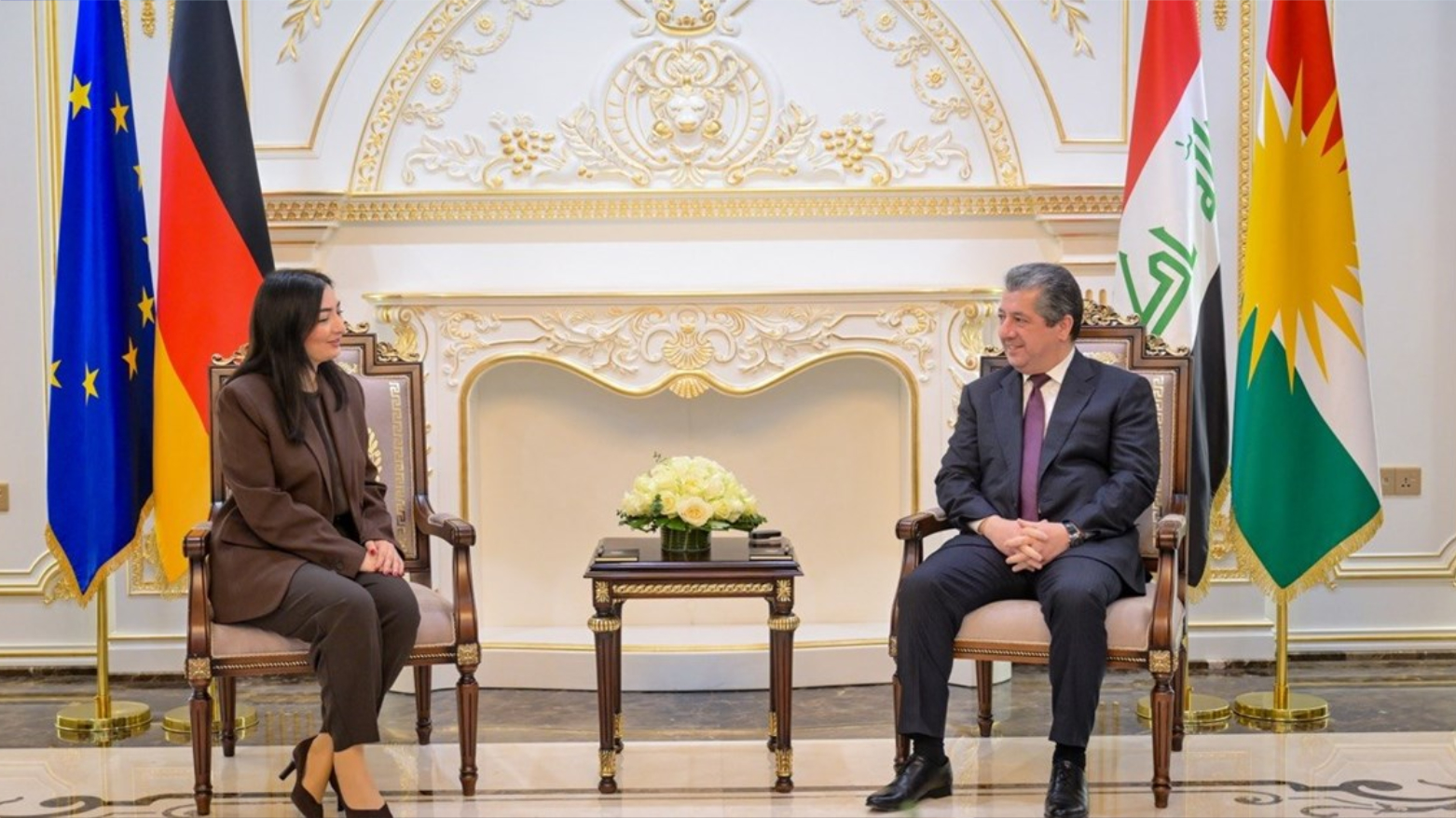
ERBIL (Kurdistan24) — Kurdistan Region Prime Minister Masrour Barzani on Tuesday received Germany’s Federal Minister for Economic Cooperation and Development, Reem Alabali Radovan, and her accompanying delegation, with discussions focusing on strengthening bilateral relations, political developments in the Kurdistan Region, and outstanding issues with the Iraqi federal government.
In a post published on his official Facebook account following the meeting, Barzani said the two sides emphasized the importance of expanding cooperation across various sectors. He also thanked Germany for its continued support for the Kurdistan Region, particularly during the fight against the Islamic State (ISIS).
The German delegation, in turn, reaffirmed Berlin’s support for maintaining peace and stability in the Kurdistan Region, according to the prime minister.
The meeting was also attended by German Bundestag members Kassem Taher Saleh and Serdar Yüksel.
Barzani said the discussions addressed the reactivation of the Kurdistan Parliament and the election of its presidency, describing the resumption of parliamentary work as the first step toward forming the Kurdistan Regional Government’s (KRG) new cabinet.
The two sides also discussed outstanding issues between the Kurdistan Region and the federal government in Baghdad, with Barzani stressing the need to resolve them on the basis of the Iraqi Constitution.
Normalizing the situation in Sinjar was another issue raised during the meeting.
The meeting comes amid a longstanding partnership between Germany and the Kurdistan Region that has developed across security, humanitarian, economic, and development fields.
Germany significantly expanded its engagement with the Kurdistan Region in 2014, when it began supplying weapons and military equipment to the Peshmerga forces and providing training to help them confront ISIS.
Berlin also delivered humanitarian assistance to support displaced people fleeing the group’s attacks.
The relationship has since extended beyond security cooperation to include institutional development, economic assistance, education, and cultural exchange.
Germany opened its Consulate General in Erbil in 2009, providing a permanent diplomatic presence in the Kurdistan Region.
In recent years, German officials have reiterated their commitment to supporting the Kurdistan Region’s stability and development, including Peshmerga reform and the strengthening of regional institutions.
The two sides have also expressed interest in expanding economic cooperation and identifying new areas for investment and partnership.