Halabja, Sulaimani Residents Tear Down Posters Seeking Kurdistan's Division
Residents in Halabja and Sulaimani tear down posters for a separate-region petition as Peshmerga veterans and Prime Minister Masrour Barzani oppose division.
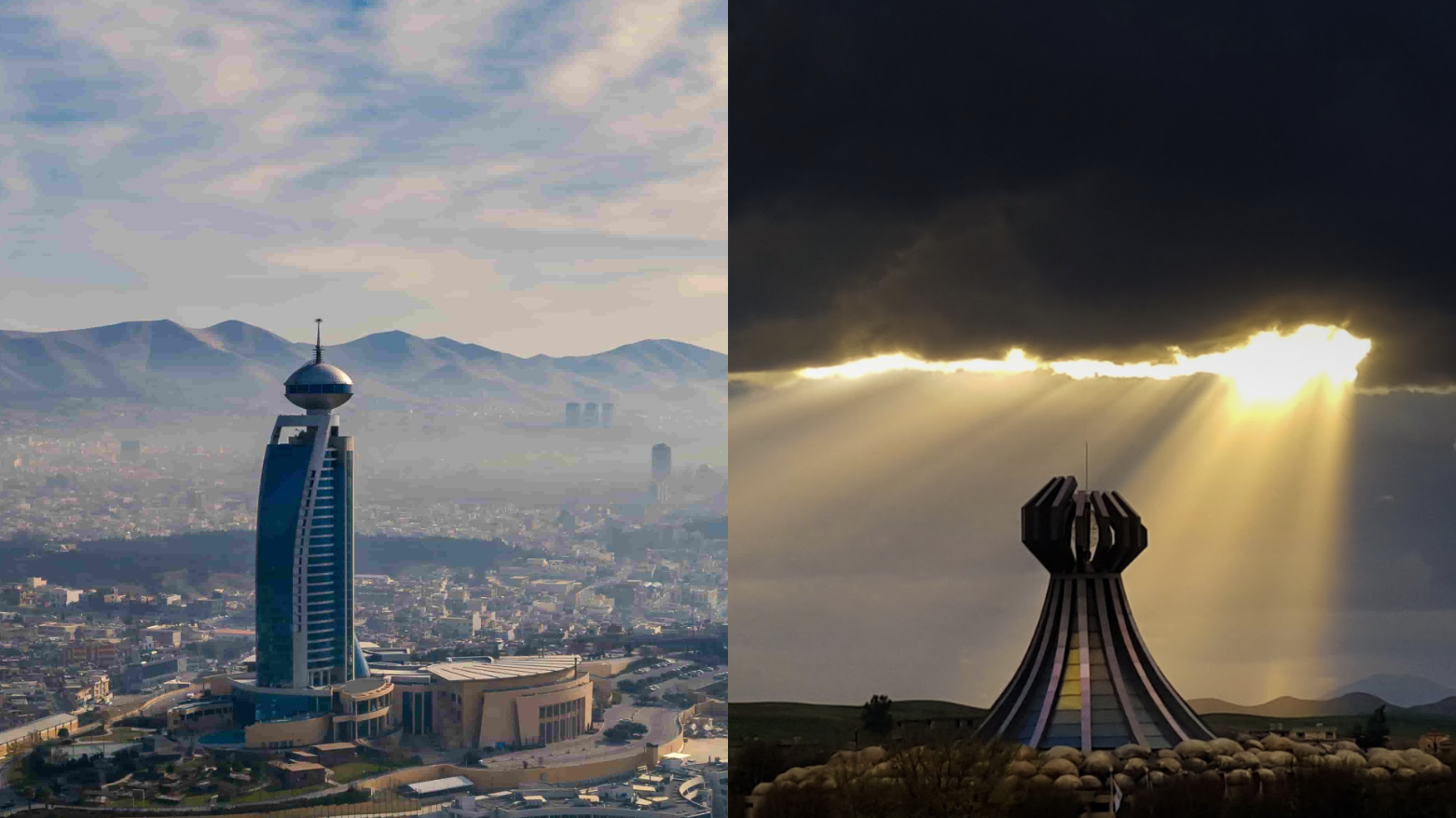
ERBIL (Kurdistan24) - Residents of Halabja and Sulaimani have torn down posters promoting a signature campaign for a separate region, while veteran Peshmerga fighters and political commentators voiced opposition to proposals they say would fragment the Kurdistan Region.
Footage aired by Kurdistan24 showed people removing and trampling campaign materials, while interviews in Halabja captured objections grounded in the city's history, the sacrifices of Kurdish fighters and concern that political disputes could renew divisions. The scenes documented opposition to the petition, although the interviews do not establish the views of every resident.
The campaign has prompted arguments over the future of Sulaimani and its relationship with the Kurdistan Region. For those opposing it, the question is not simply how local affairs should be administered, but whether a new regional arrangement would weaken the Kurdish political entity built through decades of conflict and political struggle.
Kurdistan24 anchor Zhivan Abed described considerable public anger at the signature drive and said protesters would not accept the establishment of signature-collection tents. He called the initiative illegal, an assessment he presented while reporting on scenes from Halabja, and linked opposition to the sacrifices of people who lost their lives in the Kurdish struggle.
Abed recalled Halabja's chemical attack and subsequent recovery, describing the city as the "capital of the martyrs." Its residents, he argued, would reject any attempt to detach it from the Kurdistan Region. He said protesters had pulled down posters soliciting signatures and torn them in anger.
He characterized the action as a peaceful warning, recounting a message directed at those behind the drive: "This time we tore your posters, but next time, if you ever make such an attempt to divide or separate Erbil, Sulaimani, Halabja, Zakho, Kalar, and Garmian, we will never accept it; you will be expelled."
The warning reflected the intensity of the dispute. It was Abed's account of the protesters' message, rather than a statement issued by an identified organization, and the footage itself did not establish who had organized the petition or the protest.
Halabja Residents Reject Separation, Recall Historical Sacrifices
One resident interviewed in Halabja said he would refuse to sign a petition for separation under any circumstances, drawing a distinction between Kurdish independence and the division of Kurdistan. He said he would support independence "at any cost," but not a move that would break the Region apart.
Another resident appealed to the idea of unity across the four parts of Kurdistan.
"Aren't all four parts one? How do you split it now? Why?" the resident asked, arguing that Kurds should pursue closer ties rather than another separation.
For a third interviewee, the debate revived memories of repression under Saddam Hussein's government. The resident referred to the chemical attack on Halabja, the Anfal campaign and the destruction of villages and border communities, including Hawraman, as reasons to reject the initiative.
"Wasn't it that regime that gassed us, and subjected us to Anfal?" the resident asked.
The interviewee compared those promoting separation to descendants of Saddam Hussein, a personal condemnation rather than an established description of the campaign's organizers.
Another resident worried that disputes over territorial arrangements could bring back the violence of earlier Kurdish internal conflicts. Instead of collecting signatures to create a separate region, the interviewee proposed campaigning for a rerun of the Kurdistan parliamentary election.
"Do you want civil war to break out again, the tragedy we faced, losing many sons?" the resident asked, presenting fresh elections as an alternative to political fragmentation.
A fifth resident expressed equally categorical opposition. "If my son dies, I won't sign," the person said, also invoking Kurdish national identity in explaining the refusal.
Separate scenes from Sulaimani showed protesters stepping on and tearing down campaign posters. Brief exchanges captured on camera included a person saying "Hands off!" while other bystanders spoke as the posters were removed. The footage reflected disagreement and confrontation at the site.
Questions About Who Has the Right to Decide Sulaimani's Future
During a Kurdistan24 discussion, news anchor Hakar Niheli questioned the political authority and record of those representing Sulaimani in Baghdad. He asked what sacrifices they had made for the city and whether its history, reputation and dignity should be exposed to the uncertainty of a new political arrangement.
Niheli invoked Kirkuk and Khanaqin as cautionary comparisons, asking whether Sulaimani should risk a similar fate. His remarks framed the proposed change as a matter of historical responsibility rather than an ordinary disagreement over administration.
Responding to Niheli, KDP official Kamaran Ghareeb cited the Kurdish poet Piramerd, recalling a nearly century-old verse that he rendered as: "Kurdistan delegation, nation sellers, tombstones of silent cities."
Ghareeb then posed what he regarded as the central question: who has the right to decide Sulaimani's future? The answer, he said, must include civil society, political parties and ordinary residents, rather than any single political actor.
"Who owns Sulaimani? Is it civil society, political parties, the residents of Sulaimani, or the people of Sulaimani?" he asked.
All those groups, he argued, should be consulted before any major change to the city's political future.
He said proposals to separate Sulaimani were not new and asserted that political parties were reluctant to declare openly whether they stood behind the initiative. Without public consent, he argued, such a project could not succeed.
Ghareeb warned that residents would not allow Sulaimani to become "another Jurf al-Sakhar," invoking the Iraqi locality as a comparison in his political commentary.
Veteran Peshmerga Invoke Decades of Sacrifice
Four veteran Peshmerga interviewed by Kurdistan24 also rejected the proposal, describing unity as an objective for which they had endured war, displacement and personal losses.
One veteran said his house had been burned and his possessions lost during the struggle, experiences he said were endured so Kurds could live freely. He rejected the idea that others could now divide the territory for which fighters had sacrificed.
"We do not and will not accept Kurdistan being diminished and divided," he said, asking whether the hardships associated with Kurdayeti, the Kurdish national cause, had been endured for that outcome.
A second veteran said the purpose of joining the Peshmerga had been national unity, not a new division.
"When we as Peshmerga took up arms back then, we didn't take up arms to divide Kurdistan. We took up arms for Greater Kurdistan," he said.
A third insisted that no political party or individual had the right to redraw Kurdistan's internal boundaries on their own authority.
"Sulaimani, Erbil, Duhok, it's all Kurdistan. This is Kurdistan," the veteran said, adding that neither political parties nor individuals were entitled to make such decisions unilaterally.
The fourth described the separation effort as a betrayal of the Kurdish struggle and those who died during it. He urged political unity and a common voice, arguing that further fragmentation would undermine collective Kurdish interests and benefit those he considered opponents of Kurdish aspirations.
Prime Minister Masrour Barzani Backs Opposition to Division
The public objections were echoed by Prime Minister Masrour Barzani on Tuesday, Nov. 17, during remarks at the Mövenpick-Gomaspan resort ceremony and a subsequent press conference near Erbil.
Prime Minister Masrour Barzani thanked residents of Halabja and Sulaimani who opposed the campaign and said protecting the Kurdistan Region's institutions was inseparable from defending its unity.
He characterized efforts to divide the Region as a repudiation of the sacrifices of Peshmerga fighters and those killed in the Kurdish struggle.
"I commend the people of Halabja and all those loyal Kurds who oppose this campaign; I shake their hand and thank them in Sulaimani, in Halabja, Erbil, Duhok, wherever they are," he said.
He also welcomed the Federal Supreme Court's rejection of a lawsuit challenging the reactivation of the Kurdistan Parliament and argued that political differences should be addressed by respecting election results and forming a government through negotiation.
Prime Minister Masrour Barzani said the Kurdistan Democratic Party remained in contact with the Patriotic Union of Kurdistan over government formation, emphasizing that political agreements should reflect the electorate's vote.
"The Kurdistan Region will certainly stay united, and no one has the right nor the ability to divide Kurdistan," he told reporters.
The protests, interviews and political statements have brought questions of representation, democratic consent and Kurdish unity into the open. Whether the petition produces any formal political process remains unresolved, but the residents and veteran fighters interviewed by Kurdistan24 were unequivocal in their opposition to separating Sulaimani or Halabja from the Kurdistan Region.