Iraq to Deploy Joint Security Force in Jurf al-Sakhar on Friday
Iraq plans to deploy army, police and PMF units in Jurf al-Sakhar on Nov. 20, following an oil-smuggling investigation and disputes over armed-group control.
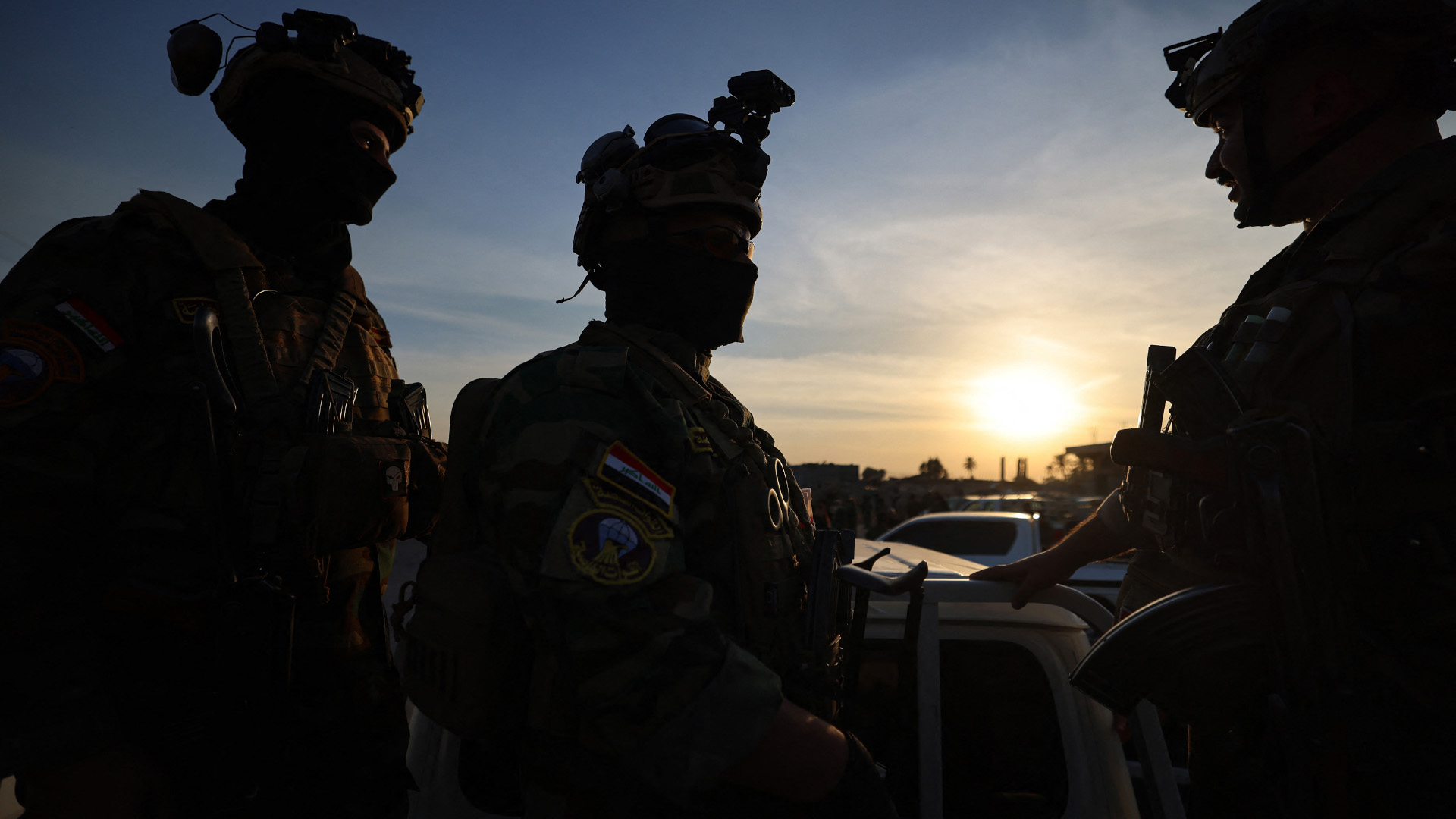
ERBIL (Kurdistan24) - Iraq is preparing to deploy a joint security force to Jurf al-Sakhar on Friday, Nov. 20, under a plan that divides responsibility among the army, Interior Ministry, Popular Mobilization Forces (PMF) and Energy Police, a federal security source told the Iraqi News Agency (INA) on Thursday.
The deployment, approved on Wednesday by Lt. Gen. Abdul Amir al-Shammari, Director of the Office of the Commander-in-Chief of the Iraqi Armed Forces, would place distinct sectors of the subdistrict under designated units, establish new checkpoints, reopen a road and assign a reserve force to respond to emergencies.
The order provides the clearest operational outline yet of Baghdad's attempt to restore government security oversight in an area controlled by armed groups since 2014. It follows an oil-pipeline investigation, the dismissal of nine officials and reported negotiations over the withdrawal of Iran-backed Kataib Hezbollah (KH).
The announcement establishes what is scheduled to happen on Friday; it does not demonstrate that the handover has already occurred or settle whether KH will comply.
A Security Plan Divided
Under the arrangement, the Ministry of Defense's 38th Brigade, part of the 10th Division, will secure the corridor from the "Ya Hussein" checkpoint to the Faziliya intersection and the boundary of the Anbar Operations Command.
The Interior Ministry's 17th Brigade will take responsibility for central Jurf al-Sakhar, from the Euphrates River to the east to the Musayyib-Faziliya road to the west.
The PMF's 72nd and 79th brigades will cover the area between that road and the boundary of the Karbala Operations Command.
An Energy Police battalion will guard oil transmission pipelines, while Babil Police will establish a checkpoint at the Faziliya intersection toward Musayyib. Anbar Police will establish another checkpoint toward Amiriya al-Fallujah.
Read More: Iraq Orders Energy Police to Protect Jurf al-Sakhar Oil Pipeline
The plan also calls for reopening the Musayyib-Behbahani-Faziliya Intersection-Amiriya al-Fallujah road to traffic. A Counter-Terrorism battalion at Hamiya military base will remain on standby as a reserve under the Commander-in-Chief.
These assignments identify who would control movement through the subdistrict, who would protect its energy infrastructure and which units would respond if the transfer encounters trouble.
They also show that the planned deployment is not exclusively an army operation: it incorporates PMF brigades alongside regular government security formations.
Reported Negotiations and Deployment Date
The announcement comes two days after Alhurra cited a source within Iraq's Coordination Framework as saying Prime Minister Ali Falih al-Zaidi and Esmail Qaani, commander of Iran's Islamic Revolutionary Guard Corps (IRGC) Quds Force, had reached an understanding for KH to leave Jurf al-Sakhar.
Read More: Iraqi PM, IRGC Commander Reportedly Reach Deal on KH Withdrawal From Jurf al-Sakhar
According to that account, a joint PMF-security force would enter the area in exchange for the militia's withdrawal, potentially avoiding a military confrontation. Neither side publicly confirmed the reported agreement at the time.
A KH representative, Abu Talib al-Saeedi, subsequently rejected the prospect of the group abandoning its stronghold.
The new deployment timetable therefore answers one question left open by the earlier reports - when government-assigned units intend to move - without resolving the more consequential question of whether KH fighters will withdraw, remain or resist the arrangements.
Nor does Thursday's account specify how existing positions will be transferred. The presence of named brigades in an approved plan should not be confused with an independently verified change of control on the ground.
The Center of the Dispute
The immediate confrontation followed findings of an investigation into interference with three branches of the strategic Basra-Haditha oil pipeline and the discovery of an illegal refinery in Jurf al-Sakhar, according to the government account.
On Nov. 14, al-Zaidi dismissed nine officials from security and oil-related positions, including the Babil police chief, the province's PMF commander, the commander of the Energy Police's Sixth Brigade and the director of the Oil Pipelines Company.
On Wednesday, Iraq's Higher Committee for Security Sector Reform directed the Energy Police to protect the area's pipeline and ordered that the relevant violations be referred to judicial authorities.
National Security Adviser Qasim al-Aboudi said forces already deployed there would be replaced under the new security arrangements.
Read More: Iraq Refers Jurf al-Sakhar Oil Pipeline Violations to Judiciary
The dedicated Energy Police battalion in Friday's plan now gives that decision a specific operational assignment.
Protecting the pipelines is distinct from proving who tampered with them: the investigation and legal proceedings must still establish responsibility for alleged theft or other violations.
KH disputes the allegations against it. Al-Saeedi has acknowledged a fuel-processing installation in the area but maintained that the group built it at its own expense and used purchased heavy fuel oil to produce diesel for vehicles and generators.
He also said an Iraqi government delegation had visited without obstruction.
Those statements directly challenge the government's account of illicit activity; the existence of facilities alone does not resolve how the fuel was obtained.
Wider Investigation
The dispute has also drawn attention from Iraq's legislature.
On Wednesday, Deputy Speaker Farhad Atrushi said oil smuggling had no legal or constitutional protection and pledged parliamentary backing for investigators working to safeguard public wealth.
Read More: Iraqi Deputy Speaker Says Oil Smuggling Has No Legal Cover
An investigative committee established under a Nov. 12 order has been examining suspected oil-product smuggling in Jurf al-Sakhar.
Separately, parliament's inquiry has expanded toward alleged routes through Kirkuk, Sulaimani and the Kurdistan Region's border crossings.
Iraqi lawmaker Zirek Zebari told Kurdistan24 on Wednesday that investigators planned to visit those locations, examine suspected transit points and compile documents for a final report to the prime minister.
Read More: Iraq Oil-Smuggling Probe to Visit Sulaimani, Kurdistan Region Border Crossings
The reported routes, including allegations of movements through Iran toward Afghanistan, remain matters for investigation rather than established findings against any identified person or institution.
This broader inquiry adds an economic and intergovernmental dimension to the operation.
Even if Friday's deployment proceeds as ordered, the questions of how oil products moved, who profited and whether enforcement can reach beyond Jurf al-Sakhar will require separate evidence and decisions.
Issue of Displaced Residents
Jurf al-Sakhar lies approximately 60 kilometers southwest of Baghdad.
Retaken from ISIS in October 2014, the area has remained under armed-group control, while residents have been unable to return for almost 12 years.
Israeli-Russian researcher Elizabeth Tsurkov, released in September 2025 after 903 days in captivity, recently told Fox News Digital that KH had held her for four and a half months in a seized family home in Jurf al-Sakhar.
She urged Iraqi authorities to investigate possible clandestine prisons, mass graves and weapons depots and restore confiscated property.
Read More: Freed Researcher Reveals She Was Held in Kata’ib Hezbollah Stronghold in Jurf al-Sakhar
These are allegations and requests for investigation, not findings established by Thursday's deployment order.
Tsurkov's account illustrates why the significance of a government security presence extends beyond checkpoints and pipelines.
A change in which armed units patrol the subdistrict would not, by itself, establish whether displaced families can return safely or whether alleged detention sites and confiscated homes have been examined.
The practical test begins Friday.
The announced plan defines territorial responsibilities, a road to reopen and a reserve force for emergencies.
What it has yet to establish is whether those orders will be implemented without confrontation, whether KH will relinquish its positions and whether government control will extend to the investigations and civilian access that have remained unresolved since 2014.