State Department to Kurdistan 24: US Backs A 'Strong, United And Resilient' Kurdistan Region
In a response to Kurdistan 24, Washington outlines its position on Iraq's weapons file, Syria's Kurds, and Gaza's humanitarian crisis, citing more than $870 million in aid approved since the ceasefire
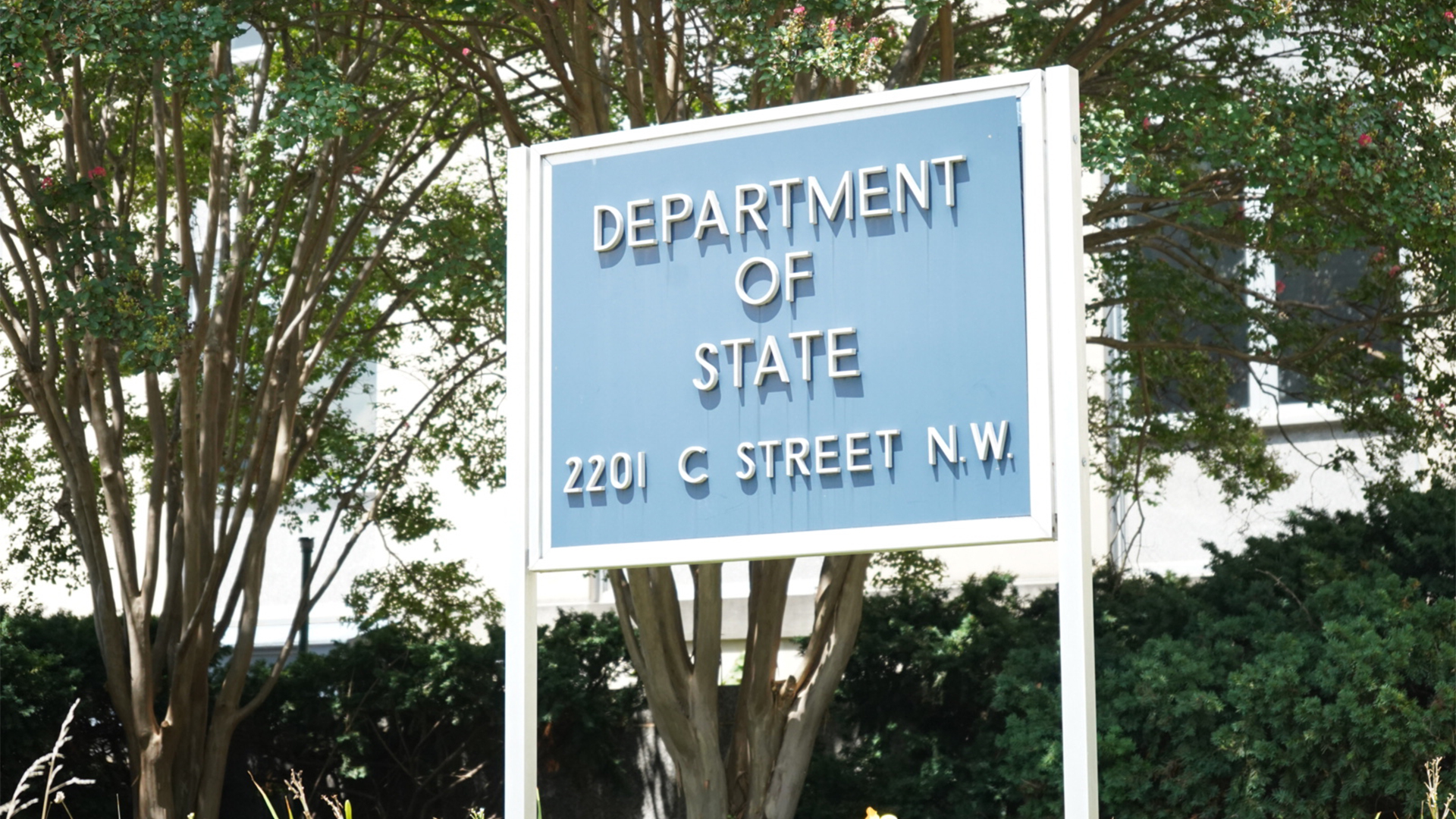
ERBIL (Kurdistan 24) - A US State Department spokesperson told Kurdistan 24 on Saturday that Washington supports a strong, united and resilient Kurdistan Region, which remains a fundamental pillar of the broad relations between the United States and Iraq, and set out the United States' official position on developments in Iraq, the Kurdistan Region, Gaza and Syria.
In response to the outlet's questions, the spokesperson stressed Washington's support for the sovereignty of states, the rights of components, and responding to humanitarian crises, and said the United States wants all weapons brought under the control of the Iraqi state.
On Iraq, the spokesperson said the United States supports the vision of Prime Minister Ali al-Zaidi for a stable and prosperous Iraq that serves its people, strengthens regional cooperation and restores its sovereignty, including by putting all weapons under state control, and added that Washington expects Zaidi to deliver on those promises.
The remarks come as Baghdad and Kata'ib Hezbollah have agreed this week on a joint force of army, police and Popular Mobilization Forces units for Jurf al-Sakhr, after a standoff, and as the deadline for armed groups to hand over their weapons is June 30, 2027. The spokesperson did not mention the group or Jurf al-Sakhr. Zaidi spoke by phone with President Donald Trump on November 5, and Trump called the Iraqi prime minister "a friend" and "a strong person" at a White House press conference on Friday.
The United States has also said that it welcomes progress on Iraq's budget bill and looks forward to the finalization of an oil and gas agreement between Erbil and Baghdad, according to a post by Prime Minister Masrour Barzani after a call with US envoy Tom Barrack on November 9.
On Syria, the spokesperson said the United States supports a united and sovereign Syria in which Kurds and all other components are not denied equal citizenship rights, security, and active and meaningful participation in governance.
The spokesperson added that the United States continues to support efforts that bring lasting stability to Syria. The statement did not name any group or arrangement.
The Syrian Democratic Forces announced their dissolution and integration into the Syrian army in August, and their commander, Mazloum Abdi, became an adviser to the Syrian presidency.
On Gaza, the spokesperson said Washington continues to work closely with the Israeli government, the Board of Peace, partner countries and international organizations to deliver life-saving aid into the Strip.
The spokesperson said that, despite significant assistance, the recent tragic loss of civilian lives shows that more work remains, and that all these efforts have been made harder by the continued armed presence of the Hamas movement in Gaza.
The spokesperson said the United States is the largest donor to the humanitarian response in Gaza, having approved more than $870 million in humanitarian aid through trusted implementing partners since the ceasefire, in support of the Board of Peace's efforts.
The ceasefire began on October 10, 2025, and the UN Security Council gave the Board of Peace a mandate to manage it and oversee reconstruction in November 2025.
The spokesperson said preparations for winter are a main focus of the United States' humanitarian efforts this year, as in previous years of its response to the Gaza crisis, adding that a specialized team works on the Gaza crisis and gives priority to funding for shelter, food aid, water, sanitation and emergency health care.
The spokesperson said the efforts have produced gains over the past year in key sectors, so that food aid now reaches most of Gaza's population, health and nutrition services have expanded, and support for improving water, sewage and sanitation has increased, leading to measurable improvements in food security, health outcomes and access to clean water, together with temporary shelter support.
The Board of Peace said on November 9 that Israel's winter preparations were insufficient and that the situation was an immediate humanitarian emergency, and it also called on Hamas to abide by its ceasefire commitments. Aid groups say reconstruction has not begun and nearly 1.4 million Palestinians live in makeshift shelters.