Masrour Barzani: No One Can Divide Kurdistan
Kurdistan Region Prime Minister defends parliament’s reactivation, calls on political parties to respect election results, and says the door remains open for renewed negotiations
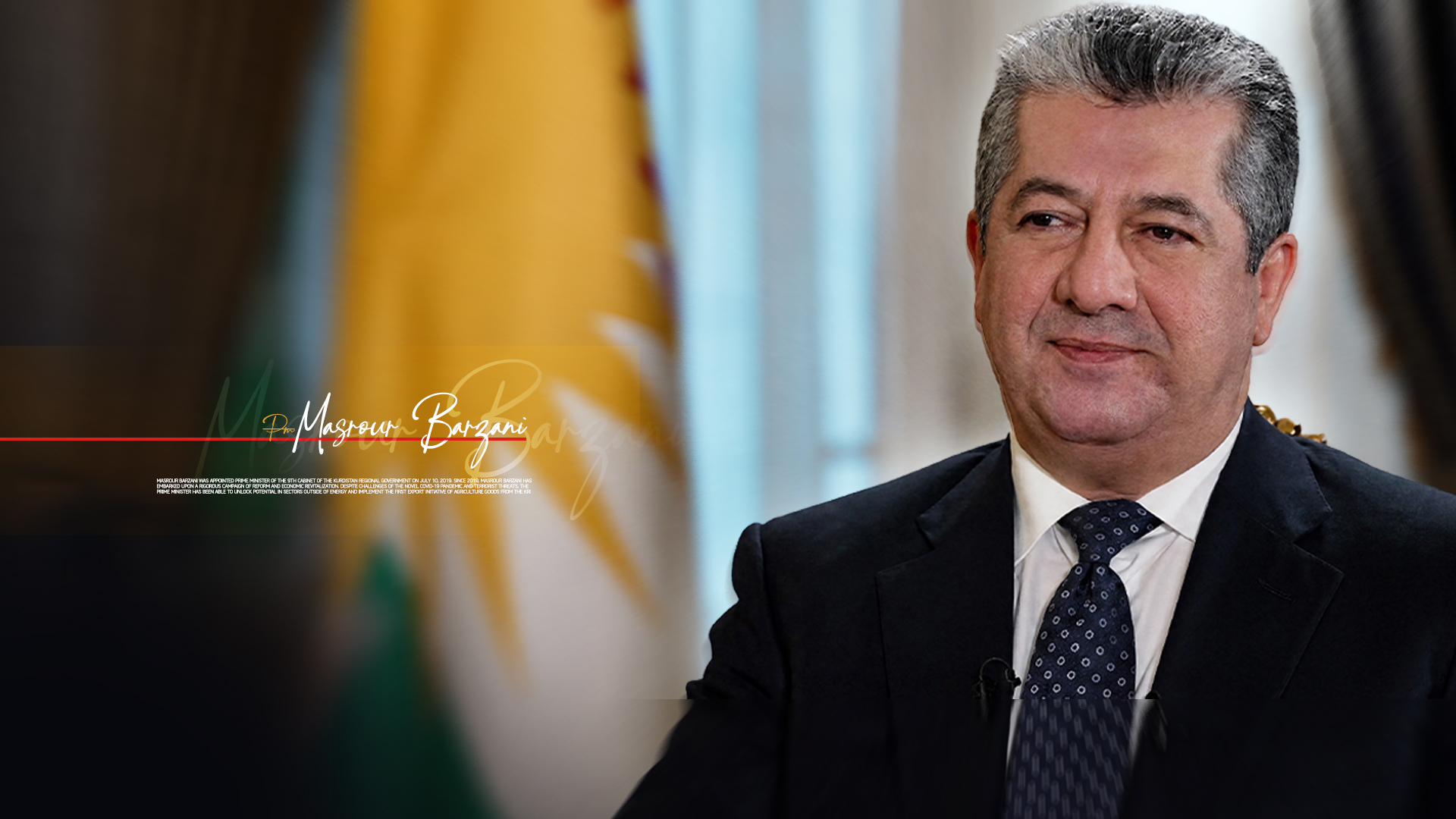
ERBIL (Kurdistan24) — Kurdistan Region Prime Minister Masrour Barzani has said that no one has the right or power to divide the Kurdistan Region, reaffirming his government’s commitment to protecting the Region’s achievements and democratic institutions amid political disagreements between the Kurdistan Democratic Party (KDP) and the Patriotic Union of Kurdistan (PUK).
In an interview with Shams TV on Saturday, Barzani said the Region’s development was the result of decades of struggle and sacrifice by its people, the Peshmerga, and the families of those killed in the struggle for Kurdish rights. He said protecting those achievements was now among the most important responsibilities facing the Region.
Responding to concerns over statements about dividing the Kurdistan Region, Barzani rejected the prospect, saying that its achievements could not be undone by individual political agendas. “No one has the right nor the power to divide Kurdistan,” he said, describing the Region as the product of the resilience and sacrifices of its people.
Addressing the political deadlock between the KDP and PUK, Barzani said the door remained open to negotiations and that his side hoped to resume engagement with all parties committed to democracy and the future of the Kurdistan Region.
He defended the reactivation of the Kurdistan Parliament, which had been unable to convene for two years amid disputes over parliamentary positions and the formation of a new government.
Barzani said the prolonged paralysis had placed the legitimacy of the Region’s institutions at risk, making it a national and moral responsibility to restore the legislature’s work.
He stressed that the move was not directed against any political party, but was intended to preserve the legitimacy of the institutions and uphold the mandate of elected representatives.
He also said the intention was to create conditions for parliament to function again and allow negotiations over the formation of the next government to resume.
Barzani emphasized that election results must be respected, arguing that parties that do not secure the seats they expect should either participate in a governing coalition or serve in the opposition rather than obstruct the political process.
He criticized efforts to paralyze parliament, saying democratic legitimacy derives from the votes of the people.
Asked whether the KDP would continue its previous approach of accepting a 50-50 power-sharing arrangement to prevent internal conflict, Barzani said such an arrangement did not reflect the essence of democracy.
He noted that the KDP had repeatedly compromised and made concessions in the past for the sake of national unity and stability, but said the current dispute was about the legitimacy of the Region’s institutions rather than the distribution of positions between parties.
On the possibility of internal fighting, Barzani said he hoped it would not happen, calling on Kurdish political forces to avoid confrontation.
He stressed that the Peshmerga should never turn against one another, even when political disagreements arise.
Turning to relations with Baghdad, Barzani said the outstanding issues between the Kurdistan Region and the federal government were not personal matters involving individual officials, but concerned the rights of the Region under Iraq’s federal system.
He expressed support for Iraqi Prime Minister Ali al-Zaydi and said he hoped the new government would resolve the pending disputes and respect the Kurdistan Region’s constitutional rights.
On efforts to unify Iraq’s security forces and bring armed groups under the rule of law, Barzani said the task would be challenging but expressed hope that the prime minister could address forces not constitutionally recognized as legitimate security institutions.
He also emphasized that the Peshmerga are a legitimate component of Iraq’s security structure and stand on an equal footing with the Iraqi military and other recognized security forces.
Barzani also discussed the impact of the US-Israeli-Iranian war on the Kurdistan Region, saying it had faced more than 1,050 missile and drone attacks during the conflict, many of which originated from within Iraq. He said Baghdad had a responsibility to control armed groups and prevent attacks that threaten the Region’s security.
He reiterated that the Kurdistan Region did not want to become part of the conflict and would not allow its territory to be used to threaten neighboring countries.
While describing Iran’s attacks during the war as unfortunate, he said the Region sought good relations with its neighbors based on mutual respect.
Addressing the Region’s economic development and its ability to attract investment despite regional instability, Barzani said public trust, infrastructure, and the quality of government services were essential to creating a favorable investment environment.
He noted that the private sector had played a significant role in financing development projects, while the Kurdistan Regional Government continued its work despite financial constraints and unresolved budget issues with Baghdad.
Barzani said his priority was to serve the people honestly and that their satisfaction would be the greatest measure of his legacy.
The Full Interview with Kurdistan Region Prime Minister Masrour Barzani, Conducted by Shams TV:
Political developments and calls to divide the Kurdistan Region
Presenter: We are witnessing tremendous development in the Kurdistan Region, which has emerged as a model in the Arab world. However, recent developments surrounding government formation and statements by PUK leader Bafel Talabani about dividing the Region into two parts have raised concerns. What exactly is happening?
Prime Minister Barzani: Well, it's good to be with you, and thank you for your remarks.
The development you see in Kurdistan is the product of the struggle of so many years and decades by our people. The credit goes to the Peshmerga, the families of the martyrs, and all those who have sacrificed their lives over the years to create what you see today.
I play my part, and I'm proud. Of course, what we've done, we did from the heart. I always consider myself part of this society and part of this land. We have deep roots here.
With this development, the most important thing is to ensure that our people understand their value and position and, of course, to remind them of their rights as a nation and what they deserve.
I'm very pleased with what we've achieved. But the most important point at this moment is how we can protect our achievements.
Regarding the recent developments and talk about partitioning Kurdistan, that is not going to succeed because no one has the right or the power to divide Kurdistan.
Kurdistan is the product of our martyrs, our Peshmerga, our people, and their resilience. We've worked so hard for these achievements, and no one can divide Kurdistan according to their wishes or a suspicious agenda.
Negotiations between the KDP and PUK
Presenter: Mr. Prime Minister, are negotiations currently underway to address this situation, or have matters reached the point of a final breakdown between the Kurdistan Democratic Party (KDP) and the Patriotic Union of Kurdistan (PUK)?
Prime Minister Barzani: There is always hope. We have never closed any doors, and what we have done was never directed against anyone.
I don't think their reaction was very rational, to be very frank with you.
Let's go back. We had an election two years ago. Our parliament couldn't convene because there was a dispute over positions and government formation. It eventually reached a point where our rivals filed complaints with the Federal Supreme Court, calling for the dissolution of parliament and the government.
Of course, we were at a stage where our own legitimacy was in question.
We had two choices: either to save the legitimacy of our institutions or face the consequences of our rivals' reactions, which I would describe as irrational.
It was our national and moral responsibility, as people who believe in the Kurdistan Region and its rights, to take action and reactivate parliament. Again, this was not directed against anybody.
The legitimacy of our Region and its institutions rests on the democratic process. It is not based on one particular individual's view of how things should be.
What we did was to save our institutions, ensure that Kurdistan's legitimacy remained intact, and fulfill our responsibility toward the constituencies that elected the members of parliament.
Our intention is to create an environment in which parliament can function again and negotiations over government formation and the way forward can resume.
The doors are open, and I hope we can resume and re-engage in negotiations with whoever believes in democracy and the future of Kurdistan.
The future of the Kurdistan Region's democratic model
Presenter: You speak about democracy, Mr. Prime Minister. We are talking about development, infrastructure, and roads, but the democratic model established in Erbil is equally important.
I remember President Masoud Barzani's position in 1991, when he clearly called for parliamentary elections that would reflect the people's will in a region where genuine elections were not being held.
Are you concerned that this model is now at risk because of these political disagreements, or will it continue, and will you defend it to the end?
Prime Minister Barzani: We will defend democracy. We will defend the achievements of our people.
What we have achieved was not easy to begin with, and we are not going to take a step backward because somebody does not believe in democracy.
Let's be frank: why are there positions against this process?
We held elections, and those elections produced results. These results must be respected.
If someone does not win the number of seats they expected, that does not mean they should suspend and paralyze the entire process because they did not perform well in one particular election.
They have to accept the results. That is respecting democracy and the will of the people.
They can act accordingly, become part of a coalition to form a government, or remain in the opposition. That is how democracy works in most of the world.
But if they have their own version and believe it is either their way or no way, that is unacceptable. That is not how we can improve or serve our people.
In this case, I think it was very obvious that the PUK, unfortunately, together with the alliance it formed with another party, challenged us not through the democratic process but through the use of force, essentially paralyzing parliament and holding it hostage for two years.
This does not help or serve the process.
For two years, when we did not have a functioning parliament, they complained that parliament was absent and called for its dissolution. Now that parliament has been reactivated, they complain again that there is an active parliament and that it cannot be accepted and must be dissolved.
They have to make up their minds. Are they for the democratic process or against it?
Their reaction was very wrong. Let me also remind you that they took a very negative position against drafting the Kurdistan Region's constitution, which is also stipulated in the Iraqi Constitution.
Preventing legitimate institutions from being established and supported simply because someone has a particular agenda is unacceptable. The majority of the Kurdish people do not accept this.
Legitimacy comes from the votes of the people. Those who have the support of the people have legitimacy. Period.
Power-sharing, the 50-50 formula, and the possibility of internal conflict
Presenter: Traditionally, the KDP has won elections and secured a majority. However, I have asked President Masoud Barzani several times about the practice of returning to a 50-50 power-sharing arrangement. He used to explain that this was necessary to prevent internal conflict.
Has that strategy now ended? Is the KDP no longer willing to make concessions and accept the 50-50 formula to avoid infighting?
I also have a difficult question that concerns many people: Are we heading toward any possibility of internal conflict in Kurdistan?
Prime Minister Barzani: The simple answer is no.
First of all, let's talk about elections. Why do we have elections?
Elections are usually conducted so that there can be a winner and someone who perhaps does not win. I'm not calling them losers because elections are held every four years. If you don't win this time, it doesn't mean you cannot win the next time.
A 50-50 division does not represent the nature or essence of democracy as it should be.
You hold elections, the results come out, and you need to respect them. If somebody does not have 50 percent of the vote, they certainly cannot claim the right to exercise 50 percent of the government or authority.
Throughout the years, the KDP has been a winner in all elections, and it has been very compromising. It has been willing to compromise and give more to its rivals and the other side to enable them to participate in government formation, for the sake of national unity, peace, and prosperity.
This time, however, it is not about a dispute between two parties. It is about the legitimacy of the Kurdistan Region as a whole.
If we do not have a constitution, or if parliament does not function as a legitimate institution, the entire process comes into question.
So it is not about which party has more seats. It is about saving the institution itself. That is the difference.
As for whether there will be internal fighting, I hope not.
President Masoud Barzani has always said there should be no Kurdish infighting. My call to everyone in Kurdistan is that we should avoid fighting within Kurdish territories and between political parties. The Peshmerga should never face one another or fight each other.
There will always be political disputes and challenges, but I hope everyone understands that we must move beyond the point of confronting each other militarily because of political disagreements.
Allegations of intimidation and pressure against parliamentarians
Presenter: My final question before moving to relations with Baghdad concerns rumors circulating on social media. Some reports claim that people were forcibly detained in hotels, children were kidnapped, and families were threatened.
Where are these allegations coming from? I would like you to clarify these issues, Mr. Prime Minister.
Prime Minister Barzani: This is nonsense. It's nonsense.
There are many people who feel responsible toward those who voted for them, and they feel embarrassed that they cannot fulfill their duty as representatives by coming to parliament and representing their people.
Besides members of our party and our allies, there are also members of other parties, including the PUK, New Generation, and others, who want to participate in the parliamentary session, reactivate parliament, and have the honor of saving the institution.
We praise what they have done. They were under no pressure whatsoever.
These are simply accusations because the other parties have lost the honor and responsibility of being members of parliament. These members decided to choose the right path by coming and reactivating parliament.
What you described is exactly the opposite. It is quite the contrary.
They harassed people to prevent them from attending because many more people wanted to participate in reactivating parliament. They harassed them, arrested their family members, and threatened them with severe consequences for themselves or their families if they participated.
When they failed to prevent the quorum from being completed and parliament from convening, they started spreading these rumors and baseless allegations.
They are nothing but cheap allegations intended to cover up their failure.
I can reassure you that everyone who participated in that session did so with full support for the process. It was their own decision.
Political concessions and the formation of a new government
Presenter: I wanted to ask you about these issues because I live in Erbil with a group of journalists from Al-Shams TV, and one of the best things we can say about this Region is that we feel safe. We do not feel the presence of intelligence agencies, fear, or threats. Some of our female colleagues say they can walk around Erbil at 2 a.m. and feel completely safe.
I wanted you to clarify these allegations because their purpose seems to be undermining the stability and security we experience here.
In any case, Mr. Prime Minister, are you personally prepared to make some concessions so that the Region can move forward?
Prime Minister Barzani: It's not about me personally. It's about the process. We are all part of this process.
We have a democratic process that we have started, and we need to respect the will of the people. Ultimately, the people are the ones who decide what kind of government they need and what kind of future they want to create.
We can only play our part.
We have said that we are ready to be very generous in our offer to form the government and work with our partners and allies, and hopefully with all those members who won seats in parliament, to create an inclusive government.
We are willing to work with them and be very flexible. But, of course, everything has its limits and must remain within a reasonable framework. The election results must also be respected.
Presenter: Will there be a new government soon?
Prime Minister Barzani: There is a process, as I said. We are willing and hopeful that during this period we can work with everybody to find a solution and a peaceful path forward without the unnecessary tensions that have been created.
I hope they come back to their senses and recognize that the unity of Kurdistan is in everyone's best interests, both theirs and ours, so that they can come and work with us to form a new government.
That is our goal. But, of course, the process will not stop simply because somebody does not want to act rationally.
We have a Constitution. Under the Constitution, Iraq is a federal country, and Kurdistan is part of this federal system. We have an entity called the Kurdistan Region. We have duties, but we also have certain rights, and those rights must be respected.
I think the major problem is the mentality of some people who still do not understand or accept federalism. Either way, they are not helping the process move forward or ensuring that the Constitution is implemented as it should be.
You cannot selectively choose certain parts and articles of the Constitution that serve one side while ignoring the rest. It is a package of compromises.
We all voted for this Constitution because we believed in the entire process and all its provisions, not just selected parts. That must also be respected in Baghdad.
I think the major problem is the mentality. Once people accept and endorse federalism, our problems will be easier to solve.
Federalism is not division. It is not about dividing the country. It is essentially about sharing responsibilities.
When Iraq first drafted its Constitution, we voluntarily participated in negotiations and accepted a federal system for the entire country. It was our choice to become part of that federal system.
It was not a division because we had been a de facto independent entity before the Constitution was written. We voluntarily joined the country because we believed that sharing responsibilities would allow us to build a much better country, where the rights of every component and all different communities are respected and guaranteed.
We need guarantees for a better future in which no individual, political agenda, party, ethnicity, or religious group dominates and violates the rights of smaller communities.
Iraq belongs to everyone, and we must all have equal rights. Federalism provides guarantees that protect those rights. You have duties to perform, but your rights must also be guaranteed.
You cannot be selective and seek alternative solutions to the constitutional rights already stipulated in the Iraqi Constitution.
Those who do not believe in the Constitution have a misunderstanding and a misperception of how powerful federalism can be in building a stronger country when people voluntarily choose to work together.
Imagine a country where everyone feels they belong, shares responsibilities, and can become stronger together.
But if people feel that a dominant force is constantly trying to belittle them or look down on them, that creates a reaction. This has been the case throughout the years.
History is full of lessons. Anybody who doesn't learn from history is doomed to repeat it.
I believe the best thing for Iraq today is to respect the Constitution and federalism and work together to build a better country.
Relations with Baghdad under Prime Minister Ali al-Zaydi
Presenter: Iraq has a new prime minister, Ali al-Zaydi, a young figure with a business background rather than a political one. He has made statements that many people welcome, emphasizing the authority of the state, rejecting armed militias, and supporting the principle of one army.
You have met Prime Minister Ali al-Zaydi. Do you believe his personality and his background, which is neither traditionally political nor sectarian, could bring progress to the traditionally tense relationship between Erbil and Baghdad, particularly regarding the Kurdistan Region's salaries, rights, and the outstanding issues we have experienced in the past?
Prime Minister Barzani: It's never personal about any individual.
Of course, we have tremendous respect for Prime Minister al-Zaydi and for all the other prime ministers who have held that position.
So it is not about personality or a personal issue. It is about the rights of our country and the Kurdistan Region within Iraq.
We expect our rights to be respected, and there are outstanding issues that need to be resolved.
Of course, we have given our full support to Prime Minister al-Zaydi, hoping that we can find a way forward to resolve the existing problems and create a much better environment and situation for the entire country.
We are very hopeful that we can reach agreements.
However, these issues remain unresolved. We are hopeful, but I don't want to speculate about what may happen in the future.
Our intention is very clear: to support a prime minister who implements the Constitution as it stands and respects the rights of the Kurdistan Regional Government within a federal Iraq.
The US withdrawal from Iraq and Kurdistan's security concerns
Presenter: The Americans have now withdrawn from Iraq, and some argue that there is no longer a need for armed factions following the US withdrawal.
On the other hand, there are concerns among the Kurds about losing American protection. Are you concerned about the absence of American forces from Iraq, given that the United States has always been an ally of the Kurdistan Region?
Prime Minister Barzani: Well, it is very sad, honestly, that people within one country would be concerned that they could be overrun by a military power or force and would need an external force to come and protect them.
Unfortunately, this has been the case for decades.
Of course, we are very grateful for the support the Americans have shown to Kurdistan and to all of Iraq.
Iraq was on the verge of collapse when ISIS seized large territories and several provinces in the country.
It was first the Peshmerga who stopped Daesh and pushed it back. Then the rest of Iraq caught up with its own security forces, and together we defeated Daesh.
That was a very good experience demonstrating how coordination and cooperation can benefit everyone.
Of course, we are very grateful to the Americans. But let me tell you, our cause is deeply rooted in history. We have a very sacred cause, which is the Kurdish cause in Iraq.
We need the support of our friends. We need the United States, the international community, and the entire world to support us.
But we also hope that we can resolve our problems with Baghdad and that Baghdad will not look at Kurdistan as an alien entity, but as part of the country and as the backbone of Iraq's stability and economic prosperity.
Kurdistan has demonstrated throughout these years how important it is to the stability of the country, the prosperity of its economy, and its political stability.
We are part of this country, and we hope these concerns will be properly addressed. I hope our people will no longer see signals that make them uncomfortable or concerned.
The Iraqi army, armed factions, and state authority
Presenter: Are you optimistic that the new government under Ali al-Zaydi will be able to unify the Iraqi army and bring weapons under state control by disarming the militias? Or do you consider that prospect far from being achieved?
Prime Minister Barzani: I hope he will, but it is not easy.
Let me make some clarifications. When we say the Iraqi army, there is the Iraqi army, but there are also Iraqi security forces recognized under the Constitution.
All Iraqi security forces are legitimate forces that need to be respected. In this case, the Peshmerga are equal to the Iraqi military and the rest of the Iraqi security forces.
So the Iraqi army is united as we speak. Nobody questions whether the Iraqi army is united.
I don't want to make comments based on assumptions, but regarding whether the prime minister can bring all forces that are not constitutionally recognized as legitimate under the rule of law, I hope he can, and we will support him in doing so.
Of course, it is a very challenging mission. It is not easy because there are certain agendas, and sometimes I am concerned that different solutions are being proposed that may not serve the purpose.
I think the prime minister has to be very careful about how he handles these issues, but we wish him success.
Of course, he will have our support in restoring the rule of law throughout the country.
The impact of the US-Israeli-Iranian war on the Kurdistan Region
Presenter: Mr. Prime Minister, we are talking about these militias. In Lebanon, we also suffer from weapons outside state control, and we know that these militias or armed factions owe allegiance to Iran.
We are now in the middle of an American-Israeli-Iranian war that could expand further.
How has this war affected the Kurdistan Region, particularly since some of these factions openly launched drones and missiles against the Region during the conflict, claiming that American positions or bases were located in Kurdistan?
How has the Region been affected? What do you see as the near-term future? And do you still maintain neutrality despite all the attacks the Kurdistan Region has faced?
Prime Minister Barzani: Kurdistan is tired of being part of any war.
We want our people to live in peace. That is the message we have always delivered.
We do not want to be part of any confrontation. But, of course, we have the full right to defend ourselves if we are attacked.
Unfortunately, there have been many attacks, more than 1,050 missile and drone attacks against Kurdistan. Some targeted coalition forces, but the rest targeted Kurdistan, and some targeted Iranian opposition camps located here.
We believe it is the responsibility of the federal government to ensure that none of these attacks originate from inside Iraqi territory.
Unfortunately, 50 percent, perhaps even more than 50 percent, of these attacks have come from inside Iraq.
There are groups responsible, and these groups must be held accountable.
The question now is: Where is the federal government?
If the federal government controls these groups, then it should hold them accountable. If it does not control them, then there is a major gap in responsibility and the authority of law in this country that needs to be addressed and resolved.
Our aim is to help the government in Baghdad ensure that it has full control over all the forces operating in the country.
Everybody must abide by the law and be part of the Iraqi security forces. Anything outside these security forces should have no place in the country.
Allegations of using Kurdistan as a launchpad against Iran
Presenter: We are also hearing reports that the Americans are relying on the Kurds, particularly Iranian Kurds, and on the borders of the Kurdistan Region to launch an uprising against the Iranian regime.
There have also been reports that weapons were delivered to the Kurds but were never used. We hear about major plots that could be launched from Kurdish territory.
Mr. Prime Minister, can you confirm or deny these reports?
Prime Minister Barzani: Our official position has been very clear.
Kurdistan is not going to be part of any confrontation. We will not allow Kurdish territories to be used against any of our neighbors.
That is our official position.
Anything else is simply rumors and allegations that many people try to use for different purposes.
Our official position is very clear: the Kurdistan Region is not part of this conflict, and we will not allow our territories to be used as a threat or as a source of threat against any of our neighbors.
Relations with Iran
Presenter: Do you consider relations with Iran to be good? How would you describe the current level of relations between the Kurdistan Region and Iran?
Prime Minister Barzani: We have no problem with any of our neighbors, including Iran.
Unfortunately, Iran's hostile position in attacking Kurdistan during this period of war was very unfortunate.
We asked for explanations, but they could not give us convincing explanations as to why they were attacking the Kurdistan Region.
Of course, we want the best possible relations with Iran and all our neighbors.
But relations work both ways. They must also have the willingness to maintain good relations with us.
Our intentions are very clear. We want good, friendly, and neighborly relations with Iran.
Syria, Türkiye, and the possibility of federalism
Presenter: We cannot avoid discussing Syria and Türkiye.
We know that relations with Türkiye are very good, and President Masoud Barzani has increasingly become a key mediator. Whenever something happens in Türkiye, people turn to him, and the same happens when problems arise in Syria.
This has given the Kurdistan Region a significant role across the four parts of Kurdistan.
Many Syrians look at the Kurdistan Region and Erbil as a political capital and see it as a dream they hope to achieve. When I was in Qamishli, Syrians spoke about Erbil as though it were a distant dream.
Do you believe Syrians can achieve a federal system in Syria similar to the federal system established under Iraq's Constitution?
Prime Minister Barzani: We cannot tell them what kind of system best suits them. They have to come up with what they believe is best for all of them.
Of course, the Kurdish people in Syria cannot be denied. They exist, they have certain rights, and they need equality and justice.
President Barzani, in particular, played an enormous role in avoiding any kind of conflict. It was a major achievement to prevent war.
What comes next needs to be negotiated between the Kurds and Damascus.
We have heard that Damascus is now accepting the idea of granting citizenship to Kurds who, unfortunately, never had the opportunity to be recognized as equal Syrian citizens.
This is a step forward.
I'm not saying that all Kurdish rights have been fulfilled, but this is a good opportunity and a positive step.
I hope that, as they move forward, they can develop a system that is best for everyone.
It is not just about the Kurds. As we know, Syria has many different components, and all of them need to feel safe and equal in the country.
Attracting investment and developing the Kurdistan Region
Presenter: Let me return to the Kurdistan Region, Mr. Prime Minister.
We began this interview discussing the political situation, but I would like to move away from politics and return to development and ambition.
You seem to launch a new project almost every day. We are constantly surprised by new investments and the growing number of tourists coming to Kurdistan, not only from Baghdad and Iraq's southern provinces but also from abroad and Arab countries.
Many people are astonished by this development. Some remember Dubai during its period of rapid growth, and today people are describing Erbil as the new Dubai, although the culture and natural environment are different.
We recently saw you inaugurate the Mövenpick hotel and resort.
My question is: How do you convince investors to come to the Kurdistan Region when it is surrounded by such a volatile environment?
Prime Minister Barzani: Trust. Trust is the key.
I think they trust me, and I have proven that my only intention is to serve the people and respect their rights.
Of course, we have constantly been under sanctions. Our budget was never released on time or in full, and our salaries were not paid.
But we could not stop. We could not give in to the economic pressure imposed on us.
We had to move forward and ensure that our economy continued to develop, that our people saw changes, and that we served them more and more every day.
They deserve more services.
What I focused on first was infrastructure and what people needed most.
People need all kinds of services, whether electricity, water, transportation, digitalization of services, reducing bureaucracy, tackling corruption, or giving greater attention to education and the health sector.
We tried to address all these areas.
Unfortunately, we did not have the funds to support all our visions and objectives or to build an even better economy than the one we have today. That was because of the sanctions imposed on us, and we still face constraints.
We have not really received help from anyone in this regard.
But one thing I can reassure you about is that, during all these difficult times, when we had almost nothing, we still had hope.
If I could not deliver something tangible to the people, I always delivered hope to them. That really kept them on their feet.
I also thank the private sector. It played a crucial role by stepping forward, taking responsibility, and implementing projects itself.
People often ask where we get the funds to carry out all these projects. We don't. The private sector is doing it.
It is about finding the right mechanisms and working with the private sector, respecting it, and guaranteeing its rights.
There is another point. Sometimes we hear complaints about why certain areas have more projects while others have fewer.
Local support, local companies, and the local private sector are the answer.
In certain areas, the private sector has greater trust in local authorities. For instance, you see this boom and development in Erbil and Duhok, but not in certain other areas.
That is because some local authorities force the private sector to become their partners and give them a share.
Of course, that does not help or encourage investment.
I believe poor local governance is sometimes the reason for this situation.
The truth is that when you build trust, you can certainly attract private-sector support and work together.
That is what we have done.
I can assure you that we could have achieved much more if I had greater support locally and regionally than we currently have.
Masrour Barzani's legacy and how he wants to be remembered
Presenter: My final question, Mr. Prime Minister.
Because you spent part of your life in the United States, I feel that American culture has influenced you. I don't know whether I'm right, particularly when you speak about democracy.
In politics, there is no permanent winner. We saw the Democrats sweep the last elections, while the Republicans may sweep the next ones.
On the other hand, you have focused on infrastructure and making the Kurdistan Region a model of development, including scientific development.
If I asked you which projects you are most proud of, I would also like to ask about something rooted in American culture: the idea of a legacy.
What does a person leave behind after leaving office? What does he want his people to remember him for?
What do you want from the people of Kurdistan? How do you want Masrour Barzani to be remembered?
Prime Minister Barzani: I want them to believe that I served them with complete honesty and with everything I had.
Their happiness and satisfaction are the greatest rewards for me.
I don't want anything from them. I want them to be happy. I want them to live a good life. That is the greatest reward for me.
Of course, you learn from people. I have been to the United States and studied there, but I have spent most of my life here.
When you feel connected to your people, when you live with them, build the future with them, and are ready to live and die with them, that is what creates and strengthens the connection between you and the people.
I want that connection to grow stronger every day.
My people are the greatest asset, the greatest achievement, and everything that we have.
Presenter: Mr. Prime Minister, thank you for this meeting. I wish we had more time because there is so much more we could discuss. But this leaves us hoping for another meeting with you, God willing.
Thank you for welcoming us and giving us this opportunity.
Our viewers, we have been speaking with the Prime Minister of the Kurdistan Region, Masrour Barzani. See you in another interview.
Prime Minister Barzani: Thank you.