Lalezar Case: Lawyers Accuse Political Forces of Judicial Interference
Lahur Sheikh Jangi's lawyers allege procedural violations in the Lalezar detainees' case and demand referral to the Court of Cassation in Sulaimani.
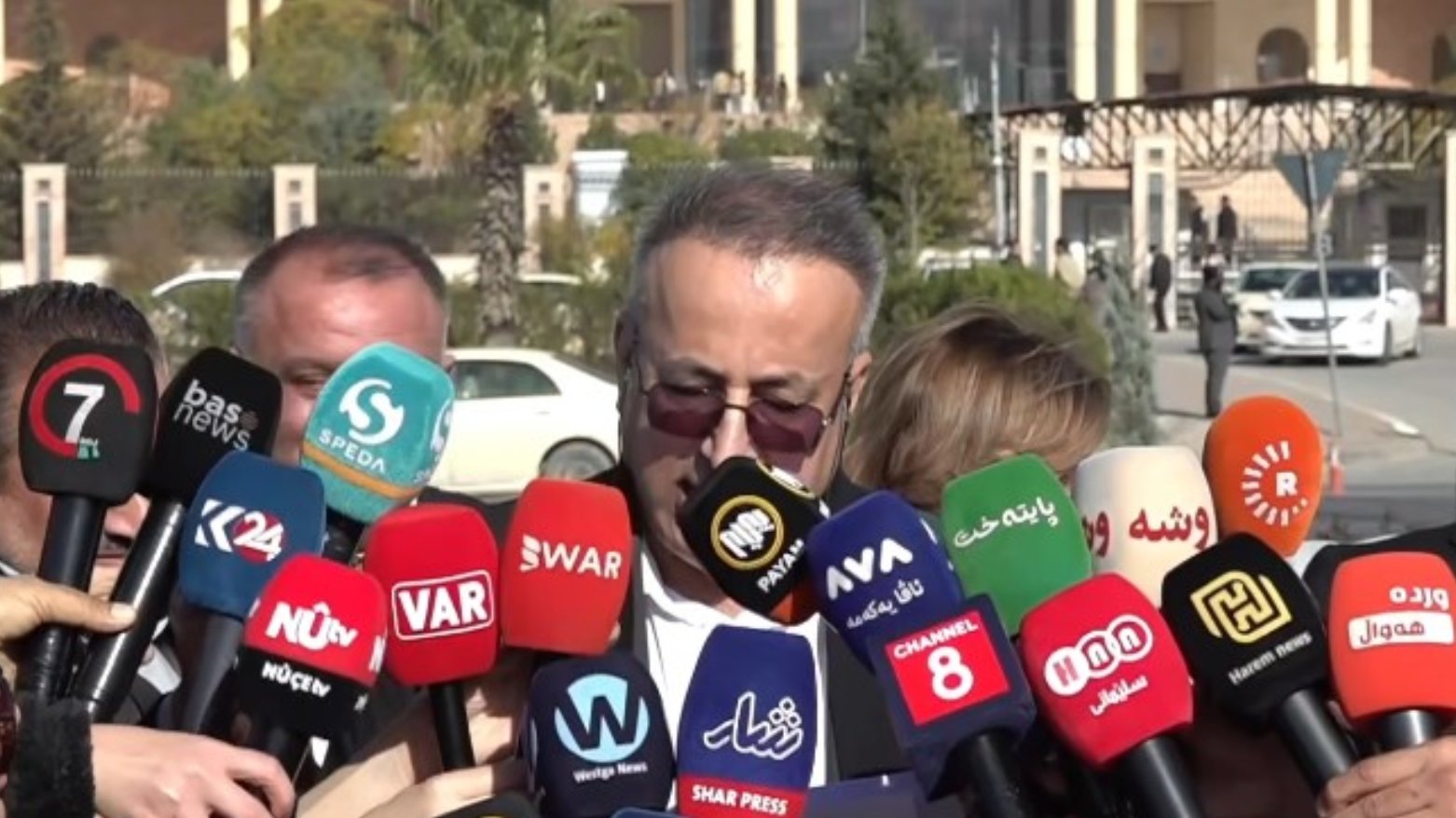
ERBIL (Kurdistan24) - Lawyers representing imprisoned People's Front leader Lahur Sheikh Jangi said Sunday that the legal right to transfer the case of detainees arrested following last year's deadly Lalezar Hotel clashes in Sulaimani has been violated, calling for the proceedings to be referred to the Court of Cassation.
Speaking at a press conference in Sulaimani on Nov. 22, 2026, Sheikh Jangi's legal team raised allegations of partisan influence surrounding the case and argued that the detainees should be judged solely on the available evidence.
The lawyers set out two principal objections. First, they described the Lalezar proceedings as emblematic of a difficult political period in which, they alleged, "partisan influence and armed forces are attempting to silence the voice of the people."
Second, they asserted that the detainees were being treated as "partisan hostages," placing responsibility for their situation on the parties they accused of imposing the sentences.
The team requested that the detainees' case be referred to the Court of Cassation and that any further judicial proceedings follow the law and rely exclusively on the evidence available.
Its demand brings renewed attention to the handling of a case that has remained politically contentious since an armed confrontation at the Lalezar Hotel in August 2025.
The confrontation began in the early hours of Aug. 22, 2025, when commando and counter-terrorism forces affiliated with the Patriotic Union of Kurdistan (PUK) moved against the hotel in Sulaimani, where Sheikh Jangi was staying.
Fighting followed between those forces and gunmen from the People's Front's special forces. The clashes lasted about four hours, involved heavy weapons and left several armed personnel on both sides dead or wounded.
Sheikh Jangi, his brother Polad and dozens of others were arrested after the operation. Lahur Sheikh Jangi and a number of the other detainees have remained in prison since then.
On Oct. 15, 2026, Sulaimani's Second Criminal Court handed down sentences under Article 56 of the Penal Code. Lahur Sheikh Jangi received five years and three months in prison, while his brother was sentenced to three years and six months.
Eight other defendants received prison terms of varying lengths, and two were acquitted. Those rulings provide the immediate judicial backdrop to the lawyers' latest demand for the case to reach the Court of Cassation.
The case also intersects with political developments involving the People's Front, which Sheikh Jangi founded after losing his position in the PUK leadership in 2021. He had previously served as the party's co-president.
The People's Front won two seats in the sixth-term Kurdistan Parliament elections held on Oct. 20, 2024, giving the party representation in the legislature as negotiations continue over the formation of the Kurdistan Regional Government's tenth cabinet.
A source close to Sheikh Jangi told Kurdistan24 on Saturday, Nov. 21, that he opposed proposals to separate Sulaimani from the Kurdistan Region and supported the People's Front participating in the next KRG cabinet. The source said the party leadership shared that position, but no finalized coalition agreement or ministerial portfolio was identified.
According to the same source, Sheikh Jangi and Polad were in good health and had recently received visits from relatives and lawyers without restrictions. That account did not address the procedural allegations raised at Sunday's press conference.
Read More: Lahur Sheikh Jangi Rejects Sulaimani Separation, Backs KRG Cabinet Role
The lawyers' latest intervention places the judicial handling of the Lalezar case back in focus, with their demand centered on referral to the Court of Cassation and proceedings determined by evidence rather than what they describe as partisan considerations.