Aziz Ahmad: Young People Form the Backbone of Kurdistan Region's Government Reform Agenda
Kurdistan Region Prime Minister's Office employs around 750 people with an average age of 26 to 30, while more than 600 young people contribute to major digital and public service initiatives
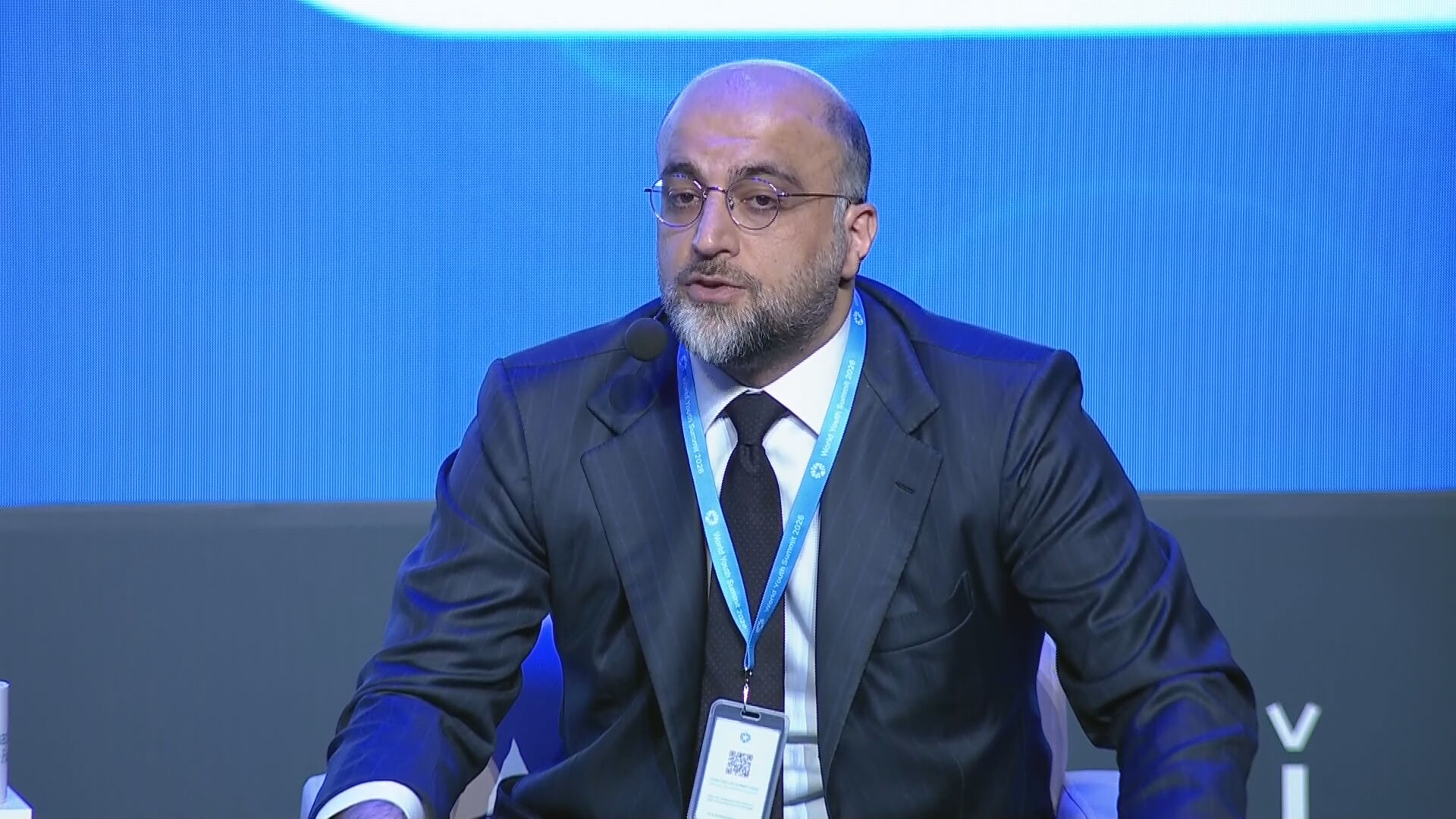
ERBIL (Kurdistan24) — Aziz Ahmad, Deputy Chief of Staff to Kurdistan Region Prime Minister Masrour Barzani, has highlighted the growing role of young people in government decision-making and reform initiatives, revealing that approximately 750 people work at the Prime Minister's Office, with an average age of between 26 and 30.
Speaking on Tuesday, during a special panel on youth and the future of the Kurdistan Region, organized by Kurdistan Foundation as part of the World Youth Summit Kurdistan 2026 in Erbil, Ahmad described the Prime Minister's Office as a small-scale example of the governance model the Kurdistan Regional Government (KRG) seeks to establish.
Responding to a question about the representation of young people within the Prime Minister's team, Ahmad identified three key principles guiding its work: empowering employees to work independently, encouraging them to challenge established ideas and offer criticism, and relying on data and scientific research to implement reform programs.
He urged young participants and other attendees to move beyond simply praising speakers and instead challenge their arguments, ask difficult questions, and critically examine the future of the Kurdistan Region and its younger generation.
Ahmad added that Prime Minister Masrour Barzani had given his team broad freedom to conduct research into the Region's challenges without restrictions, emphasizing the importance of evidence-based policymaking.
Education and Preparing the Next Generation of Leaders
Addressing the education sector, Ahmad described preparing the next generation of leaders as a genuine challenge, identifying three major factors contributing to the problem.
These include the continuous transformation and expansion of the private sector in response to changing needs, a suspension of public-sector recruitment lasting more than a decade, and a fundamental mismatch between the skills currently demanded by the labor market and private businesses and those possessed by many young people.
He emphasized that these challenges require greater attention to developing the skills and capabilities needed to prepare young people for emerging employment opportunities and future leadership responsibilities.
More Than 600 Young People Working on Digital Initiatives
Ahmad also highlighted the contribution of young people to the KRG's public service and digital transformation initiatives, including the Runaki electricity project and MyAccount digital platform.
He revealed that more than 600 young people from across the Kurdistan Region are employed in these programs, with an average age of 26, demonstrating the role of younger professionals in implementing major government initiatives.
Merit-Based Recruitment and Equal Opportunities
Concluding his remarks, Ahmad stressed that political background, ideology, and ethnicity play no role in the government's recruitment process.
"The Prime Minister's vision is that recruitment in the public sector should be based solely on competence and nothing else; young people are at the heart of this program," he said.
His remarks came during the World Youth Summit Kurdistan 2026, a three-day international gathering running from Nov. 24 to 26 in Erbil under the theme "Shaping the Future."
Organized by Kurdistan Foundation, the summit brings together more than 800 young participants and representatives from 47 countries, alongside government officials, ministers, international organizations, and youth leaders.
The summit focuses on youth leadership, education, employment, artificial intelligence, climate action, and international cooperation, providing a platform for young people to engage with policymakers and develop practical policy proposals addressing challenges facing their generation.
Ahmad's presentation highlighted the KRG's emphasis on youth participation, merit-based public-sector recruitment, digital transformation, and evidence-based governance as key elements of its broader reform agenda.