Kurdistan Region Prime Minister Barzani Says Iraqi Government Statement Is Unacceptable
Masrour Barzani says Baghdad's latest announcement contradicts previous understandings, while addressing the 2027 budget, natural resources, and relations between Erbil and Baghdad
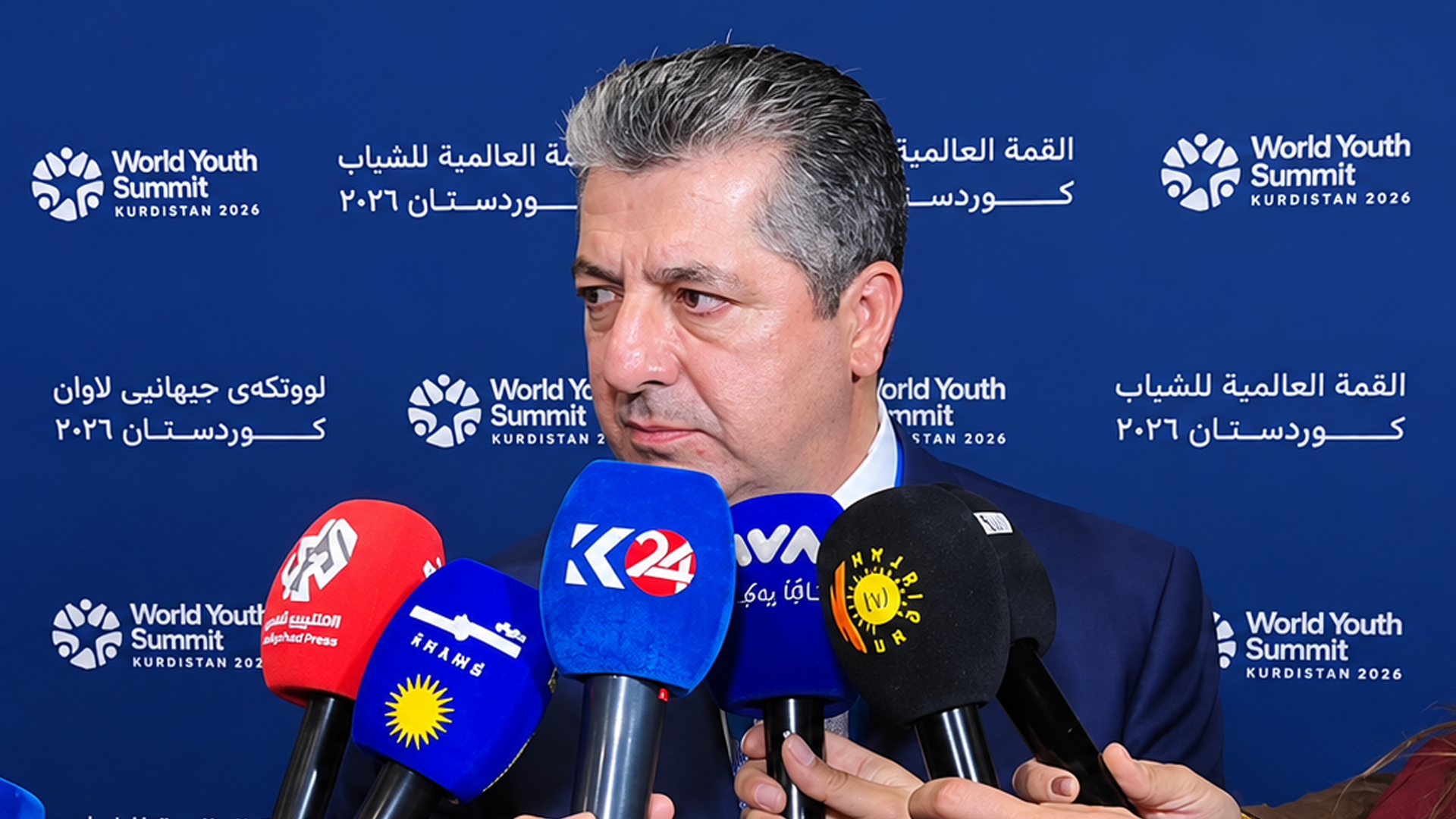
ERBIL (Kurdistan24) — Kurdistan Region Prime Minister Masrour Barzani on Tuesday described a new statement issued by the Iraqi federal government as unacceptable, saying it contradicted the understandings reached during previous discussions between Erbil and Baghdad.
Speaking to reporters on the sidelines of the World Youth Summit Kurdistan 2026 in Erbil, Barzani called for greater internal unity, stressing that protecting the Kurdistan Region's constitutional status and political entity must take precedence over personal and party interests.
He urged all political parties and citizens to recognize what he described as their historic responsibility to safeguard the Region's political experience and institutions.
“I hope all sides realize that protecting the Kurdistan Region's entity and preserving this great experience are far more important than any personal or party achievement,” Barzani said. “We are ready to set aside our disagreements and all become Peshmerga to protect the Kurdistan Region's entity.”
Addressing the Iraqi government's statement, Barzani said it had taken his government by surprise because it did not reflect the substance of previous discussions with federal authorities.
“We were surprised by the statement issued today because it does not correspond with the content of the discussions we previously had with the authorities in Baghdad,” he said.
Barzani explained that the federal negotiating delegation had conveyed a different message to Erbil, indicating that the two sides were moving toward resolving their outstanding disputes on the basis of Iraq's Constitution.
“Therefore, what was done today is in no way acceptable,” he said.
Natural Resources and Constitutional Rights
Turning to a recent trilateral meeting concerning the Khor Mor gas field, natural gas developments, and decisions by the Iraqi prime minister, Barzani said the discussions had made significant progress toward establishing mechanisms to implement the Kurdistan Region's constitutional rights over its natural resources.
He stressed that any arrangements outside the constitutional framework would be unacceptable to the Kurdistan Region, while expressing readiness to coordinate with Baghdad and energy companies in the interests of Iraq's natural resources and population.
“We are ready to coordinate with Baghdad and the companies so that this serves the interests of natural resources and the people of Iraq, but promises have repeatedly been made and have not been implemented,” he said.
The prime minister also called on the international community to respect Iraq's Constitution and help ensure that the constitutional rights of the Kurdistan Region and the country's federal system are upheld. He said international partners should act as guarantors of the constitutional framework and support the rights of the people of Kurdistan and federal Iraq.
Dialogue With Baghdad Remains Open
On the prospects for resolving outstanding disputes between Erbil and Baghdad, Barzani said the door to dialogue remained open and reiterated that his government believed all issues could be addressed through negotiations.
However, he emphasized that any agreement must be grounded fully in the Constitution rather than unilateral decisions or measures that undermine the Region's constitutional rights.
“We will continue dialogue. No unconstitutional step is acceptable to the Kurdistan Region, but if it is based on the Constitution, the door is open for us to reach a common understanding on all issues,” he said.
Barzani also expressed hope that the Erbil Summit would continue to be hosted in the Kurdistan Region in the coming years, adding that the Region should remain an active participant in such conferences and international gatherings.
His remarks come amid longstanding disputes between Erbil and Baghdad over the Kurdistan Region's share of the federal budget, public-sector salaries, oil and gas management, and the implementation of constitutional provisions governing federal relations. Negotiations over these issues have continued through meetings between senior officials from both governments, but key disagreements remain unresolved.