Inside Dilman, the Village Where Prime Minister Masrour Barzani Was Born
In Dilman, a Peshmerga veteran recalls Prime Minister Masrour Barzani's birth in a tent in 1969, as he reflects on displacement, the Peshmerga and education.
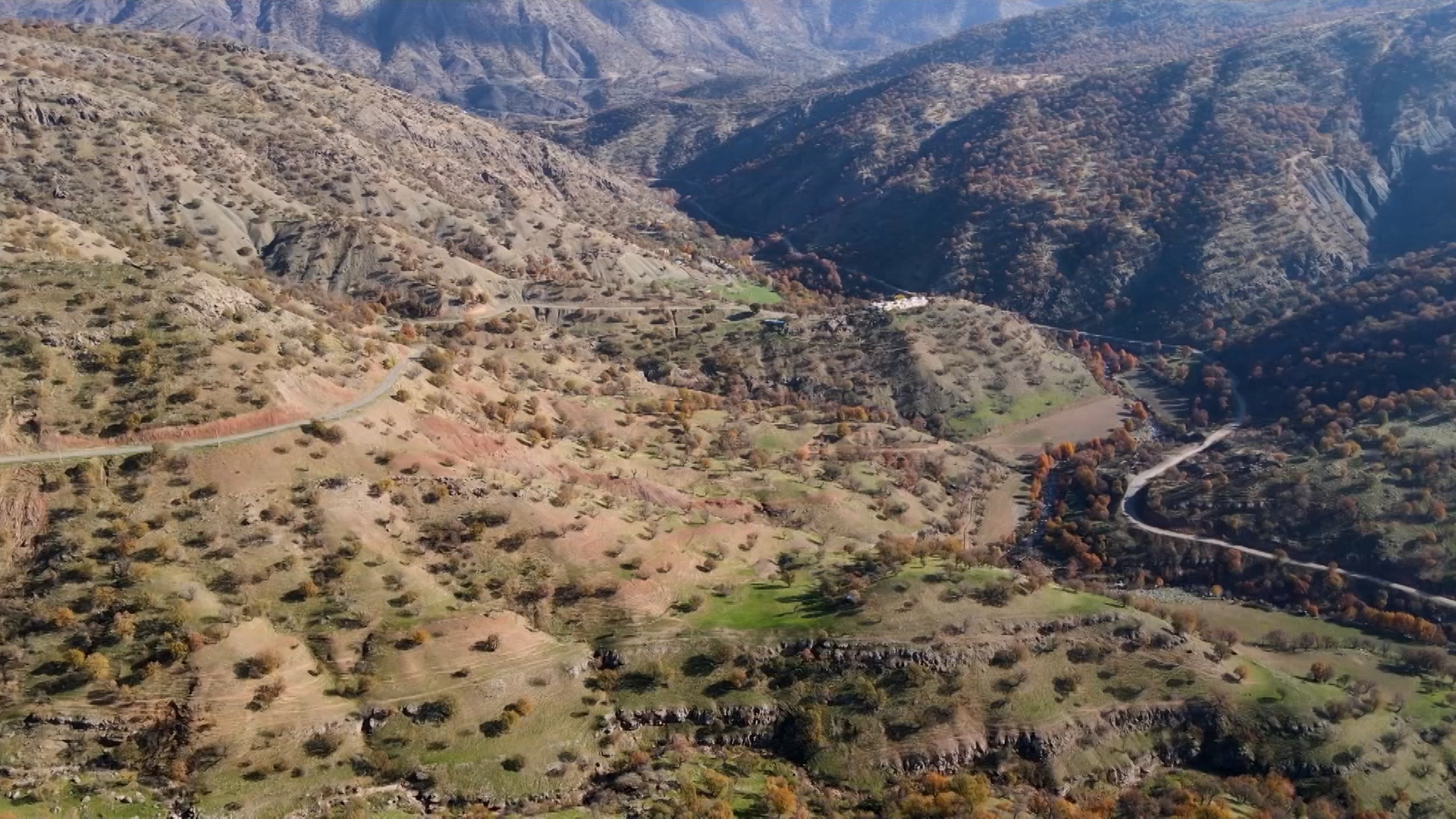
ERBIL (Kurdistan24) - The building that once helped direct the Kurdish revolution is now in ruins. Nearby, beneath a rock surrounded by reeds and oak trees, veteran Peshmerga Mam Said Khan points to the place where Kurdistan Region Prime Minister Masrour Barzani was born: not in a hospital or a house, but under a tent.
"He was born here, under a tent," Mam Said Khan told Kurdistan24 correspondent Abubakir Sleman during a visit to Dilman village in the Balakayati region. "In the year 1969, on March 2, he was born here."
Mam Said Khan remembers the violence and insecurity of that period as vividly as the location itself. "He was born right in the fire," he said, linking those circumstances to the resilience he believes Prime Minister Masrour Barzani displays today.

A Village That Remembers
Moving through the remains of the old building, Mam Said Khan pointed out where the kitchen once stood. The site was not only associated with the Kurdish revolutionary movement. It also held memories of education pursued in unusually difficult conditions.
He recalled a school attended by both villagers and Peshmerga, with fighters coming to study after dark. "At night, the Peshmerga studied. I myself studied lessons there," he said.
For another Dilman resident, those memories extend beyond the fighting. He described the Barzanis as a source of education and support for local people, recalling their relationships with villagers and saying he never experienced discrimination.
"They were a source for educating people, enlightening people," the resident said. "As Kak Masrour was born in this village, we always consider him from this village."
Sleman's visit captured a village that is peaceful today but where ruined walls, rocks and pathways remain tied to memories of bombardment, displacement and the Kurdish struggle. For those who lived through those years, the birthplace is part of the village's own history, not simply a detail in a political biography.

From Displacement to the Peshmerga
At the World Youth Summit in Erbil on Tuesday, Nov. 24, 2026, Prime Minister Masrour Barzani reflected on a later chapter of his life, including his decision to join the Peshmerga at 16.
"We were displaced when I was 16 years old. We were refugees in a neighboring country," he told participants at the summit, attended by young people and guests from 47 countries.
Still in secondary school, he said he admired the Peshmerga around him, including his father and relatives, and wanted to spend his summers experiencing their lives. Despite the hardships of displacement, he described taking up arms as a personal decision rather than an obligation.
"It was not out of necessity. It was because of my own desire and choice that I wanted to become a Peshmerga," he said.
He completed secondary school at 17 but could not enter university until approximately 22. He later studied in Britain and at American University in Washington, where he sought to strengthen his English and pursue his education in international relations.
He said he felt a responsibility to represent Kurdish students who lacked similar opportunities, remembering that he was the only Kurd at his university. This, he explained, motivated him to work intensely and seek to rank among the best students.

The Weight of Earlier Generations
Prime Minister Masrour Barzani also spoke about the distance between his generation's experience of displacement and the opportunities available to young people today.
"I hope the new generation never has to live the life of previous generations because it was extremely difficult," he said, urging young people to learn from the past without having to endure it themselves.
Back in Dilman, Mam Said Khan's recollections place that history in a specific setting: a tent beneath a rock, a school and a building whose ruins are still standing. More than five decades after that birth, the village continues to regard Prime Minister Masrour Barzani as one of its own.