Baghdad-Erbil Crisis Reflects Unresolved Federalism Question: Iraqi Politician
Iraqi Sunni Muttahidoon Party official Khalid al-Dabouni says Baghdad-Erbil disputes stem from mistrust and unimplemented federalism ahead of the planned Dec. 1 dialogue.
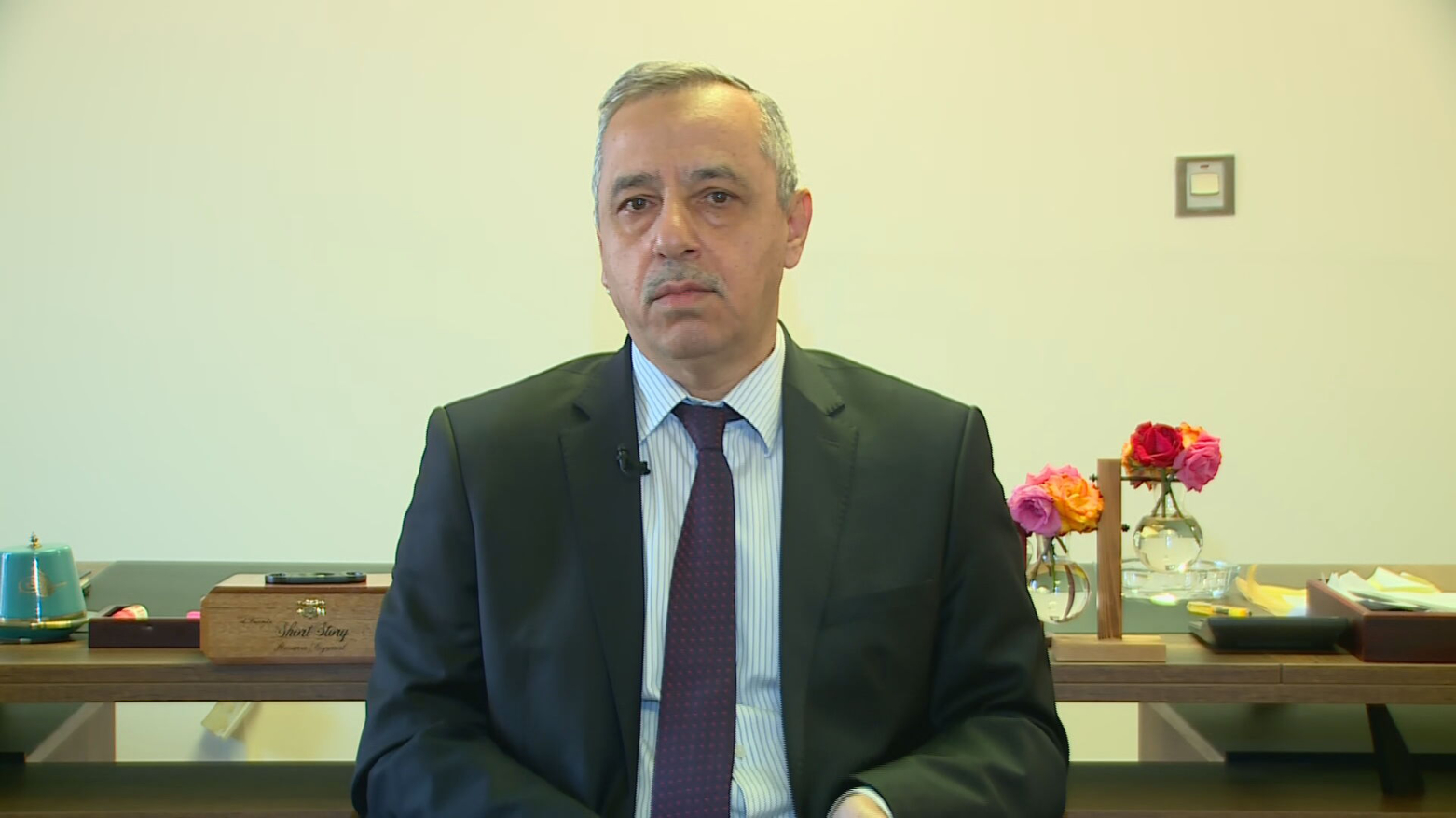
ERBIL (Kurdistan24) - Iraq's recurring disputes with the Kurdistan Region are driven by a longstanding lack of trust and the failure to implement federalism, rather than disagreements over individual budget allocations or border crossings, senior Muttahidoon Party figure Khalid al-Dabouni said Saturday.
In an interview with Kurdistan24 on Nov. 28, al-Dabouni argued that political leaders have spent more than two decades responding to each crisis with temporary arrangements while avoiding a fundamental question: whether Iraq is to function as a centralized state or as the democratic federal republic envisaged in its Constitution.
The unresolved issue, he said, has allowed disputes over oil, revenues and administrative authority to return repeatedly, often after earlier agreements appeared to have eased tensions.
Al-Dabouni traced the problem to the political order established after 2003, arguing that successive governments have failed to create the mechanisms needed to give federalism practical effect.
Although Iraq's Constitution defines the country as democratic and federal, he said, regional and provincial authorities have not received meaningful control over their political, security and economic affairs. He singled out Articles 119 and 120, concerning the formation and organization of regions, as provisions whose implementation remains inadequate.
His criticism extended beyond the Kurdistan Region. Basra, he noted, has sought greater recognition of its constitutional powers for roughly a decade, while other provinces have encountered similar resistance from Baghdad. The common obstacle, in his assessment, is the federal government's unwillingness to trust authorities outside the capital.
He also questioned how constitutional provisions are interpreted, arguing that competing political actors stretch their meaning to support immediate interests rather than agree on consistent rules.
Article 140, which provides for normalization, a census and a referendum to resolve the status of disputed territories including Kirkuk, remains unimplemented in his account. He pointed as well to Iraq's failure to enact a federal oil and gas law, another longstanding source of disagreement over control of natural resources.
For al-Dabouni, these are connected shortcomings. Addressing one contested measure without resolving the wider constitutional framework, he argued, would merely prepare the ground for the next crisis.
His remarks follow directives issued by Iraqi Prime Minister Ali al-Zaidi on Nov. 24 concerning federal control of oilfields, border crossings and oil exports in the Kurdistan Region. The measures also included a temporary suspension of petroleum-product allocations to companies and factories, while a subsequent Federal Supreme Court ruling reinforced Baghdad's position on federal authority.
Baghdad has presented its approach as part of efforts to curb oil smuggling, combat corruption and enforce federal responsibilities. Kurdish leaders and institutions have rejected what they consider unilateral encroachments on the Region's constitutionally recognized powers, prompting demonstrations in Erbil on Nov. 26.
Al-Dabouni acknowledged that the federal government's anti-corruption drive began in Jurf al-Sakhar and central Iraq before extending elsewhere. Nevertheless, he said, Kurdish concerns that the campaign could be used to curtail the Region's authority were understandable.
He also criticized the manner of the announcements. Decisions of this political sensitivity, he argued, should be communicated by civilian authorities or a government spokesperson, rather than through the office of the commander-in-chief of the armed forces. The military framing, he said, heightened anxiety among Kurds.
Unilateral orders from Baghdad cannot settle the underlying dispute, al-Dabouni maintained. He proposed joint committees covering security, oil and administrative matters as a practical way to restore trust and negotiate responsibilities.
The Muttahidoon official said al-Zaidi's government faces substantial pressure to find a way out of the confrontation. He expressed hope that the national dialogue scheduled for Dec. 1 under Supreme Judicial Council President Faiq Zaidan would produce more than another short-lived compromise.
"I believe solutions exist and will be presented at the upcoming meeting, which will take place on Dec. 1, at the beginning of next month, and it will have a significant impact," he said.
Al-Dabouni welcomed what he characterized as reassuring statements from the Coordination Framework, the Federal Supreme Court and federal officials indicating that military force would not be used and that coordination with the Kurdistan Region remained the preferred course.
Yet he cautioned that political resistance to a lasting settlement persists within Baghdad. Some parties, he alleged, want to reduce the Kurdistan Region's powers, while others benefit politically from unresolved disputes and have obstructed earlier efforts by prime ministers to improve relations.
For al-Dabouni, the test of the December talks will be whether participants can move beyond emergency arrangements and confront the constitutional disagreements and mistrust that have repeatedly brought Baghdad and Erbil back into conflict.