Saudi Arabia Intercepts Houthi Missile Targeting Riyadh as Strikes Hit Yemen’s Capital
The latest Saudi-Houthi attacks come as Yemen faces mass displacement and a deepening humanitarian crisis, with millions lacking food and basic assistance
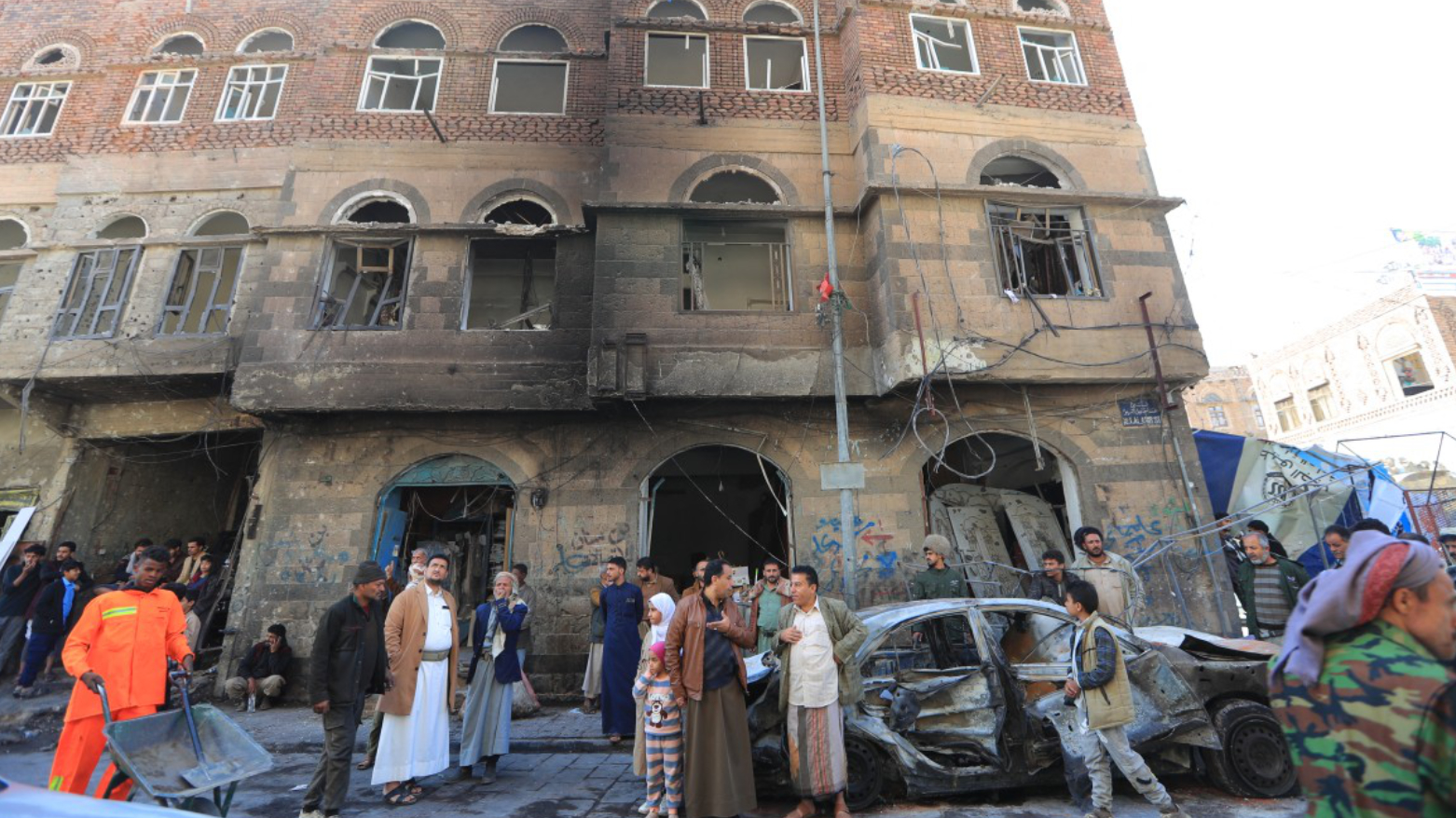
ERBIL (Kurdistan24) — Saudi Arabia said Saturday that its air defenses intercepted a cruise missile targeting the capital, Riyadh, as Houthi media reported Saudi strikes on Yemen’s capital, Sanaa, in another escalation of hostilities between the two sides.
Saudi coalition spokesperson Turki Al-Malki said in a post on X that air defenses had intercepted and destroyed a cruise missile launched by what he described as the “Houthi terrorist militia” toward the Riyadh region.
Meanwhile, the Houthi-run Saba news agency reported that Saudi forces had attacked a residential neighborhood in Sanaa, which the Iran-backed group controls.
“Eight homes and three shops were damaged after Saudi enemy forces targeted the residential neighborhood of Bir Abu Shamlah in Al-Tahrir district, Sanaa,” Saba reported on Telegram.
The Houthi-affiliated Almasirah television network said the attack wounded 13 people.
Later on Saturday, the Saudi-led coalition announced that its forces had also intercepted ballistic missiles fired by the Houthis toward southern Saudi Arabia, prompting civil defense authorities to issue warnings.
The latest exchange comes amid a renewed escalation of Yemen’s long-running civil war.
The Saudi-led coalition, which supports Yemen’s internationally recognized government, has continued airstrikes against areas under Houthi control, while the group has increasingly targeted Saudi territory, including energy infrastructure, airports, and Riyadh’s financial district.
Yemen's Humanitarian Crisis Deepens
The renewed fighting is unfolding as Yemen faces one of the world's most severe humanitarian emergencies, with millions of people struggling with hunger, displacement, and a shortage of essential assistance.
Jan Egeland, head of the Norwegian Refugee Council (NRC), told AFP on Friday during a visit to Sanaa that more than 20 million people in northern Yemen were not receiving the assistance they needed to maintain a minimum standard of living.
“Millions and millions are starving and have desperate needs,” Egeland said, describing the humanitarian situation in Houthi-controlled areas as among the worst he had witnessed during his years of humanitarian work.
He highlighted a significant disparity between Yemen's government-controlled south, where numerous international organizations remain active, and the north, where humanitarian operations have been severely restricted.
Egeland attributed the worsening conditions to a combination of inadequate international funding, restrictions on humanitarian organizations, sanctions, and the detention of aid workers by Houthi authorities.
The United Nations announced last month the death of its employee Mohammed Al-Shami, who had been detained by Houthi authorities since 2024. UN spokesperson Farhan Haq said 71 UN employees remained in Houthi custody.
The funding shortfall has further compounded the crisis. According to Egeland, the UN's 2026 appeal for basic assistance was only 20 percent funded, while its emergency shelter appeal had received just 13 percent of the required funding.
He urged the international community to facilitate the return of UN agencies and strengthen humanitarian operations, warning that aid organizations could not reach everyone in northern Yemen without the United Nations.
Yemen's frozen civil conflict reignited in July amid the wider regional war in the Middle East, displacing more than 340,000 people in recent months, according to the International Organization for Migration.
Egeland warned that the humanitarian situation was deteriorating across the country, including in government-controlled areas, where the city of Taiz has faced a worsening food crisis amid a Houthi siege.
He cautioned that deaths linked to acute malnutrition could increase over the coming six months, particularly among children exposed to disease, unsafe drinking water, and inadequate medical care.
Describing Yemen as a neglected humanitarian emergency, Egeland warned that conditions were now worse than at any point during his previous visits to the country.