
Tara Shwan
Writer
What the World’s Largest U.S. Consulate in Erbil Signals, and the Benefits It Brings
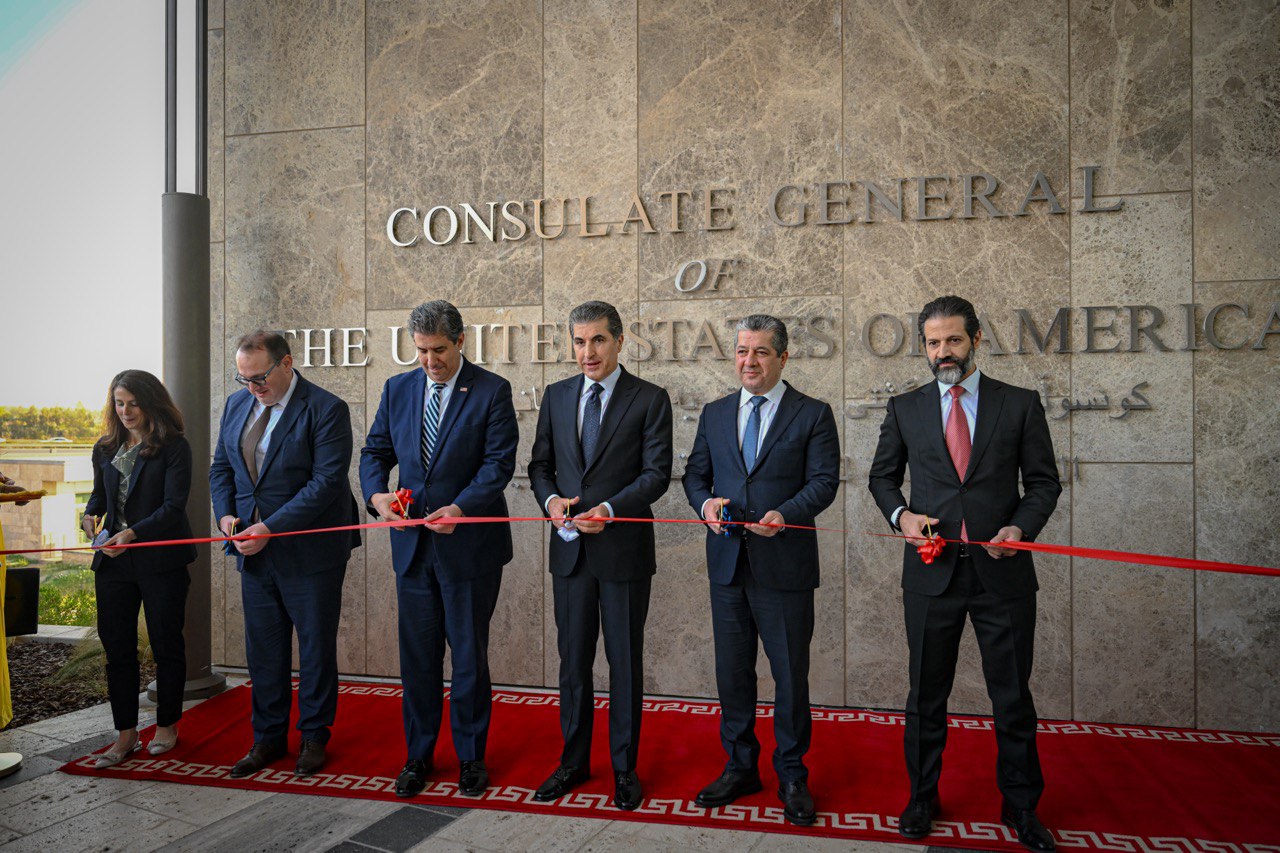
The opening of the largest U.S. consulate in the world in Erbil is far more than a construction project, it is a strategic declaration. Built on roughly 50 acres, costing $796 million, and designed to host up to a thousand people with its own offices, residences, security infrastructure, and support facilities, the consulate signals a deep and long-term American commitment to the Kurdistan Region of Iraq. Its sheer scale and permanence show that the United States is planning for sustained engagement, not a temporary or symbolic presence.
For Washington, Erbil provides a stable and strategically located platform in a turbulent region. American diplomats and officials consistently describe the Kurdistan Region as a capable security partner, a trusted voice, and a gateway to broader markets and geopolitical influence. The region’s relative calm, compared with much of Iraq and the Middle East, makes it attractive for U.S. diplomacy, intelligence cooperation, counterterrorism work, and long-term strategic planning. As former and current U.S. officials have stated, the size of the new consulate underscores a long-term vision for strong U.S.–Kurdistan relations.
Economically, the consulate strengthens the foundation for expanded American investment. U.S. officials highlight the Kurdistan Region as a “dynamic entry point” to Iraq’s markets, and the new diplomatic hub makes it easier and safer for American companies to operate in the region. This can bring greater foreign investment, new development projects, stronger commercial ties, and more opportunities for local employment. For the Kurdistan Regional Government, the consulate boosts international visibility and legitimacy, increasing the Region’s leverage both within Iraq and with global partners.
Politically, the move elevates Erbil’s status on the world stage. A consulate of this magnitude expands diplomatic channels, strengthens cooperation in governance and humanitarian efforts, and positions the Kurdistan Region as an increasingly significant actor in regional affairs. Kurdish leaders view the opening as a clear political message, a vote of confidence in the Region’s stability, reliability, and importance to U.S. regional strategy.
At the same time, American officials have emphasized that the decision is not naïve about ongoing risks. The Middle East remains volatile, and the Kurdistan Region is still affected by broader regional tensions, including actions by Iran-aligned militias. Even during the opening ceremonies, U.S. leaders publicly called for dismantling destabilizing armed groups, an acknowledgment that the region, while comparatively stable, is not free from threats. The consulate’s presence itself increases Erbil’s strategic significance, which can create new security pressures.
Still, the overarching message is unmistakable: the United States sees the Kurdistan Region as one of the most stable, dependable, and strategically valuable partners in Iraq and the Middle East. The new Erbil consulate represents a major investment in diplomacy, security, and economic cooperation, a structural commitment that is designed to endure for decades. It signals confidence in the Region’s trajectory while recognizing that stability is always relative in such a complex part of the world.
In essence, the opening of the world’s largest U.S. consulate in Erbil is both a practical and symbolic act. Practically, it creates a powerful hub for diplomatic work, security coordination, and economic engagement. Symbolically, it affirms that the United States views the Kurdistan Region as stable enough to invest in heavily, and strategically important enough to become a centerpiece of its Middle East presence. It is a long-term bet, one that reflects trust, partnership, and the belief that the Kurdistan Region will continue to play a key role in shaping the future of Iraq and the wider region.
The views expressed in this article are those of the author and do not necessarily reflect the views of Kurdistan24.