
Tara Shwan
Writer
Inside Congress A Defining Hearing on Syria’s Future
Tara Shwan analyzes the U.S. House hearing signals a strategic shift on Syria, with the Kurdish question now central to stabilization efforts-not an afterthought.
A recent hearing before the U.S. House Foreign Affairs Committee titled Syria at a Crossroads U.S. Policy Challenges in the Post-Assad Era offered one of the clearest windows yet into how Washington is reassessing its approach to Syria. For more than three hours, lawmakers and expert witnesses engaged in detailed and at times pointed discussion about where the country stands today and where it may be headed in the coming years. Beyond policy nuances, the hearing revealed a broader strategic recalibration that could shape American engagement with Syria at a pivotal moment.
The framing of the session itself was telling. Describing Syria as being at a crossroads reflects recognition that the status quo is neither stable nor sustainable. More than a decade of conflict has left deep institutional, economic, and social fractures. Yet the post-Assad phase, however defined in practical terms, is increasingly viewed not only as a period of risk but also as a window of opportunity. The central debate in Congress was not whether Syria faces profound challenges. That is widely accepted. The debate centered instead on whether current conditions present a viable path toward stabilization and what role the United States should play in shaping that trajectory.
Throughout the hearing, witnesses presented differing emphases. Some highlighted the fragility of the security environment and the danger of renewed violence if political processes stall. Others focused on diplomatic openings, regional shifts, and the possibility of rebuilding state institutions under a coherent national framework. While disagreements emerged over tactics and timelines, there was a noticeable convergence around one core idea. Syria’s direction over the next few years will depend heavily on whether political agreements are implemented in good faith and whether international actors align their policies with the goal of long-term stability rather than short-term maneuvering.
The most defining moment of the hearing came when Committee Chairman Brian Mast asked a forward-looking question that cut through technicalities. He challenged the witnesses to project ahead one year or three years and assess where Syria is likely to stand based on current dynamics. It was a strategic pivot from analysis of the present to accountability for the future. His question underscored the reality that policy choices made now will determine whether Syria consolidates fragile gains or reenters a cycle of fragmentation.
The responses reflected cautious but discernible optimism. Several experts argued that Syria is not destined for perpetual instability. They pointed to the possibility of incremental progress if security structures are strengthened, if political commitments are honored, and if economic engagement is pursued responsibly. The emphasis was not on dramatic transformation but on steady consolidation. Stabilization in this view requires reinforcing institutions, promoting inclusive governance, and creating conditions that discourage renewed radicalization.
A recurring theme in the discussion was national cohesion. Witnesses stressed that integrating diverse communities within a unified political framework is essential to preventing the entrenchment of parallel authorities or competing centers of power. The economic implications were also clear. Investors, regional partners, and international institutions are unlikely to commit substantial resources to a landscape defined by uncertainty and divided governance. Unity therefore is not simply a political aspiration but a practical prerequisite for reconstruction and growth.
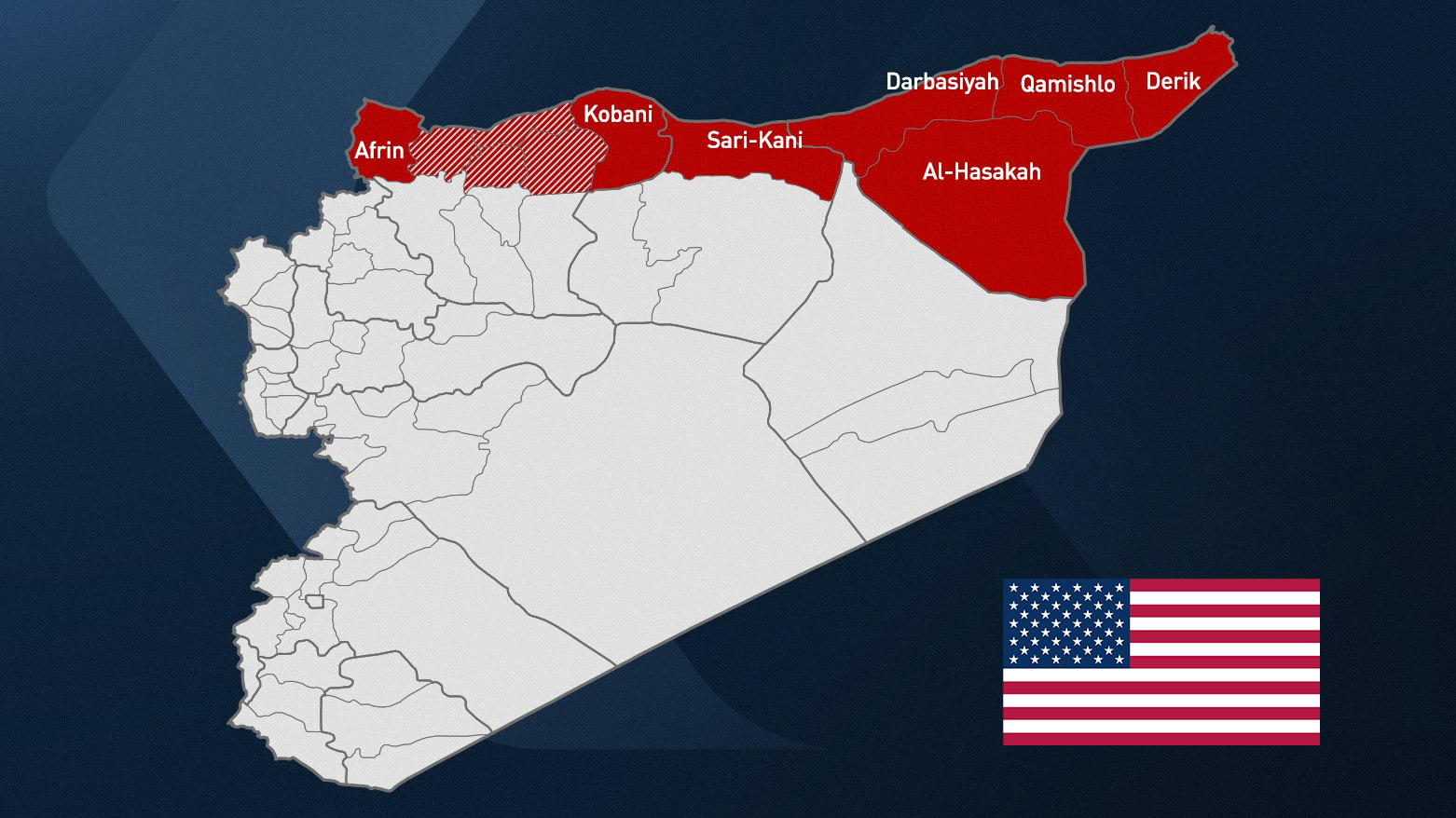
Within this broader conversation, the Kurdish question remains central to Syria’s future. Recent years have shown the Kurdish-led authorities in northeastern Syria navigating a complex landscape shaped by security pressures, regional rivalries, and shifting international commitments. The Syrian Democratic Forces played a major role in the fight against ISIS and have maintained significant influence in parts of the northeast. At the same time, Kurdish communities have suffered horrific crimes. Testimonies presented at the hearing included video and photographic evidence of massacres targeting Kurdish civilians and fighters. Of particular concern were the accounts of Kurdish female fighters being deliberately killed or sexually assaulted, underscoring the gendered dimension of violence in the conflict and the vulnerability of women who defended their communities. These accounts brought a stark human dimension to the hearing, reminding lawmakers of the extreme risks faced by Kurds and the urgent need for accountability and protection.
Recent developments highlight the delicate balance between aspirations for local self-administration and the broader push toward reintegration under a unified national framework. Discussions about the future of northeastern Syria increasingly revolve around how Kurdish political and security structures might be incorporated into state institutions while preserving cultural rights, representation, and local governance mechanisms. For many Kurds, this moment carries both concern and opportunity. There is concern about losing hard-won autonomy and security guarantees. There is also the opportunity to secure formal recognition of political and cultural rights within a reconstituted Syrian state.
These dynamics reinforce the central message of the congressional hearing. The future of Syria cannot be separated from the future of its diverse communities, particularly the Kurds. Any durable stabilization effort must address inclusion, representation, and equitable governance. Ignoring these dimensions risks perpetuating instability. Addressing them constructively could strengthen national cohesion and affirm the rights of communities that have borne the brunt of conflict.
Realism tempered optimism in the hearing. Several participants acknowledged that violence may persist in localized areas and that setbacks are likely. Accountability processes, reconciliation efforts, and institutional reforms will require sustained commitment. The question raised implicitly throughout the session was whether the international community, particularly the United States, possesses the patience and strategic consistency necessary to support such a gradual process. Quick policy shifts or contradictory signals could undermine fragile momentum.
What was particularly striking was what the hearing did not prioritize. The conversation did not center on partitioning Syria or endorsing permanent fragmentation as an endpoint. Instead, the prevailing concern was how to prevent further disintegration and reinforce a coherent national structure capable of exercising authority across the country. This suggests that within this congressional setting, the dominant policy instinct leans toward preserving territorial integrity and strengthening centralized institutional capacity while encouraging inclusive governance arrangements.
The broader geopolitical context adds weight to these discussions. Regional actors are recalibrating their approaches to Syria, balancing security concerns with economic interests and diplomatic normalization efforts. Global powers are similarly reassessing their engagement amid shifting priorities. In this environment, United States policy decisions carry amplified significance. Clear objectives, coordinated diplomacy, and sustained engagement could help anchor a stabilization process. Ambiguity or disengagement could leave a vacuum filled by competing interests.
Ultimately, the hearing underscored that Syria’s crossroads is more than a rhetorical phrase. It represents a tangible strategic inflection point. The coming years will reveal whether incremental gains can accumulate into meaningful stability or whether unresolved tensions, particularly the unresolved security and political rights of Kurds and the protection of Kurdish women fighters, will resurface with greater intensity. The tone in Congress suggested awareness of both the risks and the opportunities. There was recognition that while Syria’s path forward is uncertain, it is not predetermined.
The challenge now lies in translating congressional discussion into coherent policy. Hearings provide a forum for debate and reflection, but they must be followed by sustained diplomatic, economic, and security initiatives if their insights are to have practical impact. The direction Syria ultimately takes will depend not only on domestic actors, including its Kurdish population and other communities, but also on the consistency and clarity of international engagement.
In that sense, the recent session on Capitol Hill may prove to be more than a routine policy review. It could mark an inflection point in how United States lawmakers conceptualize Syria’s future. Whether cautious optimism evolves into measurable progress will depend on decisions made in the months ahead. What is clear from the hearing is that the stakes are understood and that acknowledging the extreme suffering and rights of the Kurdish people, including the targeted violence against women fighters, is central to any inclusive and lasting solution.
By Tara Shwan,
Executive Director,
American-Kurdish Economic Institute, AKEI
The views expressed in this article are those of the author and do not necessarily reflect the views of Kurdistan24.