Yasa Masood Chalki
Writer
Narrative Pre-Positioning in a time of war: The Media Campaign Against the American University of Kurdistan
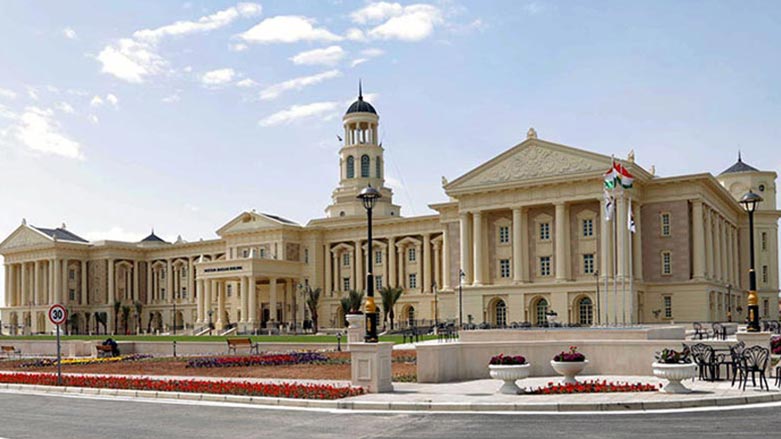
In the midst of the ongoing Iran war and continuous targeting of different institutions inside and outside Iran by both sides of the war, the Islamic Revolutionary Guard Corps (IRGC) announced on March 28, 2026 that American and Israeli universities across West Asia had been designated "legitimate targets," the statement landed with the weight its authors intended, a direct ultimatum, broadcast through Iranian state media, advising students, professors, and civilians to stay at least one kilometer away from such institutions or face the consequences. Within days, the United States Embassy in Baghdad issued its own warning, specifically naming the American University of Kurdistan in Duhok among the institutions that Iran and Iran-aligned groups "may intend to target." Two warnings, from opposite ends of a geopolitical fault line, converging on the same address.
What neither warning could have anticipated was that certain media outlets operating inside the Kurdistan Region would, at precisely this moment, choose to devote their coverage to publishing granular surveillance of that same university.
The American University of Kurdistan is not a political institution. It is not owned by Americans, it only uses American style of learning. Founded in 2014 in Duhok as a public, not-for-profit university, AUK was built on a straightforward premise: that the Kurdistan Region deserved a center of intellectual excellence, cross-disciplinary research, and the kind of liberal education that produces engineers, nurses, business leaders, and scientists rather than partisans. It holds no political affiliation. It wages no ideological campaign. Its four colleges, Engineering, Business, Arts and Sciences, and Nursing, are monuments to exactly the kind of future that responsible governance is supposed to protect.
That is precisely what makes the recent media campaign against it so remarkable in its cynicism.
Over recent days, several media channels with visible ties to a particular political current within the Kurdistan Region have published what can only be described as targeting packages. Detailed information about AUK, its layout, its operations, its visibility, circulated not in the form of academic critique or editorial commentary, but as the kind of granular, sustained coverage that serves no journalistic purpose except one: to ensure that those looking for a target know exactly where to look.
In any functioning media environment, the standard framework is clear. Outlets exercise editorial restraint during periods of heightened security risk. They do not publish surveillance profiles of civilian institutions when armed groups with a documented appetite for drone strikes against the Kurdistan Region are actively attacking Kurdistan. They do not amplify threat environments by handing potential attackers a roadmap. These are not abstract principles of press ethics. They are the minimum standards that separate journalism from operational facilitation.
What is being observed here crosses that line, not recklessly, but methodically.
Some paramilitary groups in Iraq have spent years probing the Kurdistan Region's defenses, targeting oil fields, airports, and infrastructure with drones that Kurdish authorities have traced to Iranian manufacture. The Iraqi paramilitary groups do not need detailed instructions from Tehran to act. What it needs, what any complex, networked militant structure needs, is local intelligence, local lobby, local orientation, and the political cover that comes from a local media narrative that has already framed the target as deserving of scrutiny.
That narrative is now being constructed, brick by brick, by outlets whose political loyalties are an open secret in Erbil and beyond.
There is a concept in strategic communication that analysts sometimes call narrative pre-positioning, the act of constructing a media environment in which violence, when it comes, appears to have been justified in advance. It is subtler than incitement. It is harder to prosecute. But it is no less deliberate. When a media outlet with a known political sponsor spends days providing detailed, visually supported information about an American university at the precise moment that Iran's military arm has declared such universities legitimate targets, the question of intent answers itself.
Political movements are responsible for the instruments they sustain. When those instruments begin functioning as amplifiers for threats that the United States Embassy has formally warned about, the distinction between editorial independence and political direction becomes, at best, unconvincing.
There are moments in every conflict when the architecture of future accountability is quietly assembled. Not by courts, not yet, but by documentation, by pattern, by the record of who said what when the signals were already clear. The IRGC issued its warning. The US Embassy issued its warning. And certain media channels, tethered to a specific political center of gravity, chose that window to flood the information environment with material that could serve no purpose except one.
History is watching. And in this region, history has a long memory.
The views expressed in this article are those of the author and do not necessarily reflect the views of Kurdistan24.