
Yasa Masood Chalki
Writer
Drones: The Turning Point in the History of Modern Terrorism
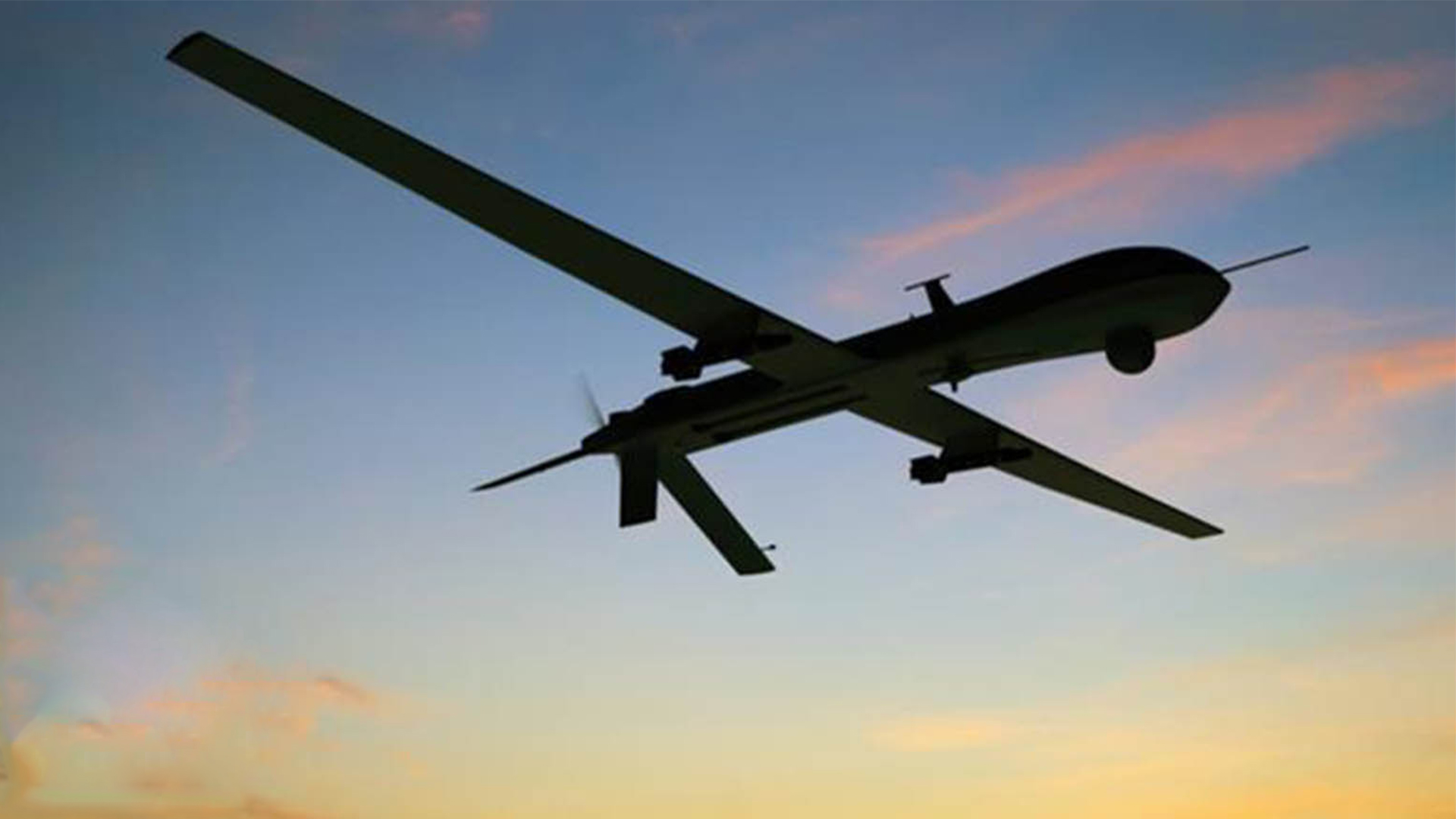
The attacker no longer needs a passport. They no longer needs explosives tucked beneath a coat, or a final phone call to someone he will never see again. A small device, guided by cold hands from a distant room, has rewritten the logic of political violence in ways that make everything we once understood about terrorism feel like a chapter from another century.
Since the summer of 2025, when oil fields across Kurdistan burned for days in succession, through that winter's midnight strike on the KhorMor gas field, and into the torrent of more than 450 drones and missiles that fell on Erbil and surrounding areas during the Iran-Israel-USA war in early 2026, one lesson has become impossible to ignore: terrorism has changed its face completely. What once demanded years of planning, recruitment, and infiltration now demands only a few minutes, a set of wires, and a remote control.
That transformation did not emerge from nowhere. The drone has a longer history than most people assume, and its roots run deep into the wars of the last century. The idea if older than the technology
In 1917, before the guns of the First World War had gone quiet, British engineer Archibald Low was already testing the first radio-guided aircraft. It failed technically, but it planted the seed. The Americans tried months later, failed equally, and shelved the file.
The Germans moved first this time during the WW2. The V-1 flying bomb was the first unmanned aerial weapon ever used systematically in warfare, thousands launched against London from 1944 onward, cheap to produce, simple in design, and requiring no pilot. Meanwhile, the Americans converted their aging B-17 bombers into massive flying explosives under Operation Aphrodite, and deployed the radio-guided TDR-1 against Japanese targets in the Pacific. The Japanese made a grimmer choice entirely: they put the human being inside the aircraft. The Kamikaze was not an act of heroism. It was a weapons system. The logic was identical in every case; send what will not return.
Israel, in the 1980s, read that lesson in its own way. Its HARPY loitering munition was the first true armed drone designed to hover over a battlefield for hours, hunting enemy radar systems before diving into them. Not a bomb to be dropped, but a predator that waits. Azerbaijan deployed it to devastating effect in the 2020 Karabakh war, dismantling Armenia's air defense architecture in a matter of days.
Then came 2016, and with it the most consequential development in this entire history. In a modest workshop in Ramadi, ISIS fighters taped a hand grenade beneath a cheap commercial quadcopter. On October 2nd, two Peshmerga fighters became the first martyrs in recorded history of a modified commercial drone strike. ISIS did not invent the concept, it proved that this weapon was no longer the exclusive domain of nation-states.
The United States Navy was paying attention. Its LOCUST program (Low-Cost UAV Swarming Technology) was being developed that same year: a system capable of launching dozens of small drones in rapid succession from a single tube, each communicating with the others, forming an intelligent swarm that can overwhelm any air defense system regardless of its sophistication. The gap between that program and ISIS's taped grenade is enormous. The underlying ambition is identical: disrupt the enemy from above, at minimum cost.
Ukraine completed the picture, though with numbers no analyst had previously imagined. Since 2022, FPV suicide drones (commercial racing aircraft fitted with explosives) have been manufactured by the tens of thousands every month. Russia imported Iran's Shahed-136, a delta-wing loitering munition it renamed the Geran-2 and began producing domestically; at the height of operations, Russian forces launched 728 of these in a single day against Ukrainian targets.
The cumulative weight of that history lands on one equation: what once required an army is now accessible to a cell, and what once required a cell is now accessible to an individual.
To appreciate what that means, consider what traditional terrorism actually demanded. A suicide attack was a fragile and expensive construction. The distance between the idea and its execution was measured in months, sometimes years. Before anything else, an organization had to find a person willing to trade their life for a single strike, a requirement that consumed enormous human energy: hundreds of hours of recruitment, persuasion, ideological indoctrination, religious lectures, coercion and incentive simultaneously applied. And there was never any guarantee the perpetrator would hold together psychologically until the final moment, because survival is the deepest instinct there is, and nature has a way of reasserting itself precisely when extremist ideology tries hardest to suppress it.
Then came the harder phase: getting that person into the heart of a fortified city. Checkpoints, cameras, intelligence assets scattered through markets and alleyways made infiltration close to impossible. The perpetrator needed forged documents, passed through rings of intermediaries, spent weeks hidden in safe houses waiting for the right signal. Every additional day multiplied the risk of exposure.
And the costs did not stop there, car bombs, explosive devices, logistical networks, a support chain that experience showed was perpetually vulnerable to informants, betrayal, and security penetration.
The drone eliminated all of it. No recruit, no perpetrator, no human body placed at risk. No need to breach a fortified city, no need to smuggle explosives, no safe houses or secret routes. The operator sits behind a screen in a darkened room, perhaps hundreds of kilometers from the target, guides the strike, and withdraws without leaving a trace.
Commercial drones are manufactured for hundreds of dollars and sold openly online. With simple technical modifications that anyone who can read an instruction manual can execute, they become weapons capable of carrying explosives and striking targets tens of kilometers away. Their small size renders them nearly invisible to conventional radar.
On the other hand: deniability. No one knows with certainty who launched the drone. No fingerprint, no witness, no thread that leads back to the sender. That equation makes political and legal attribution extremely difficult, and it grants the attacking party an exceptional advantage in a world governed by diplomatic calculation and accusations that require evidence, not just smoke.
The Kurdistan Region of Iraq stood squarely at the heart of this transformation and what happened on its soil in 2025 and 2026 deserves the kind of serious attention that every analyst concerned with regional security owes it.
Between July 14th and 16th of 2025, fires broke out across five major oil fields spanning the Erbil and Duhok governorates (Shaikhan, Tawke, Fishkhabur, Khurmala, and Sarsang). Approximately 220,000 barrels of daily production were knocked offline, accounting for over 70 percent of the Region's oil output. None of those fields was unguarded. The drones passed over them anyway. No party formally claimed responsibility.
On the night of November 26th, 2025, as midnight approached, two suicide drones breached the airspace above KhorMor gas field (Kurdistan’s electricity infrastructure), one of Iraq's largest. A storage tank ignited, flames spread to pipelines, electricity generation in the Region dropped immediately, and workers were rushed to concrete shelters. As in every previous instance: no one claimed the attack, and only the smoke bore witness to whoever had been there.
The most intense episode came during the Iran-Israel-USA war. From February 28, 2026 onward, Kurdistan media documented no fewer than 450 drones and missiles targeting the Region, Martyring at least 14 people and wounding 85 others, the densest period of sustained assault the area had experienced in years.
What amplifies the danger is that Kurdistan had historically defined itself as an island of stability in a sea of turbulence. That reputation attracted investment, international business, and major oil companies from the United States, Europe, and the Gulf. That stability is now being interrogated, not because the ground forces failed their duty, but because the threat arrived from the sky, from a direction where no barrier is raised and no passage can be denied.
The cost of drone armament is now within the reach of any actor with a few hundred dollars and electronics available in any commercial market. Private companies produce more capable, lighter, and harder-to-detect aircraft every day. As the pace of commercial technological development accelerates, classical air defense systems fall further behind, by steps sometimes, by miles at others.
This is what makes the coming period the most demanding in security analysis. We are confronting a model of terrorism that does not require the heavy organizational infrastructure or the enormous human investment that any major operation in the previous generation of extremism demanded as a minimum condition. It is cheaper, faster, and harder to confront. That combination is precisely what keeps security analysts awake at night.
Kurdistan has no choice but to demand from the international community what its strategic role and historical sacrifices have earned. This Region was the front line in the war against ISIS. The Peshmerga paid in thousands of martyrs, standing when others retreated.
Air defense systems capable of tracking and engaging small drones are no longer a security luxury. They are an existential requirement. Advanced radar detection, electronic jamming infrastructure, radio-frequency rifles that disrupt control signals, and electronic domes protecting critical installations, all of these solutions exist, have proven their effectiveness in other regions, and are available. International partners who provide them to the Kurdistan Region will not be extending charity to a local party. They will be investing in the stability of the entire region.
History is watching. And in this part of the world, it has never once forgotten.
The views expressed in this article are those of the author and do not necessarily reflect the views of Kurdistan24.