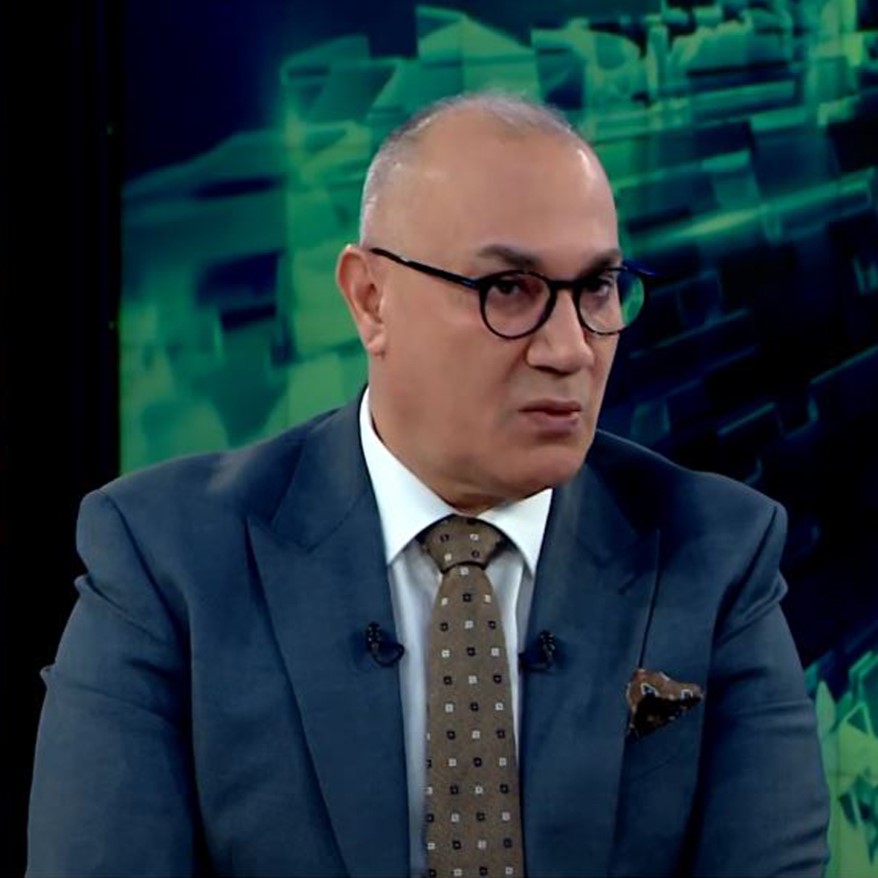
Mohammed Ihsan
University Professor and Academic
The U.S.–Iran Memorandum of Understanding: A Necessary Pause in Conflict, Not a Guaranteed Peace
Dr Mohammed Ihsan (Yale University) argues the US–Iran MOU is a pragmatic de-escalation step, not a victory or failure, reducing regional tensions and economic risks but leaving nuclear and enforcement issues unresolved; its success depends on implementation.

By Dr Mohammed Ihsan
Yale University
The recently signed memorandum of understanding (MOU) between the United States and Iran marks one of the most significant diplomatic developments in the Middle East in years. After months of heightened tensions, military confrontations, and fears of a broader regional conflict, both governments have chosen negotiation over escalation. While supporters of the MOU have described it as a diplomatic breakthrough capable of restoring stability, critics have questioned whether the deal grants too many concessions to Tehran while leaving fundamental security concerns unresolved. In my view, the MOU should neither be celebrated as a historic victory nor dismissed as a strategic failure. Rather, it represents a pragmatic attempt to prevent a dangerous conflict from spiraling further, while creating a framework for future diplomacy. Its true success will depend not on the signatures attached to the document, but on whether both sides demonstrate the political will to implement and sustain its commitments.
At its core, the MOU reflects a reality that neither Washington nor Tehran could ignore. Continued confrontation carried enormous risks for both countries and for the broader international community. The possibility of military escalation threatened not only regional stability but also global economic security. Any prolonged conflict involving Iran would likely have disrupted critical energy routes, increased oil prices, fueled inflation, and created uncertainty across international markets. For the United States, another open-ended military engagement in the Middle East would have imposed substantial financial and political costs at a time when policymakers are increasingly focused on strategic competition elsewhere. The MOU therefore reflects a recognition that diplomacy, however imperfect, was preferable to the unpredictable consequences of continued escalation.
One of the most immediate benefits of the MOU is the reduction of tensions in a region that has become increasingly volatile. The Middle East remains a critical geopolitical arena where local conflicts often carry global implications. By establishing mechanisms for de-escalation and communication, the MOU reduces the risk of miscalculation that could trigger a wider conflict involving regional powers and international actors. This alone should not be underestimated. History has repeatedly shown that wars often begin not through deliberate planning but through misunderstandings, misjudgments, and the absence of diplomatic channels. In that sense, the MOU serves as an important stabilizing instrument.
Economically, the MOU also has the potential to generate positive outcomes. Global markets generally respond favorably to reduced geopolitical uncertainty, particularly in energy-producing regions. Greater stability could help moderate fluctuations in oil prices and alleviate concerns about supply disruptions. For ordinary Americans, the benefits may not be immediately visible, but lower energy volatility can contribute to broader economic stability and help ease inflationary pressures. At a time when economic concerns remain a central issue for many households, avoiding another international crisis that drives up fuel and transportation costs is a meaningful achievement.
However, acknowledging these advantages does not mean ignoring the legitimate concerns surrounding the MOU. The central question is whether the deal addresses the root causes of tension between the United States and Iran or merely postpones them. Critics argue that the MOU provides Tehran with economic and political benefits while leaving some of the most contentious issues unresolved. Concerns remain regarding the future of Iran’s nuclear program, regional influence, and long-term strategic intentions. If the MOU delivers immediate relief to Iran without securing durable and verifiable commitments, opponents contend that it may strengthen Tehran’s position without significantly improving regional security.
This concern is not without merit. Diplomatic MOUs are ultimately only as effective as the mechanisms that enforce them. Ambiguous language, differing interpretations, and weak verification systems have undermined many international MOUs in the past. The current MOU appears to leave important details to future negotiations, a reality that introduces both opportunity and risk. Flexibility may have been necessary to secure consensus, but ambiguity can also become a source of future disputes. Much will depend on whether subsequent negotiations produce clear benchmarks, transparent monitoring procedures, and consequences for noncompliance.
The American public’s reaction to the MOU is likely to be shaped by these competing considerations. On one hand, many Americans are weary of prolonged military involvement in the Middle East. After decades of costly conflicts, there is widespread support for diplomatic solutions that reduce the likelihood of war and allow the United States to focus on domestic priorities. For this segment of the public, the MOU represents a sensible effort to avoid another cycle of confrontation with uncertain outcomes.
On the other hand, skepticism toward Iran remains deeply embedded in American public opinion. Many citizens question whether Tehran will fully honor its commitments and whether any MOU can adequately address longstanding security concerns. This skepticism crosses partisan lines, although it is often expressed with different political emphases. Some Americans will view the MOU primarily through the lens of peace and stability, while others will focus on questions of deterrence, credibility, and enforcement. As a result, public opinion is unlikely to be overwhelmingly supportive or overwhelmingly opposed. Instead, it will remain cautious, conditional, and heavily influenced by future developments.
Politically, the MOU is almost certain to become a subject of intense debate. Supporters will argue that diplomacy has successfully prevented a potentially devastating conflict and created an opportunity for long-term stability. Critics will contend that the MOU risks rewarding adversarial behavior while failing to secure sufficient guarantees. Both perspectives contain elements of truth. Diplomatic compromise often requires accepting imperfect outcomes in pursuit of greater strategic objectives. The challenge lies in determining whether the concessions made today will generate meaningful security benefits tomorrow.
Ultimately, the significance of the U.S.–Iran MOU lies not in what it immediately accomplishes but in what it makes possible. It offers a chance to replace confrontation with negotiation and uncertainty with dialogue. Yet it also leaves many difficult questions unanswered. In my assessment, the MOU should be viewed as a necessary pause in a dangerous trajectory rather than a definitive solution to one of the world’s most complex geopolitical disputes. If both sides use this opportunity to build trust, strengthen verification mechanisms, and pursue substantive progress, the MOU could become the foundation of a more stable regional order. If they fail, it may be remembered merely as a temporary interruption in a conflict that was postponed rather than resolved. The MOU is therefore best understood not as the end of a crisis, but as the beginning of a critical test whose outcome remains uncertain.
Professor Mohammed Ihsan
Secretary General, Afro-Asian People’s Solidarity Organization (AAPSO)
The views expressed in this article are those of the author and do not necessarily reflect the views of Kurdistan24.