
Tara Shwan
Writer
The American Departure: Iraq’s New Reality and Kurdistan’s Security Challenge
Tara Shwan argues that the U.S. withdrawal tests Iraq’s sovereignty and requires Kurdistan to strengthen its defenses, deepen cooperation with Baghdad and maintain international partnerships as armed factions and regional powers compete for influence.
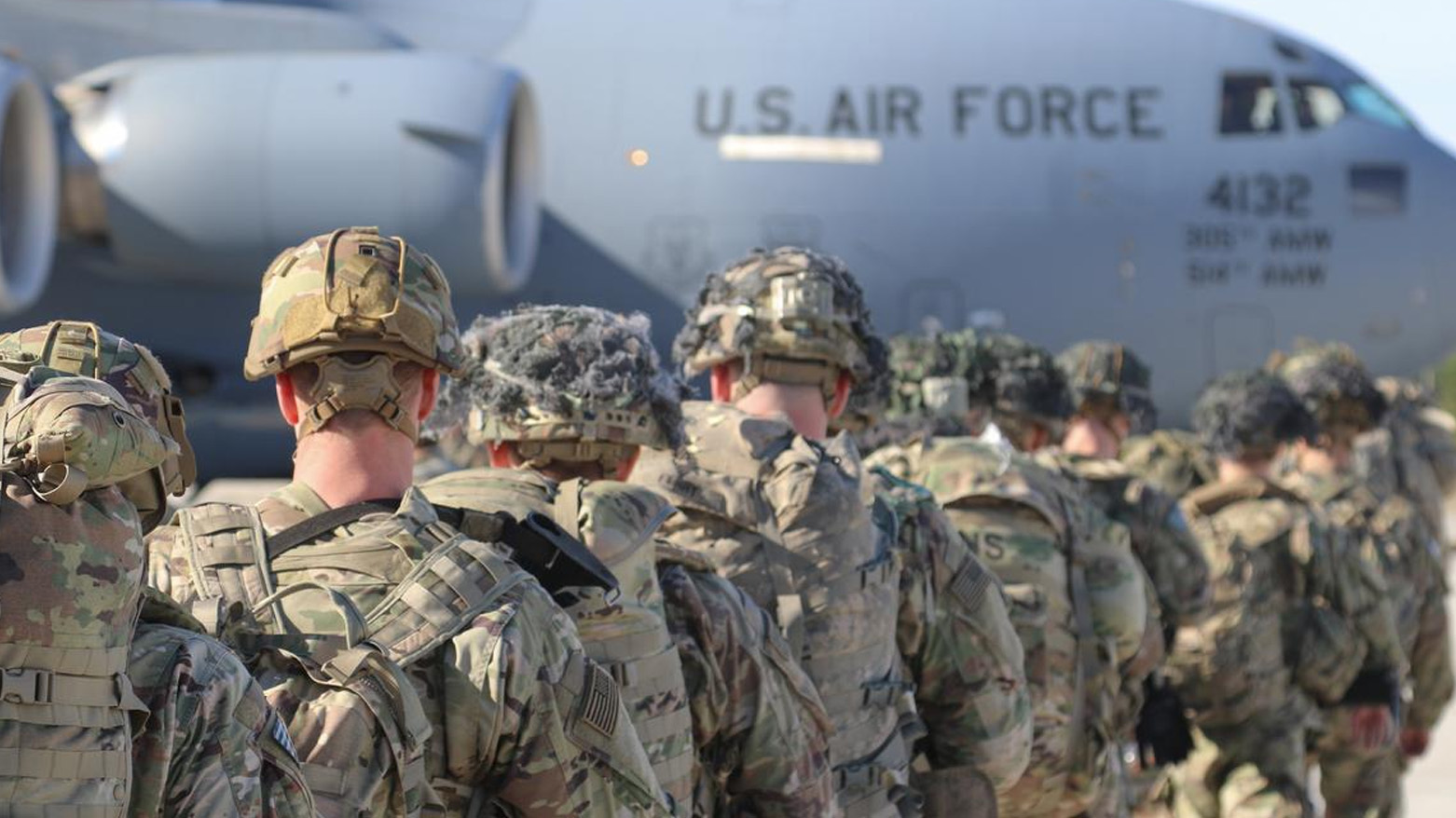
September 30, 2026 marks the end of an era in Iraq. The American military withdrawal from Iraq and the Kurdistan Region has now been completed. After years of political demands, military confrontation and debate over sovereignty, American forces have left, bringing to an end a significant chapter in Iraq’s modern security history.
For many Iraqi political forces, particularly within the Shia political camp, the departure represents the fulfilment of a long standing demand. The argument was clear: Iraq is a sovereign country and should not require foreign troops to determine or guarantee its security. That argument has now reached its destination. But the departure of American forces does not end Iraq’s security dilemma. It exposes it.
The question facing Iraq today is no longer whether American forces should remain. They have left. The question is what Iraq will do with the strategic space created by their departure.
Sovereignty is not simply the absence of foreign soldiers. A sovereign state is one that can protect its territory, control its security institutions, maintain authority over the use of force and conduct its foreign policy according to national interests. That is where the real challenge begins.
Iraq is not the same country it was when ISIS captured large parts of its territory. Its security forces are more experienced, its institutions are stronger and the territorial threat once posed by ISIS has been defeated. A return to the exact circumstances of 2014 is therefore not inevitable.
But instability does not always return in the same form.
ISIS can remain a threat without controlling cities. Political fragmentation, weak security coordination and gaps in state authority can create opportunities for an insurgency to survive and regenerate. The danger is therefore not necessarily an immediate collapse of Iraqi security, but the gradual emergence of vulnerabilities that can be exploited by extremist organisations and other armed actors.
Yet ISIS is only one part of the larger question.
The deeper issue is the relationship between the Iraqi state and the powerful armed groups that have become an established part of the country’s political and security landscape. For the forces that demanded the American withdrawal, September 30 represents a major political achievement. But with that achievement comes responsibility. If Iraq is now sovereign enough to reject a foreign military presence, it must also become strong enough to ensure that no domestic armed force becomes more powerful than the state itself.
This is perhaps the greatest test facing Baghdad.
The departure of American troops gives the Iraqi government greater room to shape its own security policy. But it also removes one of the major external forces that influenced the balance between the Iraqi state, armed factions and regional powers. The space created by America’s departure will not remain empty. The question is who will fill it.
Iran will remain deeply influential because of geography, economics, political relationships and longstanding ties with important Iraqi forces. Turkey will remain a major actor because of trade, energy, borders and security interests. Other regional and international powers will continue to pursue their own interests in Iraq.
American troops sure have left, but Iraq is not becoming less important to the region. If anything, the country may become more intensely contested through political influence, economic relationships, armed groups and strategic partnerships.
This makes the question of Iraqi independence much more complicated than simply removing foreign soldiers. Iraq must now demonstrate that it can maintain relationships with powerful neighbours without becoming subordinate to any of them. That will require a stronger state.
And nowhere will the consequences of this new reality be more sensitive than in the Kurdistan Region.
For Kurdistan, the American presence was never simply about the physical presence of American soldiers. Over the years, Washington became an important part of the region’s wider security architecture and provided Erbil with military cooperation, political support and strategic reassurance. That reassurance has now changed. The Kurdistan Region enters this new period with fewer external guarantees and greater responsibility for its own security.
The threat facing Kurdistan is also no longer defined by one enemy. ISIS remains a concern, but the broader security environment includes drones, missiles, armed groups, regional rivalries, intelligence operations and unresolved disputes between Erbil and Baghdad. Modern warfare has changed. A state or armed group no longer needs to occupy territory with tanks and soldiers to cause enormous political and economic damage. Drones and missiles can reach deep into territory, disrupt infrastructure, create fear and challenge the credibility of governments. This creates a serious strategic problem for Kurdistan.
The Peshmerga has decades of experience fighting insurgencies and defending the region, but the security requirements of the coming era are different. The Kurdistan Region will increasingly need sophisticated intelligence, surveillance, air defence, rapid response capabilities and stronger institutional coordination. These capabilities cannot be developed overnight. And this is where Baghdad becomes central to Kurdistan’s future security.
The federal government cannot treat the security of the Kurdistan Region as a purely Kurdish concern. Kurdistan is part of Iraq, and instability in Erbil, the disputed territories or the northern provinces would ultimately become an Iraqi national security problem. If Baghdad wants to demonstrate that Iraq is genuinely sovereign, it must demonstrate that sovereignty across the entire country. At the same time, Erbil must recognise that the old security environment cannot continue indefinitely.
The Kurdistan Region cannot build its future around the assumption that an external power will always arrive when the region faces a major threat. Its own institutions must become stronger. The Peshmerga must become more unified and capable. Defensive systems must improve. Intelligence cooperation must deepen. And above all, Erbil must develop a realistic strategy for operating in a region where there are no permanent security guarantees. This does not mean that the American relationship has ended.
The United States can remain an important partner through diplomacy, intelligence cooperation, training, economic relations and political engagement. But there is a fundamental difference between having American forces physically stationed in Iraq and having America remain an important partner from outside the country. That difference will shape the years ahead. For Baghdad, the American withdrawal is an opportunity to demonstrate sovereignty.
For Erbil, it is a warning that strategic reassurance cannot be taken for granted.
For Iraq’s armed factions, it is a test of whether political influence can coexist with a stronger and more unified state. For Iraq’s neighbours, it creates new opportunities to expand their influence. And for the Iraqi state itself, it represents a moment of accountability.
For years, sovereignty was the argument used to demand that America leave. Now sovereignty becomes the standard by which Iraq must be measured.
Can the state protect its people?
Can it control its territory? Can it prevent armed factions from becoming parallel centres of power? Can it maintain a balanced foreign policy between competing regional powers? Can Baghdad and Erbil cooperate when their political interests diverge? And can Iraq prevent its territory from once again becoming an arena for other countries to fight their battles?
The answers will determine what September 30 ultimately means.
If Iraq succeeds in strengthening its institutions, consolidating its security forces and establishing a more balanced foreign policy, the American withdrawal could eventually be remembered as the beginning of a more mature phase of Iraqi statehood. But if the space left by the Americans becomes an arena for competing factions and regional powers, Iraq may discover that removing foreign troops is much easier than building a state strong enough to prevent others from filling the vacuum.
For Kurdistan, the lesson is even more immediate.
The era in which American military presence could be regarded as a permanent strategic insurance policy is over. Kurdistan will have to become more capable of defending itself while remaining firmly connected to the broader Iraqi security framework. It will have to maintain its international relationships without becoming dependent on any single external power. And it will have to navigate its relationship with Baghdad with the understanding that neither side can afford permanent strategic mistrust.
The future security of Kurdistan will therefore depend not on one foreign power, but on the combination of its own capabilities, its relationship with Baghdad and its ability to maintain meaningful international partnerships.
The same is true for Iraq. The country has spent years debating who should leave. Now it must confront the much harder question of what comes after they leave. America has left Iraq.
The space it leaves behind will be filled by someone. The hope is that it will be filled by stronger Iraqi institutions, greater national unity and a state capable of protecting all of its citizens. Because the true measure of sovereignty is not whether a foreign soldier has left your country. It is whether your country is strong enough to protect itself after he does.
By Tara Shwan,
Executive Director,
American-Kurdish Economic Institute, AKEI
The views expressed in this article are those of the author and do not necessarily reflect the views of Kurdistan24.