
Tara Shwan
Writer
Washington and Baghdad at a Strategic Crossroads
Tara Shwan argues that Iraqi PM Ali al Zaidi's Washington visit signals a strategic shift in U.S.-Iraq relations from a security-first partnership toward economic cooperation, investment, and balanced regional diplomacy, with its success ultimately measured by implementation rather than symbolism.
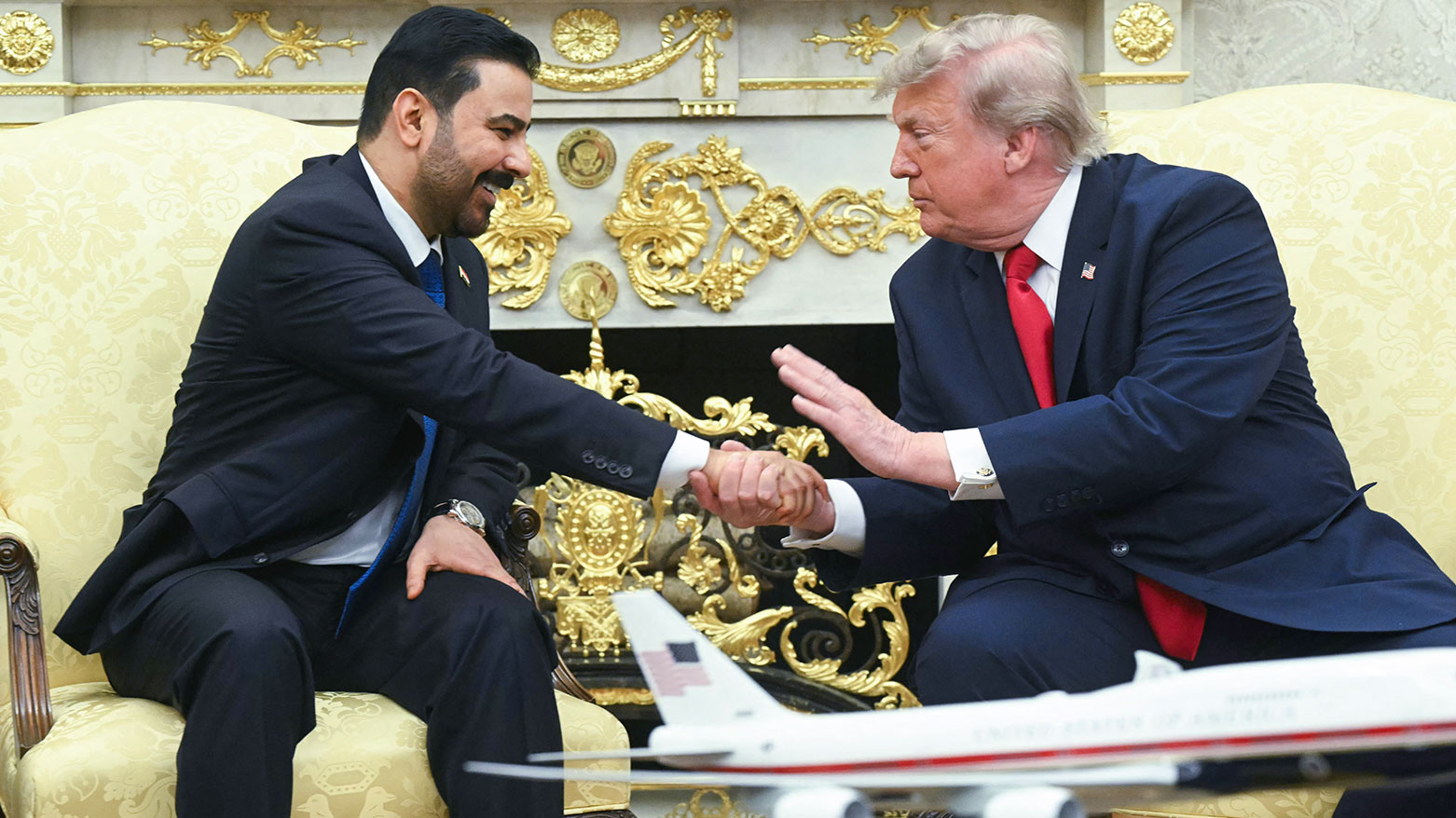
State visits often generate headlines long before they generate results. Yet their true significance lies not in diplomatic protocol but in the strategic realities they seek to reshape. Iraqi Prime Minister Ali al Zaidi’s official visit to the United States, which runs from 13 to 18 July, culminating in his meeting with President Donald Trump, should be understood through this broader strategic lens. More than a six day diplomatic engagement, the visit represents the first major international test of Al Zaidi’s leadership since assuming office. It is also his first meeting with President Trump, making it an important opportunity for both leaders to establish the foundations of a working relationship at a time of considerable regional uncertainty. The political symbolism is heightened by President Trump’s public support for Al Zaidi’s appointment, signalling that Washington views the new Iraqi government as an opportunity to deepen bilateral cooperation beyond the security framework that has dominated relations for more than two decades.
The six day visit brings together meetings with President Trump, senior administration officials, members of Congress, and representatives of major American companies. Its agenda reflects Baghdad’s effort to redefine the nature of its partnership with Washington. Discussions focus on expanding cooperation in energy, attracting investment into Iraq’s oil and natural gas sectors, developing electricity infrastructure, advancing financial and technological cooperation, encouraging private sector engagement, and strengthening broader economic ties. Security cooperation remains an important component of the discussions, particularly with regard to counterterrorism coordination, regional stability, and the question of armed groups operating outside state authority. Yet unlike previous high level engagements, security no longer constitutes the sole defining feature of the relationship. Increasingly, economic diplomacy has become the principal vehicle through which both governments seek to advance their strategic interests.
For Iraq, this evolution reflects a fundamental shift in national priorities. The country’s principal challenges are no longer confined to defeating terrorism but increasingly revolve around achieving sustainable economic development, diversifying sources of national income, modernising infrastructure, improving energy security, creating employment opportunities, and restoring investor confidence. Baghdad therefore enters Washington not as a state seeking assistance, but as a country seeking long term strategic partnerships capable of supporting its economic transformation. In doing so, Al Zaidi is also attempting to reshape international perceptions of Iraq, presenting it as an emerging regional economic actor rather than a country defined primarily by conflict and instability.
From Washington’s perspective, the visit carries equal strategic importance. President Trump’s foreign policy has consistently emphasised economic partnerships, energy security, and measurable strategic returns. Iraq occupies an increasingly significant position within that framework. Beyond its vast energy resources, Iraq remains a critical actor in the balance of power across the Middle East. The United States therefore seeks deeper commercial engagement while encouraging stronger governance, institutional reform, and greater state authority over all armed actors operating within Iraqi territory. The objective is not merely to strengthen bilateral ties but to support a more stable Iraq capable of contributing to broader regional security and economic connectivity.
The meeting between President Trump and Prime Minister Al Zaidi should therefore be viewed as more than a ceremonial diplomatic encounter. It represents an opportunity to redefine the strategic logic underpinning Iraqi American relations. Both governments approach the discussions with distinct priorities but increasingly overlapping interests. Iraq seeks investment, technology, and international confidence. The United States seeks a stable regional partner capable of safeguarding its sovereignty, expanding economic cooperation, and contributing to regional stability. Whether these shared interests can be translated into durable policy will determine the long term significance of the visit.
Nevertheless, Iraq’s greatest strategic challenge remains preserving its foreign policy equilibrium. Baghdad continues to balance its strategic partnership with the United States alongside its deep political, economic, and geographic ties with neighbouring Iran. Navigating this increasingly polarised regional environment requires careful diplomacy rather than binary choices. The success of Al Zaidi’s visit will therefore depend not only on the agreements reached in Washington but also on Iraq’s ability to strengthen international partnerships while preserving its strategic autonomy.
Ultimately, the significance of this visit extends well beyond six days of diplomacy in Washington. It reflects an attempt to reposition Iraq within an evolving regional order where economic resilience, institutional strength, and balanced foreign policy increasingly define national influence. If the understandings reached during the visit translate into sustained investment, credible reforms, and deeper strategic cooperation, this could mark the beginning of a more mature phase in Iraqi American relations. If not, the visit will remain an important diplomatic moment whose promise exceeded its practical impact. The real measure of success will not be what was announced in Washington, but what Iraq is able to implement once the delegation returns to Baghdad.
By Tara Shwan,
Executive Director,
American-Kurdish Economic Institute, AKEI
The views expressed in this article are those of the author and do not necessarily reflect the views of Kurdistan24.