
Ahmad M. Alkuchikmulla
Political Economy Analyst
Kurdistan's Unpriced Risk: Air Defence, Energy and Kurdistan's Security After the US/Coalition
Ahmad M. Alkuchikmulla argues that, following the coalition’s withdrawal, the Kurdistan Region must quantify the costs of airspace closures, drone attacks and disrupted energy production—and use that economic toll to secure binding air-defense commitments from Baghdad and protect investment.
By Ahmad M. Alkuchikmulla
The coalition has gone, and its air defences with it. Kurdistan should stop treating its insecurity as bad luck and start presenting it as a bill.
In the weeks after the war began on 28 February, families across the Kurdistan Region and its diaspora learned to plan their lives around a closed sky. Flights stopped. The land borders stayed open, which sounds like a mercy until you try to rely on one. A journey once measured in hours became long, costly and uncertain, and relatives who would normally have been on a plane within a day stayed where they were, watching the news and waiting.
The Region’s airspace stayed shut for roughly 38 days. Unauthorised data estimated that the lost airport and airline revenue exceeded $416 million. It is an estimate, and it is not the largest bill the war has presented. But it puts a number on something most people experienced only as inconvenience.
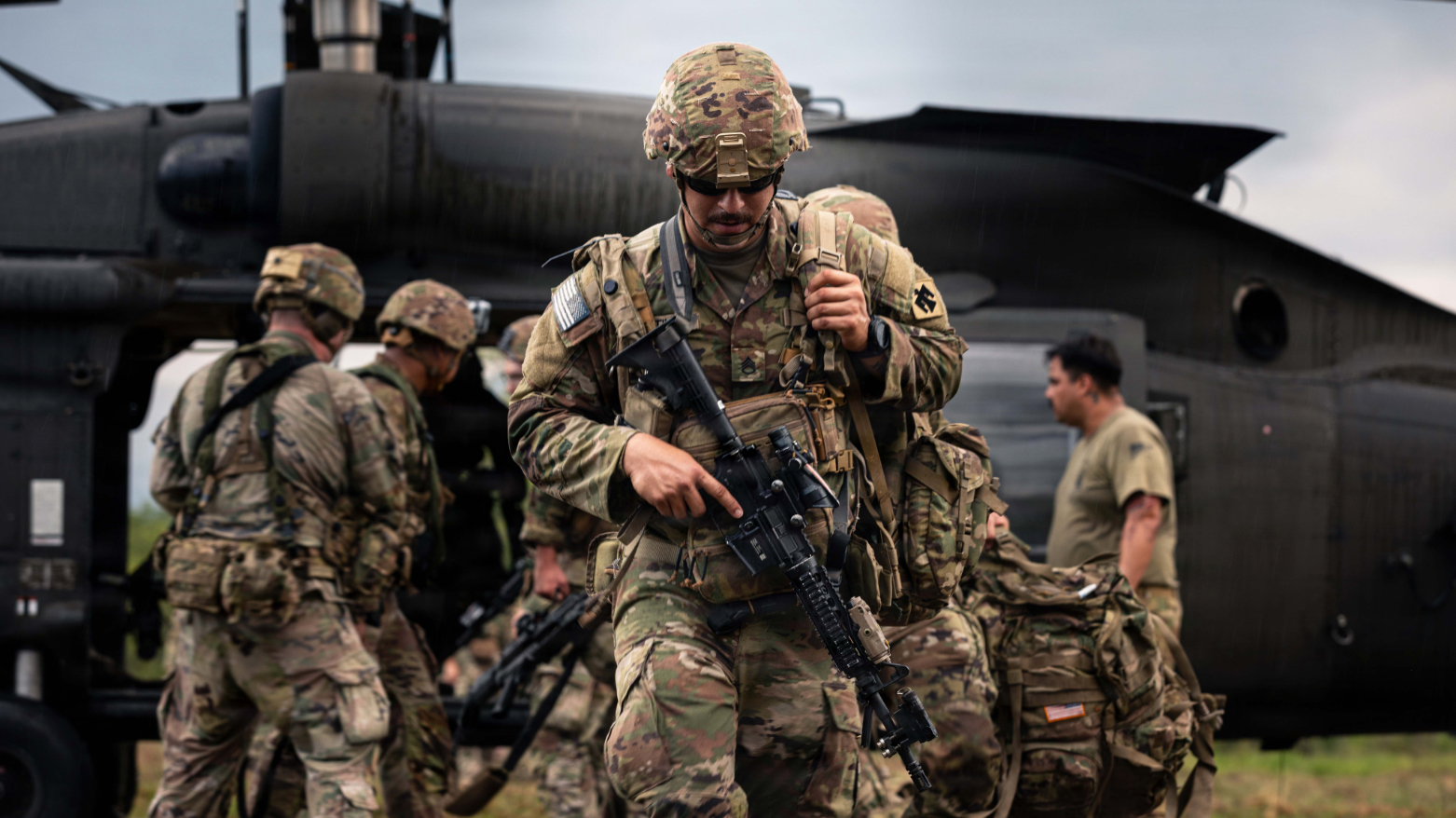
On 30 September, most of the US troops left Erbil Air Base with little presence now, ending a mission that began in 2014. The departure was agreed with Baghdad in 2024 and has its own sovereign logic. Since then, the debate in Erbil has been about security: who will stop the next drone. That is a fair question. I want to make a different argument, which is that Kurdistan's insecurity is now a measurable cost, and that the Region will get protection faster by presenting the bill than by pleading for help.
The ledger
Start with electricity. Gas from Khor Mor fuels power stations that generate about 90% of the Region’s electricity. Production stopped or went down to its lowest from 28 February, when the war began and resumed on 13 April. On 16 July, the operator shut it again, citing credible security threats, and the Region lost 2,500 megawatts.
Oil followed the same pattern. DNO suspended production at two fields as a precaution, and exports through Ceyhan were reported suspended. In August, Al Jazeera reported a figure of about 30,000 barrels a day, against the 200,000 agreed for export with Baghdad (a gap the report attributed to the war).
The attacks themselves are on a scale few outside the Region register. There have been more than 1,000 drone and missile strikes since 28 February, killing at least 32 people. Analysts estimate coalition defences intercepted about 95% of what was fired.
That last figure explains the price. Operators, airlines and insurers were not pricing the absence of attacks. They were pricing a shield. Now the shield has gone. The Patriot batteries at Erbil airport were removed in July. A week after the last troops left, the Peshmerga ministry said no air-defence system of any kind had been delivered, while Iraq says it expects systems from South Korea, Turkey and the United States without giving dates.
Investors have limits. A US energy-security specialist warned last year that oil and gas companies carry a fairly high tolerance for risk, but not an unlimited one. The Region's economic strategy, which depends on foreign capital, quietly assumes that tolerance will hold.
A sky closed before
None of this is new. In September 2017, a day before the independence referendum, Iran halted flights to the Region’s airports at Baghdad’s request, while the land border stayed open. Go back further and the same pattern runs in the other direction. Outside powers established the no-fly zone that protected Kurdish-majority territory, and the Region grew out of it.
Others have protected the sky over Erbil and closed it. Each time, Kurdish security has rested on a decision taken somewhere else. The question now is whether the Region can turn that dependence into something written down and enforceable.
The slower threat
The same logic applies to the second risk. By almost every measure, ISIS in Iraq is weak. Its claimed attacks fell from 1,459 in 2020 to 16 in 2025. But the Washington Institute’s Aaron Zelin notes the group was also at a historic low in 2010, before the 2011 US withdrawal, after which it built a proto-state within three years.
That is a warning, not a forecast. In September, ISIS claimed five attacks in three weeks, more than in the previous eight months combined, and on 12 September Kurdish forces arrested 22 suspects in Halabja and Sulaymaniyah. An Iraqi lawmaker says the group is exploiting the gaps between army and Peshmerga positions near Daquq and Hawija. And 5,704 detainees were moved from Syria to Iraq in January and February.
The scenario worth pricing is not a revived terrorism. It is the slow return of insecurity to the disputed territories, in a Region that is already paying for drones.
Three things to ask for, and from whom
First, an air-defence protocol with Baghdad by the end of the year. The Peshmerga ministry says airspace protection is a federal responsibility. If so, Baghdad should put it in writing: a named allocation for Kurdistan, delivery dates and a shared data link. Baghdad has its own reasons to agree, since the northern export route runs through the same sky.
Second, protect what earns the money. Counter-drone systems at energy sites typically cost far less than the interceptors built for ballistic missiles. The operators with the most to lose, including the UAE-based consortium that runs Khor Mor, should be asked to co-finance them, in return for a clear commitment from the KRG on protection and compensation.
Third, finish the political work. The KRG announced on 21 September that Peshmerga unification was complete. That shows what the Region can do when it decides to. The same discipline is needed to form a government that can sign the first two agreements, and to keep joint army-Peshmerga coordination working along the disputed line.
What could go wrong
Baghdad’s air defences may arrive late or never arrive or become another bargaining chip. Iran may not stop either way. Analysts expect drone attacks to persist even if a US-Iran deal is reached. There is also a counter-argument: with US bases gone, Iran loses one of its stated justifications for attacking. That is possible, but it is not something to bet a power grid on.
Those families waiting for a flight have understood the arithmetic for months. An open border does not make up for a closed sky. The Region now has a rare moment, with a unified army and a bill in hand, to turn borrowed protection into a signed one. It should use it before the lenders forget what the closure cost them.
Ahmad M. Alkuchikmulla
Communication Associate, MEA Institute for Strategic Studies
Global Development Researcher, SOAS University of London
1st Class BSc Politics with Economics Graduate, University of Bath
London, United Kingdom
The views expressed in this article are those of the author and do not necessarily reflect the views of Kurdistan24.