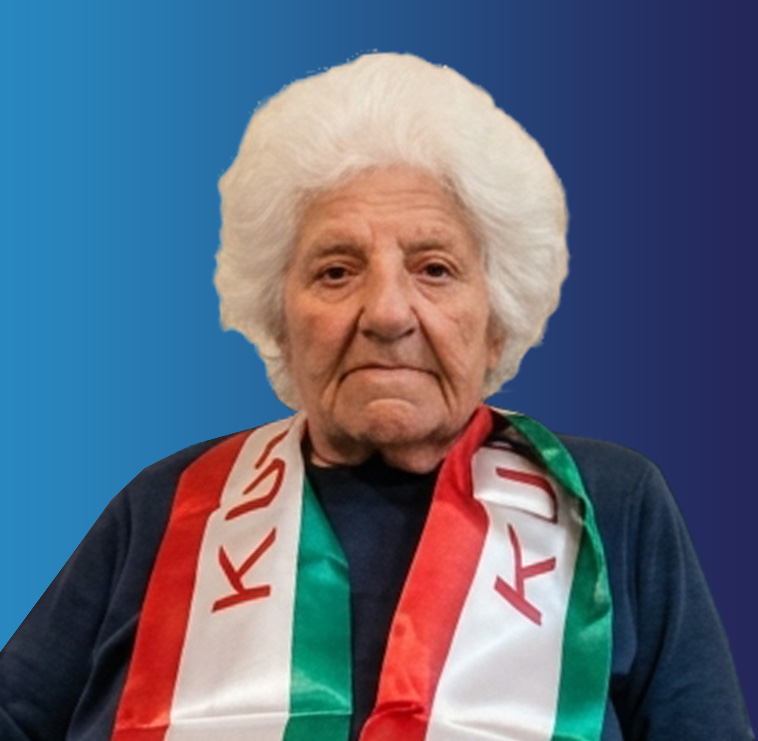
Sinem Khan Bedirkhan
Author and Intellectual
Books, Culture, and the Dream of an Independent Kurdistan
Reflections on My Visit to the Erbil International Book Exhibition
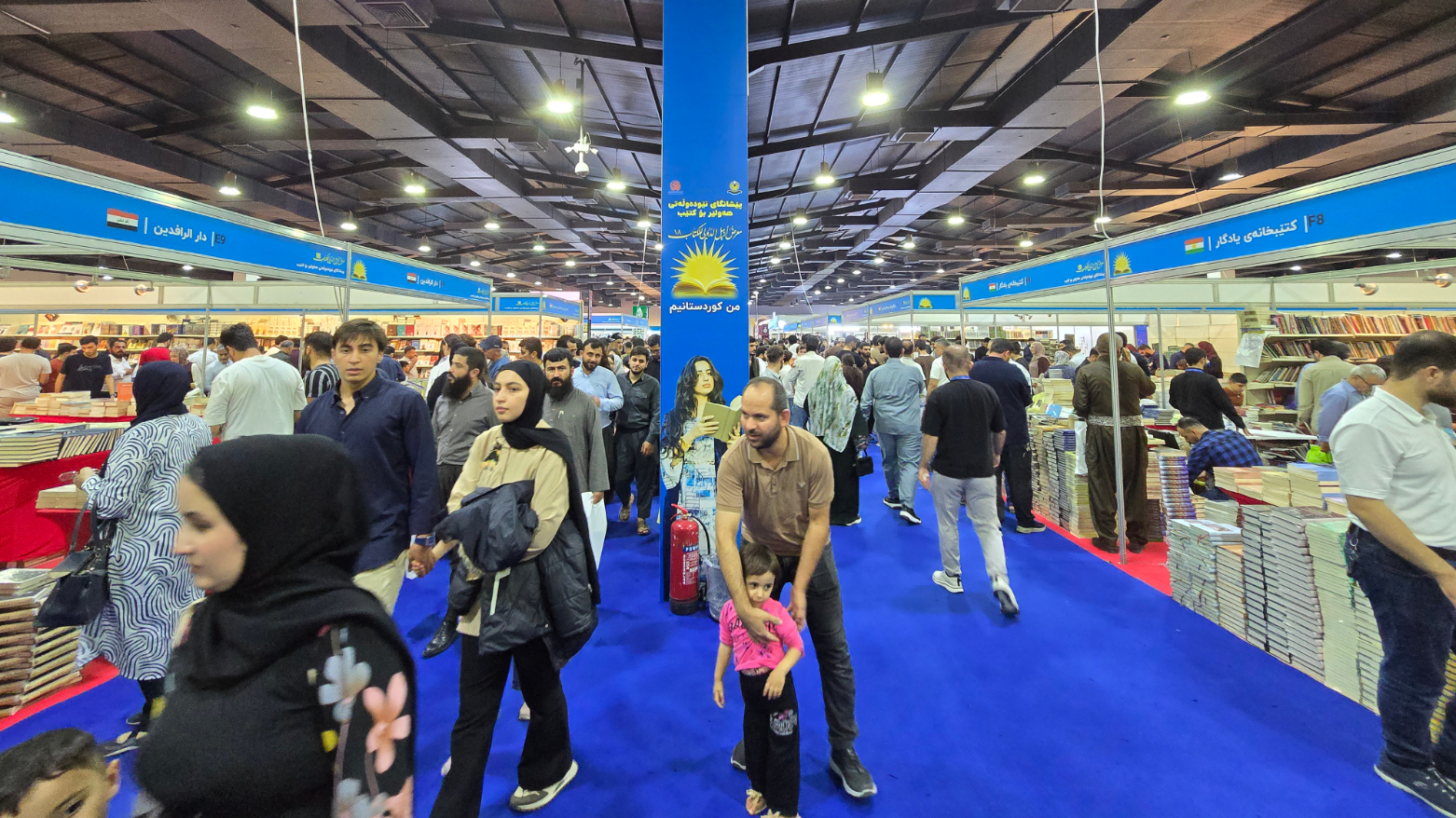
My visit to the Erbil International Book Exhibition was a truly memorable and heartwarming experience, one that filled me with immense happiness, pride, and renewed hope for the future of our beloved Kurdistan.
In an age when social media, smartphones, and digital technology have become such dominant forces in our daily lives, I have often wondered whether traditional books would continue to occupy their rightful place in the hearts and minds of our younger generations.
It was therefore a wonderful and reassuring experience to see the exhibition attracting so many visitors from different walks of life. What brought me the greatest happiness, however, was seeing the remarkable presence of young men and women, enthusiastically browsing through books, discovering literature, exchanging ideas, and demonstrating a genuine desire for knowledge.
As I walked among them, I felt a profound sense of optimism. Despite the enormous technological changes taking place around us, the love of books and the pursuit of knowledge remain very much alive.
In every young person holding a book, I could see another ray of hope for the future of Kurdistan.
Throughout my life, I have believed that books are among humanity's greatest treasures. They enlighten our minds, broaden our horizons, develop our ability to think independently, and allow us to learn from the experiences, achievements, and wisdom of others.
But for us as Kurds, reading carries an even deeper significance. It is not merely a means of acquiring knowledge; it is also an essential instrument for preserving our national identity, understanding our history, protecting our language, and safeguarding the rich cultural and folkloric heritage inherited from our ancestors.
We are a people with a remarkable history, a beautiful language, a rich literary tradition, and a cultural identity that has survived generations of hardship and struggle. Our poetry, music, folklore, literature, and historical memories are not simply treasures from the past. They are the foundations upon which our national identity rests and the bridge connecting our ancestors with the generations yet to come.
For me personally, these convictions are deeply rooted in both my family heritage and my own life's journey.
As a member of the Bedirkhan family, I take great pride in the contributions of my ancestors to the development of Kurdish literature, journalism, education, and national consciousness.
From the pioneering efforts in Kurdish journalism, including the publication of the historic newspaper Kurdistan, to the scholarly and literary achievements of later generations, the Bedirkhan family understood that the preservation of a nation's identity begins with the preservation of its language, history, and culture.
Their dedication helped establish an intellectual and cultural legacy that continues to inspire generations of Kurds.
Yet my personal connection to books, language, and Kurdish cultural heritage extends beyond the family into which I was born.
I was also privileged to share my life with my late husband, Salah Saadallah, a man whose passion for knowledge, literature, and the Kurdish language was reflected in his remarkable dedication to writing, translation, and scholarship.
Alongside his distinguished professional career as an engineer, Salah devoted an important part of his life to enriching Kurdish literature and making knowledge more accessible to Kurdish readers.
Through his literary work and translations, including works by internationally renowned authors such as Ernest Hemingway and Agatha Christie, he helped introduce Kurdish readers to important works of world literature.
But perhaps his most significant and enduring intellectual contribution was his English–Kurdish dictionary, a major scholarly undertaking that demanded years of dedication, patience, research, and painstaking effort.
A dictionary is far more than a collection of words and their meanings. It is a bridge between languages, cultures, and civilizations. It is an educational instrument that opens doors to knowledge and serves students, teachers, translators, researchers, and future generations.
For a language such as Kurdish, whose preservation and development have faced so many historical challenges, such a contribution carries particular importance.
I witnessed the dedication and commitment that went into his work, and I understood how deeply he believed in the importance of expanding the resources available to those wishing to learn, study, translate, and write in Kurdish.
His dictionary was not simply a book. It was a contribution to the intellectual foundations of our nation and a gift of knowledge to generations he would never meet.
When I reflect upon the cultural heritage of the Bedirkhan family and the literary achievements of my husband, I see a shared conviction that has accompanied me throughout my life: that books, education, language, and culture are indispensable to the survival, dignity, and progress of a nation.
It is this conviction that made my visit to the Erbil International Book Exhibition so personally meaningful.
Standing among those young readers, I could not help but think of the generations before us who devoted their lives to preserving our language, writing our books, documenting our history, and ensuring that Kurdish culture would continue to flourish.
I thought of my ancestors and their pioneering literary and cultural efforts. I thought of my husband and the countless hours he dedicated to his writing, translations, and dictionary.
And then I looked at the young people around me, eagerly exploring books, and felt that the efforts of those earlier generations had not been in vain.
What greater satisfaction could there be than to see the knowledge and cultural heritage to which previous generations devoted so much of their lives being embraced by the young people of today?
I firmly believe that the future of Kurdistan will be determined not only by political aspirations and national determination, but equally by the education, intellectual development, cultural awareness, and wisdom of its younger generations.
Our dream of a free, prosperous, and independent Kurdistan must rest upon solid foundations: educated citizens, strong institutions, scientific advancement, respect for knowledge, an appreciation of our history, and an unwavering commitment to preserving our national identity.
Political independence is a historic aspiration, but building a successful and enduring independent country requires far more than political boundaries. It requires an enlightened society capable of governing itself wisely, developing its institutions, respecting its cultural diversity, and providing future generations with opportunities for learning, creativity, and progress.
Before we can build a truly strong and independent nation, we must build generations equipped with knowledge, wisdom, cultural awareness, and a profound sense of responsibility toward their homeland.
This is why I attach such importance to events like the Erbil International Book Exhibition.
They are not merely gatherings of publishers, writers, and readers. They are celebrations of intellectual freedom, cultural exchange, and human curiosity. They provide opportunities for young people to discover new ideas, broaden their perspectives, and develop a lifelong relationship with books and learning.
I sincerely encourage parents and grandparents to introduce their children to reading from an early age, to take them to book exhibitions, libraries, museums, and cultural events, and to teach them the value of both modern knowledge and their own cultural heritage.
Let our children learn about the wider world, but let them also know the story of their own people. Let them embrace scientific progress and technology, but let them never forget their language, literature, folklore, and history.
For a nation that forgets its past risks losing its identity, while a nation that understands its history and embraces knowledge possesses the strength to shape its future.
As I left the exhibition, I carried with me a wonderful sense of happiness and reassurance.
At this stage of my life, witnessing so many young people showing an interest in books and education is among the most encouraging and rewarding experiences I could hope for.
I felt proud of the cultural legacy of my ancestors, grateful for the intellectual contributions of my late husband, and deeply hopeful that the generations now growing up in Kurdistan will continue to build upon the foundations laid by those who came before them.
The greatest tribute our young people can pay to the scholars, writers, poets, translators, and cultural pioneers of previous generations is not merely to remember their names, but to continue their work, expand their achievements, and carry their dedication to knowledge into the future.
My greatest wish is to see a Kurdistan whose children are educated, whose language flourishes, whose history is understood, whose folklore and cultural heritage are cherished, and whose people possess the wisdom, confidence, and determination to shape their own destiny.
I have always believed that books have the power to change individuals, that educated individuals have the power to transform societies, and that enlightened societies have the strength to build nations.
A nation that reads is a nation that thinks.
A nation that preserves its language and remembers its history is a nation that knows its identity.
And a nation that invests in the education of its children is a nation that invests in its own freedom and future.
May the love of books and the pursuit of knowledge continue to flourish throughout Kurdistan. May our younger generations honor the cultural and intellectual heritage entrusted to them, and may their education, wisdom, and dedication help bring closer the dream that so many generations have cherished: a peaceful, prosperous, enlightened, and independent Kurdistan.
The views expressed in this article are those of the author and do not necessarily reflect the views of Kurdistan24.