Kurdistan Sees Record Rainfall in Hiran, Snow Piles in Kani Masi
Hiran recorded the highest rainfall at 104mm and Kani Masi the most snow at 34cm in the past 24 hours. Meteorology officials forecast intermittent drizzle and fog Saturday, followed by stable weather and rising temperatures on Sunday.
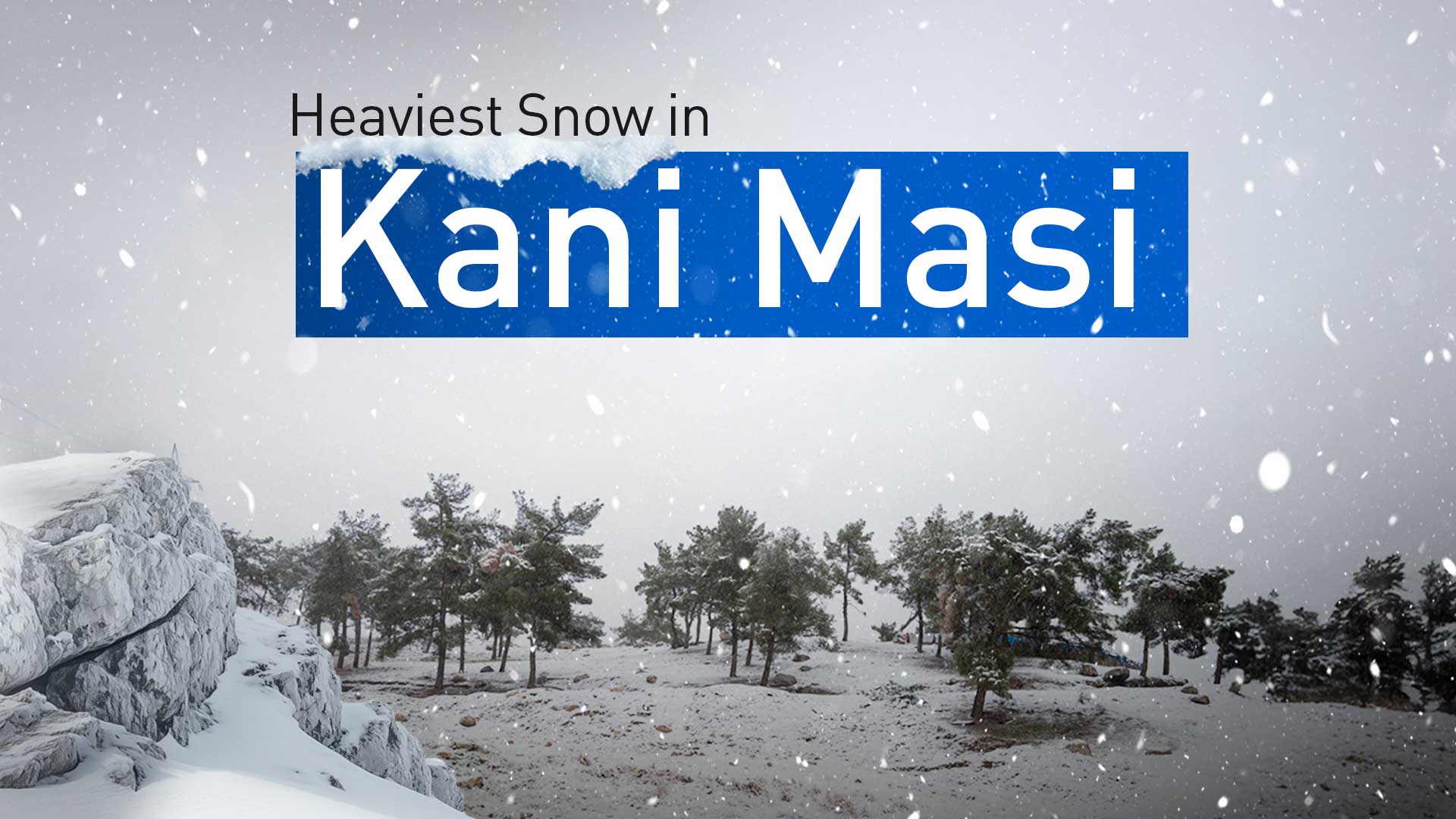
ERBIL (Kurdistan24) — A significant weather system moved across the Kurdistan Region over the past 24 hours, delivering widespread precipitation that resulted in heavy rainfall in Erbil Governorate and substantial snow accumulation in the mountainous districts of Duhok.
According to official data released on Saturday by the General Directorate of Meteorology and Seismology, the sub-district of Hiran recorded the region's highest rainfall at 104 millimeters, while Kani Masi registered the deepest snowfall at 34 centimeters.
The General Directorate, which operates under the Ministry of Transport and Communications, published the comprehensive meteorological statistics at 9:00 a.m. on Saturday, January 10, 2026.
The data covers a 24-hour period and provides a detailed breakdown of atmospheric conditions across all governorates and independent administrations within the region.
The report indicates that while rain fell in most areas, snow was largely concentrated in the higher-altitude mountainous zones.
Rainfall Distribution in Erbil Governorate
The governorate of Erbil witnessed the most intense rainfall figures in the region. Hiran’s record of 104 millimeters was followed closely by Nazanin, which received 96.3 millimeters. The Gomaspan Dam area also saw significant precipitation, recording 86 millimeters.
Other areas in Erbil reporting substantial rainfall included Pirmam with 69.2 millimeters, Koya with 66.5 millimeters, and Khalifan with 62 millimeters. Shaqlawa recorded 58 millimeters, while the Soran district received 55.5 millimeters. In the Barzan area, gauges measured 54 millimeters, and Rawanduz recorded 50 millimeters.
The Directorate’s data also showed that Sidekan received 43.5 millimeters, while the Dwin Dam area recorded 44 millimeters. In the center of Erbil city, rainfall measured 44.4 millimeters.
Further south, Dibaga recorded 33 millimeters and Shamamak 28.9 millimeters. To the north, Choman received 26 millimeters, and Khabat recorded 19.2 millimeters.
Notably, Haji Omran recorded zero millimeters of rain, a figure attributable to the freezing temperatures that resulted in snowfall rather than liquid precipitation in that specific locale.
Precipitation in Sulaimani
In the Sulaimani Governorate, the highest rainfall was observed in Sayranaga (Sarkapkan), which recorded 71 millimeters. Ranya followed closely with 68 millimeters, and Chwarqurna received 63.9 millimeters. The border town of Penjwen recorded 58.5 millimeters, while Yakhsamar saw 57.1 millimeters.
Qaladze reported 55.5 millimeters of rain. Other notable measurements included Chwarta at 43 millimeters, Tanjaro at 42 millimeters, and Takiya at 41.7 millimeters. Mawat recorded 40.1 millimeters, and Bazian received 37.1 millimeters. The area around Dukan recorded 33.6 millimeters, while Chamchamal received 32.7 millimeters.
Measurements in Barzinja showed 32 millimeters, Sangaw 30 millimeters, and Darbandikhan 25.4 millimeters.
The lower end of the spectrum in the governorate included Sitak with 23.3 millimeters, Qaradagh with 21 millimeters, Said Sadiq with 19.2 millimeters, and Qarga with 16.4 millimeters. The center of Sulaimani city recorded 12 millimeters of rain.
Duhok and Halabja Statistics
In Duhok Governorate, Dinarta led with 78.5 millimeters of rain, followed by Bjil with 68 millimeters and Zawita with 61 millimeters. Bardarash recorded 52 millimeters, and Akre saw 50.6 millimeters. Batufa received 46 millimeters, while both Shiladze and Mangish recorded 45 millimeters each.
Qasrok reported 41.5 millimeters, Deraluk 40 millimeters, and both Bamarni and Chamanke recorded 37 millimeters. Sarsing received 34 millimeters, while Amedi and Shekhan both recorded 30 millimeters.
Ba'adre saw 24 millimeters, and the Duhok city center recorded 20.3 millimeters. Zakho reported 20 millimeters, Kirdasen 17.5 millimeters, Semel 13.2 millimeters, and Kani Masi recorded 5 millimeters of rain, a low figure due to the heavy conversion to snow in that area.
In Halabja Governorate, Byara recorded the highest rainfall at 29.5 millimeters. Khurmal followed with 26.7 millimeters. Tawela recorded 22.6 millimeters, Sirwan 22.5 millimeters, and the center of Halabja received 21.5 millimeters.
Figures for Kirkuk and Snowfall Data
The Directorate also released figures for the Kirkuk Governorate. Takiya Jabari recorded 43 millimeters, Shwan 29.8 millimeters, and Maydan 20.8 millimeters. Kifri received 13.2 millimeters, Kalar 10.4 millimeters, and Khanaqin recorded 8.8 millimeters.
Snowfall accumulation was significant in the mountainous regions over the past 24 hours. Kani Masi topped the list with 34 centimeters of snow. Basne (Sharbazher) recorded 30 centimeters. Haji Omran, which saw no rain, recorded 14 centimeters of snow.
Other areas reporting snow included Ranya and Sarsing, both with 11 centimeters.
Balisan, Halsho, and Hero each recorded 10 centimeters. Rawanduz and Chwarqurna saw 9 centimeters of accumulation. Sidekan reported 8 centimeters, Chamanke 6 centimeters, and both Soran and Amedi recorded 5 centimeters.
Penjwen saw 4.5 centimeters, Barzan 4 centimeters, and Hiran, Khalifan, and Tawela each recorded 3 centimeters. Yakhsamar and Bamarni reported 2 centimeters, and Choman recorded 1 centimeter.
Weather Forecast and Temperature Outlook
In a separate announcement regarding the weather outlook, the General Directorate of Meteorology and Seismology predicted that for Saturday, January 10, skies across most of the region would remain completely cloudy, accompanied by intermittent drizzle continuing into the evening.
The Directorate warned of a drop in temperatures of 2 to 4 degrees Celsius compared to the previous day. The lowest temperature for Saturday was recorded in Haji Omran at 0 degrees Celsius.
Additionally, officials warned of fog formation late Saturday night and early Sunday morning, which is expected to reduce visibility to below 7 kilometers.
Looking ahead to Sunday, January 11, the weather is expected to stabilize, with skies ranging from clear to partly cloudy. Temperatures are forecast to rebound, rising by 2 to 4 degrees compared to Saturday.
Specific temperature forecasts for the region’s major cities show a warming trend. In Erbil, the high is expected to rise from 9 degrees Celsius on Saturday to 13 degrees on Sunday.
Sulaimani is forecast to move from 7 degrees to 10 degrees.
Duhok is expected to see a rise from 8 degrees to 10 degrees.
Kirkuk is predicted to increase from 11 degrees to 14 degrees, and the Garmian administration from 12 degrees to 15 degrees.
In the high-altitude area of Haji Omran, the high is forecast to rise from 0 degrees on Saturday to 5 degrees on Sunday. Wind speeds are expected to remain gentle throughout the weekend.