Erbil Authorities to Name City Roundabout ‘The Braid’ in Tribute to National Resistance
Erbil will name a roundabout "Kezi" (The Braid) to honor Kurdish resistance and unity, following a global campaign sparked by the alleged desecration of a female fighter's remains in Syria.
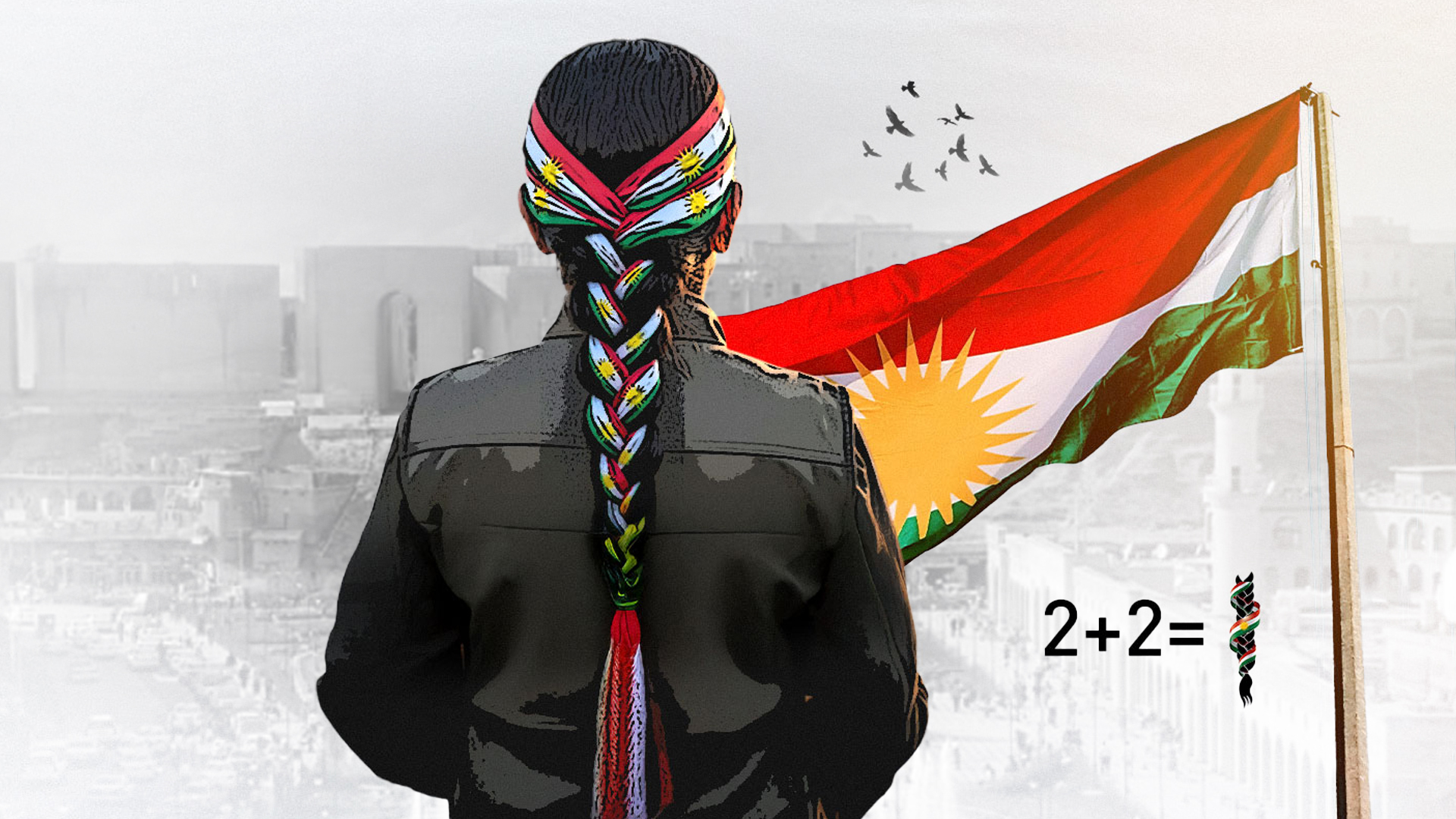
ERBIL (Kurdistan24) - The Erbil Governorate announced on Wednesday that a municipal roundabout in the capital will be formally named "Kezi," or "The Braid," to serve as a national symbol of resilience and unity. The decision, approved unanimously by the Erbil Municipal Council, follows a widespread cultural and social movement centered on the braid as a hallmark of Kurdish identity and resistance against regional instability and oppression.
Omed Khoshnaw, the Governor of Erbil, presided over the meeting with members of the Municipal Council on Jan. 28, 2026, to finalize the naming. During the session, Khoshnaw emphasized that the choice of "Kezi" carries significant national and patriotic weight.
He characterized the theme as a representation of determination regarding Kurdish national issues and a method of confronting what he described as the oppression of occupiers.
According to the governor, the naming is intended to transmit a clear message of unity for the "Kurdish house," signaling that the cultural values of the people remain a priority for the regional administration.
The members of the Municipal Council endorsed the proposal after a period of deliberation, viewing the measure as tangible evidence of a shared intellectual and spiritual bond among Kurds across different regions.
The council's approval formalizes the braid's status as a civic landmark in Erbil, institutionalizing a symbol that has recently gained global prominence through grassroots activism and the arts.
Catalyst in Rojava
The administrative move in Erbil is rooted in a visceral regional reaction to events in Western Kurdistan (northeastern Syria). Earlier this month, a viral video began circulating on social media depicting a militant affiliated with the Syrian government bragging while displaying a braid of hair.
The individual in the footage claimed he had cut the braid from the head of a deceased Kurdish female fighter in the city of Raqqa, which had recently been retaken by the Syrian Arab Army from Kurdish-led forces.
While Agence France-Presse (AFP) noted that the veracity of the claim was initially unclear, and the soldier later released a second video asserting the braid was a fake found in a restaurant, the imagery sparked immediate and widespread outrage.
For many in the Kurdish community, the act was interpreted as a calculated attempt at cultural and gender-based intimidation, specifically targeting the image of the Kurdish woman fighter, a figure that has gained international recognition during the conflict against the Islamic State (ISIS).
The Syrian Democratic Forces (SDF) subsequently released their own documentation, which they stated showed the killing and desecration of their fighters, including women, by Damascus-affiliated factions.
These incidents occurred amid a broader military offensive against Kurdish-held areas in northeastern Syria, where the Syrian Arab Army has sought to reassert centralized authority.
The ‘Braid Campaign’ and Social Mobilization
In response to the Raqqa video, a synchronized protest movement titled "The Braid Campaign" emerged across the Kurdistan Region of Iraq and the broader Middle East.
According to a report by the Iraqi News Agency (INA), female activists, media professionals, and civilians participated by sharing images and videos of themselves braiding their hair.
The campaign was framed not merely as a symbolic gesture but as a declaration of defiance against attempts to control the image and dignity of women in conflict zones.
On Friday, dozens of women gathered in Erbil to publicly braid each other's hair.
Vienna Salam, a 31-year-old university lecturer at the gathering, told AFP that the video was perceived as a direct threat to Kurds and Kurdish women specifically.
Salam stated that braiding is "our way of fighting back and of representing our identity as Kurdish women." During such demonstrations, participants were observed chanting "Women, Life, Freedom," a slogan that gained global fame during the 2022 protests in Iran.
Bahar Ali, a Kurdish activist in Erbil, told INA that the braid is a deep symbol of strength and pride.
"Cutting the braid in such contexts is seen not only as a physical act but as a heavy moral blow," Ali said, adding that for every braid cut, "thousands of braids will grow to humiliate [the aggressors] and triumph for dignity."
Artistic and Cultural Responses
The symbolism has also been captured through various artistic mediums. Kurdish sculptor Saman Hidayat recently unveiled a two-meter-tall work titled “Kurdish Revolutionary Women Kazi (Braid).” Carved from oak wood, the sculpture is intended to represent continuity and the historical struggle of the Kurdish nation.
Hidayat, who has lived in Germany since 2015, told Kurdistan24 that he is considering casting the piece in bronze and mounting it on four stones to symbolize the four parts of Kurdistan.
In Berlin, visual artist Lukman Ahmad announced the opening of a fine arts exhibition titled "Braids of Rojava," scheduled for Feb. 7, 2026.
Ahmad, originally from Rojava, pledged to donate all proceeds to relief efforts in northern Syria. He told Kurdistan24 that his paintings serve as evidence of the agony currently facing the region.
"They cut our braids, but as we have seen, Kurdish women have woven thousands more," Ahmad said, describing his art as a form of resistance against malicious intellectual campaigns aimed at the Kurdish people.
Parallel to these efforts, the Sulaimani branch of the Artists Syndicate organized a joint exhibition titled “Small Size, Great Vision,” featuring 20 artists. Parwin Ali, a visual artist involved in the show, noted that the works sought to highlight the pain and resilience of Kurdish women.
The exhibition carried the collective message: “If they cut one braid, we will weave thousands more.”
Broader Administrative and Humanitarian Context
The decision to name the Erbil roundabout "Kezi" coincides with a period of heightened humanitarian concern for the Kurdistan Regional Government.
Governor Khoshnaw previously announced that merchants and philanthropists in Erbil have mobilized to provide urgent assistance to Rojava. This civic response is being coordinated with the Barzani Charity Foundation (BCF), which has conducted needs assessments on the ground.
Priority items include medicine, food, blankets, and mattresses for those displaced by the fighting.
The BCF reported that its aid collection campaign in Erbil raised 210 million Iraqi dinars in just three days, with approximately 40 trucks of supplies sent to conflict-affected areas. This humanitarian focus is viewed as a continuation of the KRG’s commitment to regional stability.
By approving the "Kezi" roundabout, Erbil’s municipal authorities have signaled that the symbolic resonance of the braid—representing identity, resistance, and the historical role of Kurdish women—has been elevated to a matter of official regional heritage.
The council emphasized that the decision serves as evidence that Kurds remain united in thought and soul, regardless of the geographical borders that separate them.