Kurdistan Region, UAE Move to Deepen Energy and Infrastructure Cooperation
Both sides highlighted the Kurdistan Region’s Runaki program and the initiative to ensure a 24-hour electricity supply, underscoring the importance of sustainable energy solutions and long-term collaboration in the power sector.
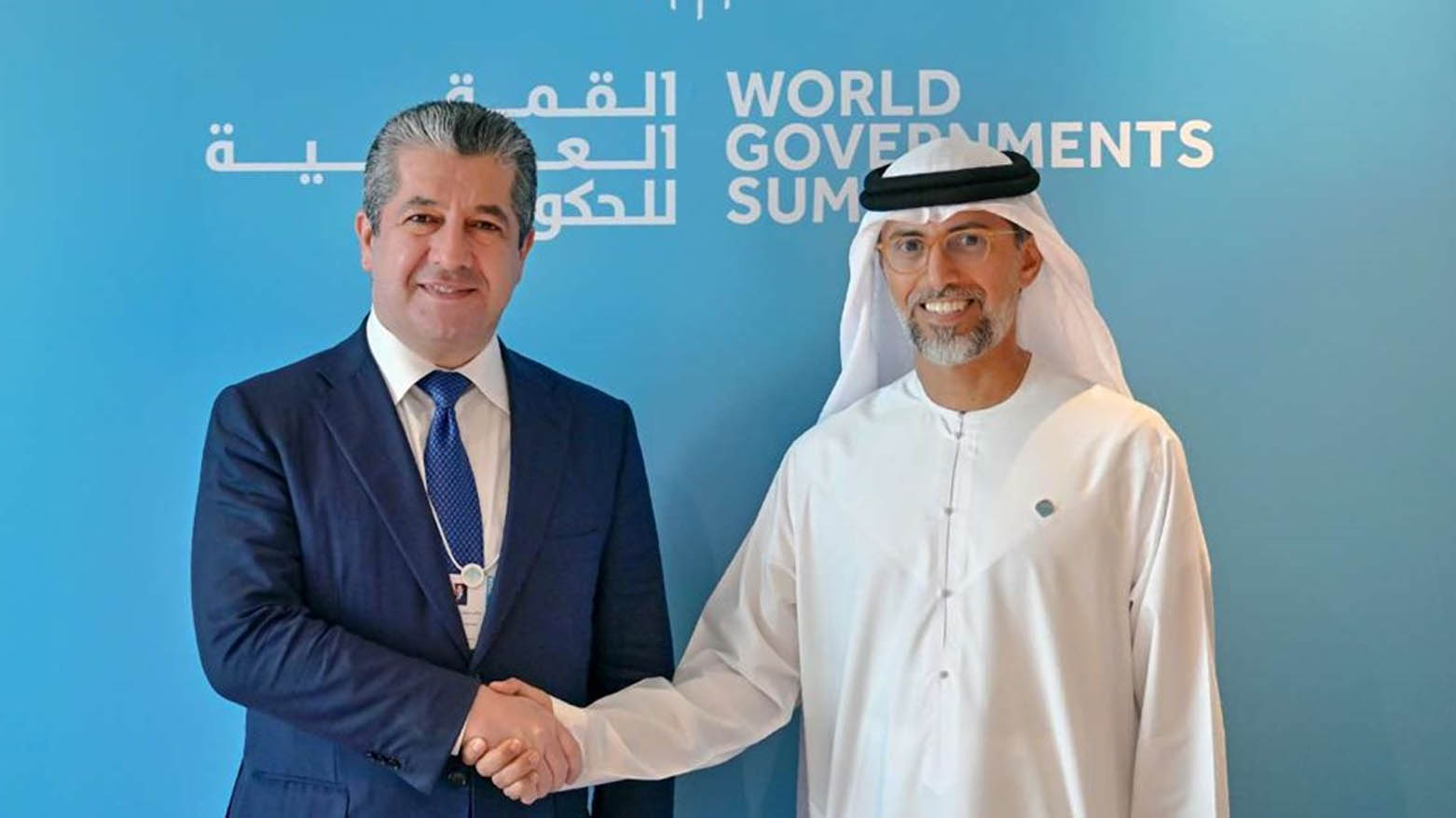
ERBIL (Kurdistan24) – Kurdistan Region Prime Minister Masrour Barzani met with UAE Minister of Energy and Infrastructure Suhail Al Mazrouei in Dubai on Wednesday, on the sidelines of the World Government Summit, to discuss expanding bilateral cooperation in key sectors.
According to a statement released by the Kurdistan Regional Government (KRG), the talks focused on strengthening ties in infrastructure and energy, with a particular emphasis on electricity. Both sides highlighted the Kurdistan Region’s Runaki program and the initiative to ensure a 24-hour electricity supply, underscoring the importance of sustainable energy solutions and long-term collaboration in the power sector.
The meeting follows a day after Prime Minister Barzani held talks with United Arab Emirates President Sheikh Mohammed bin Zayed Al Nahyan in Abu Dhabi, where both leaders emphasized the need to further strengthen relations between the Kurdistan Region and the UAE across various sectors. They also exchanged views on the overall situation in Iraq, as well as recent developments in Syria and the broader region.
Relations between the Kurdistan Region and the UAE have steadily expanded over the past decade, with Abu Dhabi emerging as a key economic and diplomatic partner. Emirati companies have invested in real estate, energy, tourism, and infrastructure across the Kurdistan Region, while high-level exchanges have intensified in recent years, reflecting a shared interest in long-term cooperation and regional stability.
The UAE has increasingly positioned itself as a regional hub for diplomacy and dialogue amid ongoing tensions, a role seen as strategically significant by Erbil. Kurdistan Region officials view closer ties with the UAE as vital for diversifying partnerships, attracting foreign investment, and maintaining balanced relations throughout the Middle East.