French President Reaffirms Military Support for Qatar as Gulf States Report New Wave of Drone and Missile Attacks
France has deployed air defense support to Qatar as President Emmanuel Macron reaffirmed Paris’ military and political backing for Doha amid rising regional tensions and ongoing missile and drone attacks in the Gulf.
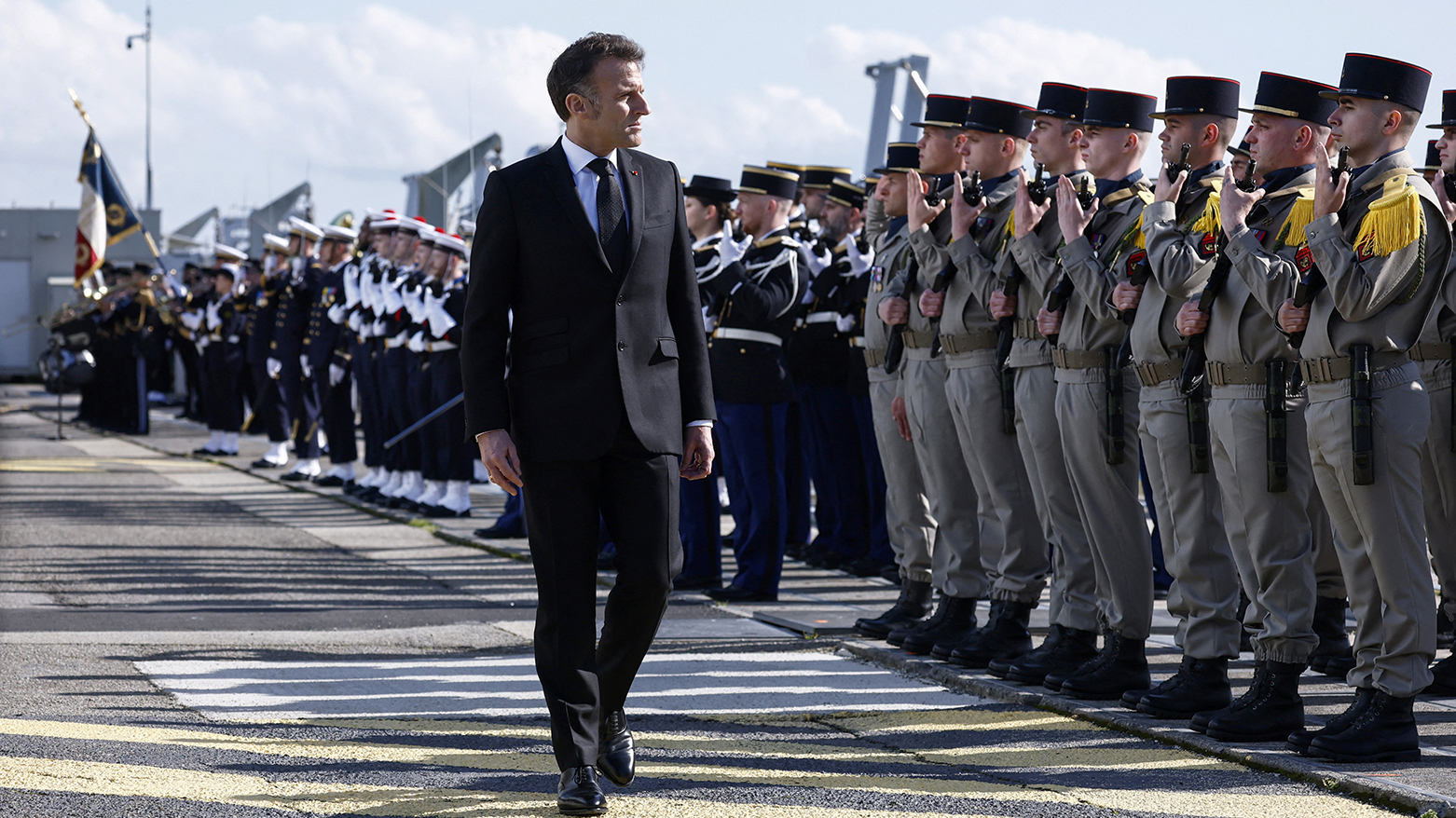
ERBIL (Kurdistan24) - Emmanuel Macron, President of France, announced that his country has deployed air defense capabilities in support of Qatar following talks with Tamim bin Hamad Al Thani, the Emir of Qatar, reaffirming Paris’ military and political backing for Doha.
In a post on the social media platform X on Sunday, Macron said he had just met with the Qatari emir and reiterated France’s “total solidarity” with Qatar in the face of what he described as unacceptable attacks.
Macron praised the effectiveness of the Qatari armed forces in maintaining security inside the country, including protecting foreign nationals living in Qatar.
He emphasized that France and Qatar share the same priority of securing global energy supplies, stressing that oil and gas tankers must be able to safely navigate through the Red Sea and the Strait of Hormuz.
The French president also revealed that Paris is currently deploying defensive military support in the region, particularly in the air domain, for the benefit of Qatar.
“France is a reliable and loyal ally and will continue to honor its commitments alongside Qatar,” Macron said, adding that both countries believe long-term stability can only be achieved through de-escalation and negotiations rather than continued military confrontation.
Amid the rising regional tensions, the Sultanate of Oman warned that the region is facing a dangerous turning point due to the expansion of military operations and the dominance of force over dialogue.
During an emergency meeting of the Arab League foreign ministers held via video conference, Badr Albusaidi, Oman’s foreign minister, said the ongoing conflict could have serious political, economic and security consequences.
He called on regional and international actors to intensify diplomatic and political efforts to reach a peaceful solution to the root causes of the tensions, stressing that only diplomacy can preserve regional stability and prevent further destruction.
Missile and Drone Attacks
Meanwhile, the Ministry of Defense of the United Arab Emirates released new statistics regarding aerial attacks targeting the United Arab Emirates.
According to the ministry, UAE air defense systems detected 17 ballistic missiles on Sunday, intercepting 16 of them while one fell into the sea.
Authorities also reported that 117 drones were launched toward the UAE, with 113 intercepted and four falling inside the country.
Since the start of the Iranian attacks, officials say a total of 238 ballistic missiles have been fired, of which 221 were intercepted, 15 fell into the sea, and two reached their targets.
The ministry also reported that 1,422 Iranian drones have been launched, with 1,342 neutralized and 80 crashing. Eight cruise missiles were also intercepted.
Regarding casualties, officials said the attacks killed four people holding Pakistani, Nepali, and Bangladeshi nationalities. Another 112 people sustained minor to moderate injuries, including citizens of the UAE and foreign nationals from countries such as Egypt, Sudan, Ethiopia, the Philippines, India, Bangladesh, Sri Lanka, Azerbaijan, Yemen, Uganda, Eritrea, Lebanon, Afghanistan, Bahrain, Comoros, and Türkiye.
The ministry reiterated that it remains on full alert to confront any threats and will firmly respond to any attempts to undermine the country’s security and sovereignty.