Civil Society Figures Gather in Diyarbakir for Peace and Social Dialogue Forum
Officials and civil society figures gathered in Diyarbakir for the “Peace and Social Freedom Forum,” a multi-day initiative aimed at developing a regional roadmap for coexistence, with participation from Kurdish officials from the Kurdistan Region.
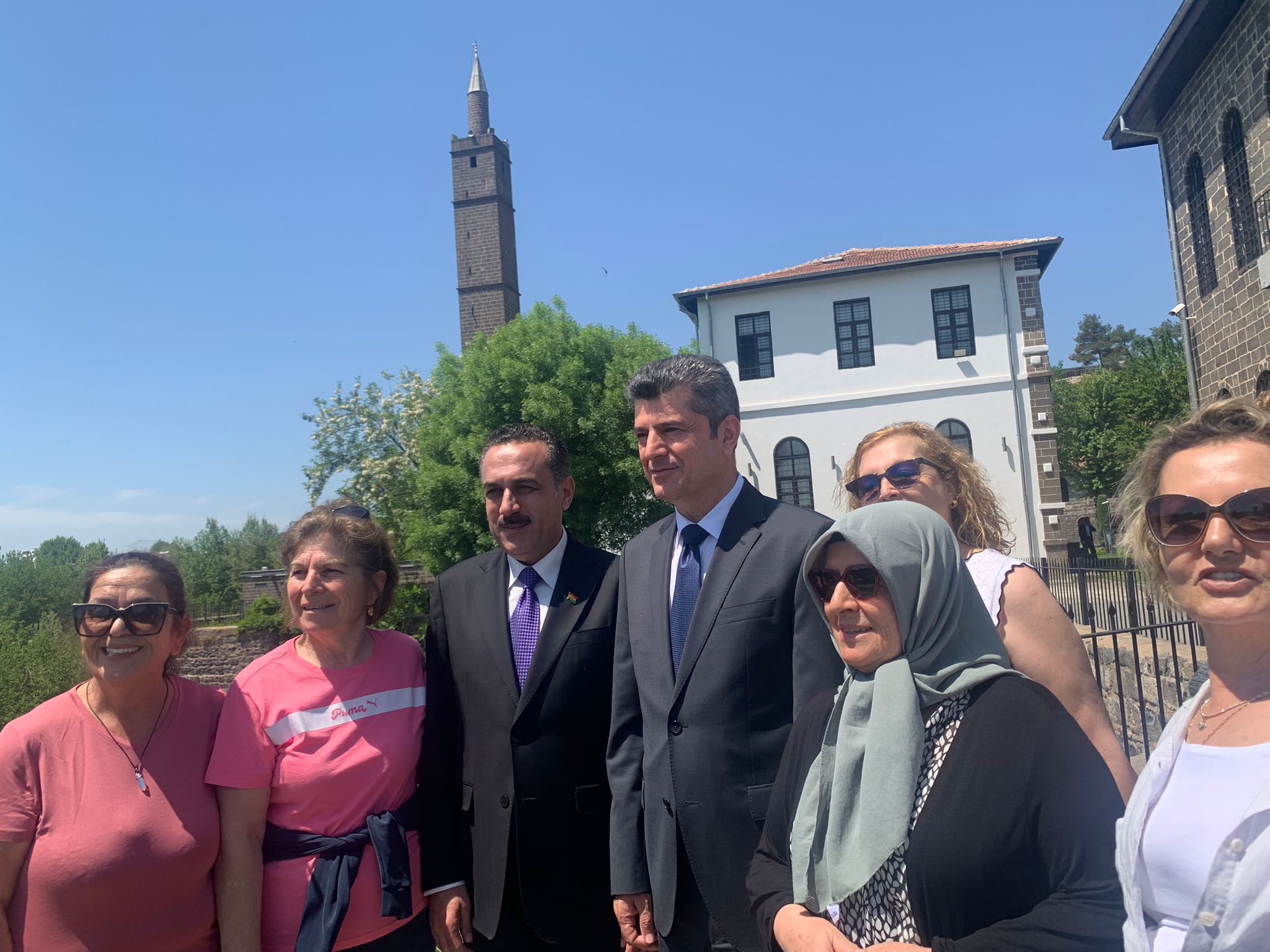
ERBIL (Kurdistan24) - The municipality of Diyarbakir (Amed) in Northern Kurdistan (southeast of Türkiye) has launched the "Peace and Social Freedom Forum," an institutional initiative organized to draft a collaborative roadmap aimed at consolidating regional coexistence. This multi-day event commenced on Tuesday and quickly drew notable political figures, including Erbil Governor Omed Xoshnaw and Duhok Governor Ali Tatar from Kurdistan Region, who arrived in the city to participate in the scheduled activities.
The forum represents a concerted effort to utilize civil society dialogue as a mechanism for addressing regional challenges.
The gathering is designed to explore how peace and social freedom can be systematically integrated across all levels of daily life.
By examining societal structures from the neighborhood and family levels up to local governments and non-governmental organizations, the event seeks to formulate a comprehensive framework for conflict resolution and institutional stability.
Forum Opens in Diyarbakir
Supported by a coalition of local and international networks, the forum's organized activities are scheduled to continue through May 16.
The event serves as a major platform for regional discourse, evidenced by the early arrival of the two prominent governors from the Kurdistan Region. Their attendance highlights the broader geographical relevance of the forum's stated goals regarding community relations.
The primary objective of these ongoing discussions is to foster a common understanding among diverse groups.
The organizers intend to gather the insights generated during the panels and translate them into a unified, actionable framework, which has been explicitly designated as the final goal of the forum.
Civil Society Engagement Highlighted
To achieve its collaborative objectives, the forum has convened a wide demographic of participants.
The panels and related activities are being attended by a large contingent of academics, civil society organizations, and various activist institutions.
Additionally, the event features contributions from regional and international artists, reflecting an effort to blend cultural expression with political and social discourse.
Platform for Discussion on Social Issues
The forum's comprehensive agenda covers a vast array of topics deemed critical to social freedom and peaceful coexistence.
The scheduled panels will heavily focus on governance and human rights, addressing issues related to law, justice, and the ongoing challenges of migration and forced displacement.
The duties and rights of specific demographics, particularly women, youth, and children, are also central to the planned discussions.
Furthermore, the forum addresses cultural, environmental, and economic stability.
According to the event's agenda, participants are scheduled to debate matters concerning education, research, language, literature, history, and collective memory.
Further details from the Diyarbakir forum indicate that its agenda places strong emphasis on the intersection of human activity and the environment, with structured discussions spanning ecology, agriculture, labor, and broader economic policy.
The forum also extends its focus to public welfare domains, including health and sports, as well as sociocultural dimensions such as religion and belief systems.