Kurdistan Region Seeks Updated Unemployment Figures Through New Field Study
The Kurdistan Region is preparing a nationwide labor-force survey to update official unemployment figures, with fieldwork set to begin next month in coordination with the Statistics Board and the International Labour Organization (ILO).
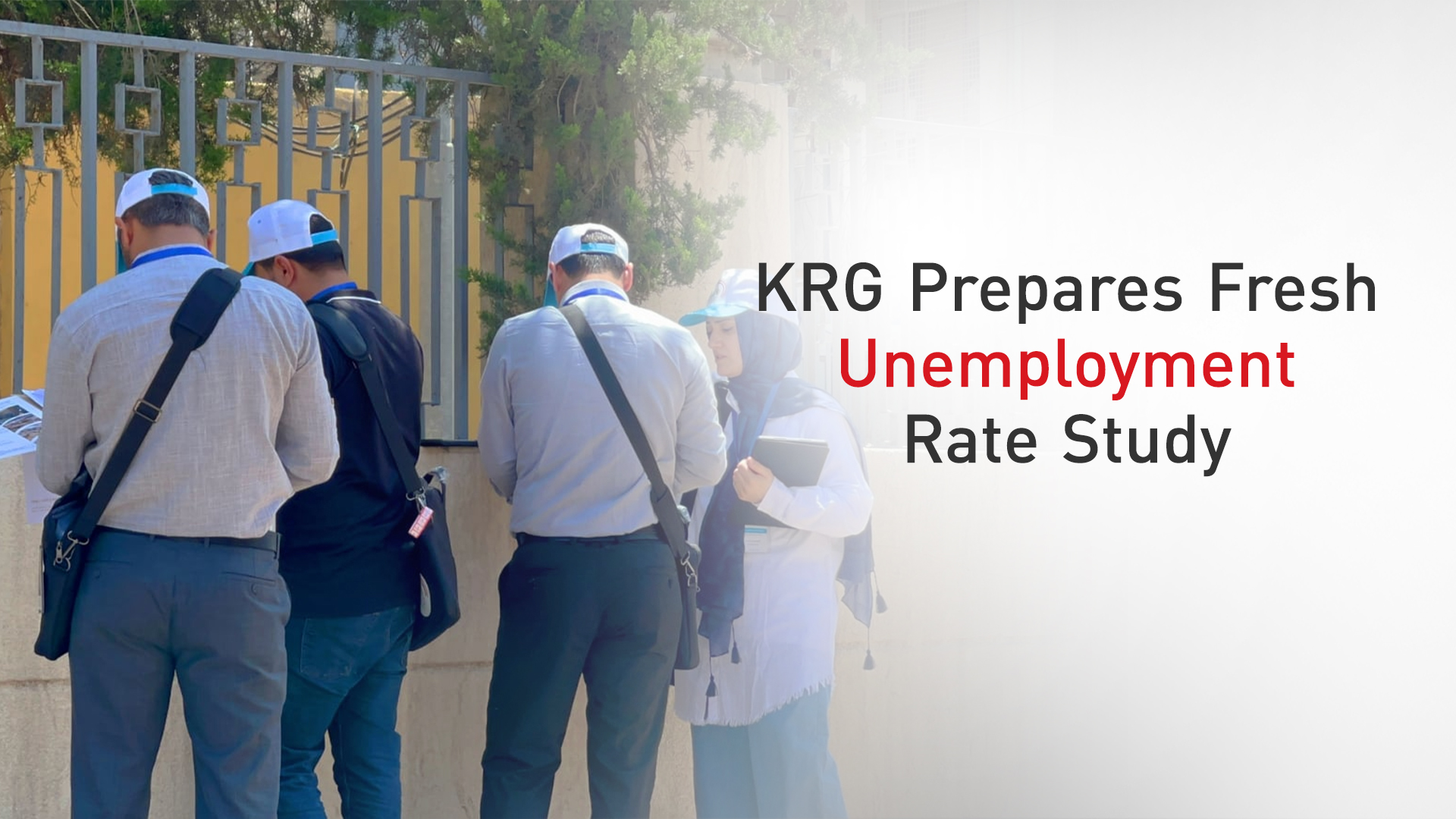
ERBIL (Kurdistan24) - Authorities in the Kurdistan Region are preparing to initiate a comprehensive field survey to determine the latest official unemployment rate and assess current labor-force dynamics. According to remarks by a senior regional official, the process is scheduled to begin in the coming weeks and is intended to provide critical, updated data to inform future economic governance and institutional policymaking.
Sirwan Mohammed, the Deputy Minister of Planning for the Kurdistan Regional Government (KRG), told Kurdistan24 on Sunday that logistical preparations for the labor force survey have entered their final stage.
Mohammed stated that, barring any unforeseen obstacles, field data collection will officially launch at the end of next month. The initiative highlights a renewed administrative focus on securing accurate socioeconomic metrics to guide public services and investment strategies.
The determination of precise unemployment data serves as a foundational element for assessing a region's economic health.
This policy effort underscores that governments and institutional planners rely heavily on such statistics to design effective labor reforms, direct funding for job creation, and address systemic economic challenges.
By securing verifiable data through formal surveys, authorities aim to move beyond speculative estimates, providing both policymakers and potential investors with a clear, transparent picture of the workforce environment and regional economic stability.
Labor Market Data Under Review
The forthcoming survey will utilize a specific, targeted methodology to gauge employment levels.
According to the Deputy Minister of Planning, the process will be strictly household-based. Mohammed explained that survey teams will visit families directly to question members about their employment status, ensuring a comprehensive demographic sample.
He noted that the survey's scope does not include physical business sites, commercial companies, or factories, maintaining a focus on individual workforce participation rather than commercial enterprise data.
The timeline for the initiative requires extensive coordination.
While the actual fieldwork for data collection will last one month, Mohammed indicated that the preparatory phases and subsequent data analysis demand a significant amount of time.
According to the information agthered by Kurdistan24, officials anticipate that the newly determined unemployment rate will be officially released before the end of the year.
This complex administrative effort is not being conducted in isolation.
The survey is being implemented in direct coordination with the regional Statistics Board and the International Labour Organization (ILO), Kurdistan24 report discovered.
The involvement of the ILO indicates a commitment to utilizing internationally recognized scientific procedures for data collection and analysis, reinforcing the institutional credibility of the forthcoming findings.
Economic Context and Previous Figures
The necessity for a new survey is driven by the elapsed time since the last comprehensive review of the region's labor market.
According to Mohammed, the most recent survey of a similar scale was conducted in 2021.
Because of this gap, regional institutions do not want to rely on economic predictions or outdated models; instead, they seek to determine and publish the actual unemployment rate using rigorous methodological standards.
While awaiting the new data, previous national statistics provide a baseline for the current economic context. According to the latest figures from a prior survey conducted across Iraq, the unemployment rate in the Kurdistan Region stood at 14.97% in 2024.
The new survey will seek to determine how these figures have shifted over the past two years, particularly concerning demographic challenges such as youth unemployment.
The Kurdistan24 report explained that accurately measuring the rates of job creation and the specific levels of unemployment among the youth demographic remains a primary objective of the field survey.
Economic Planning and Policy Use
The ultimate purpose of launching this labor-force assessment extends beyond mere statistical recording; it is designed to be an active tool for economic governance.
According to the report, securing accurate data is essential for enabling the government to make informed decisions regarding public projects and broader economic policies.
By understanding the exact dimensions of unemployment and labor-force participation, regional planners can better allocate resources, design targeted vocational training programs, and address sectors experiencing labor shortages or surpluses.
Transparency in statistical reporting also plays a vital role in economic confidence, providing international organizations, financial institutions, and private sector investors with the verifiable information required to assess the region's economic viability.
The forthcoming determination of the unemployment rate, conducted in coordination with international organizations, is expected to contribute to a significantly improved understanding of current labor-market conditions and support long-term economic planning in the Kurdistan Region.