Kurdistan Region Remains Safe Haven for Refugees Despite Mounting Pressures, Interior Minister Says
Reber Ahmed urges Baghdad and international community to share responsibility as nearly one million displaced people remain in the Kurdistan Region
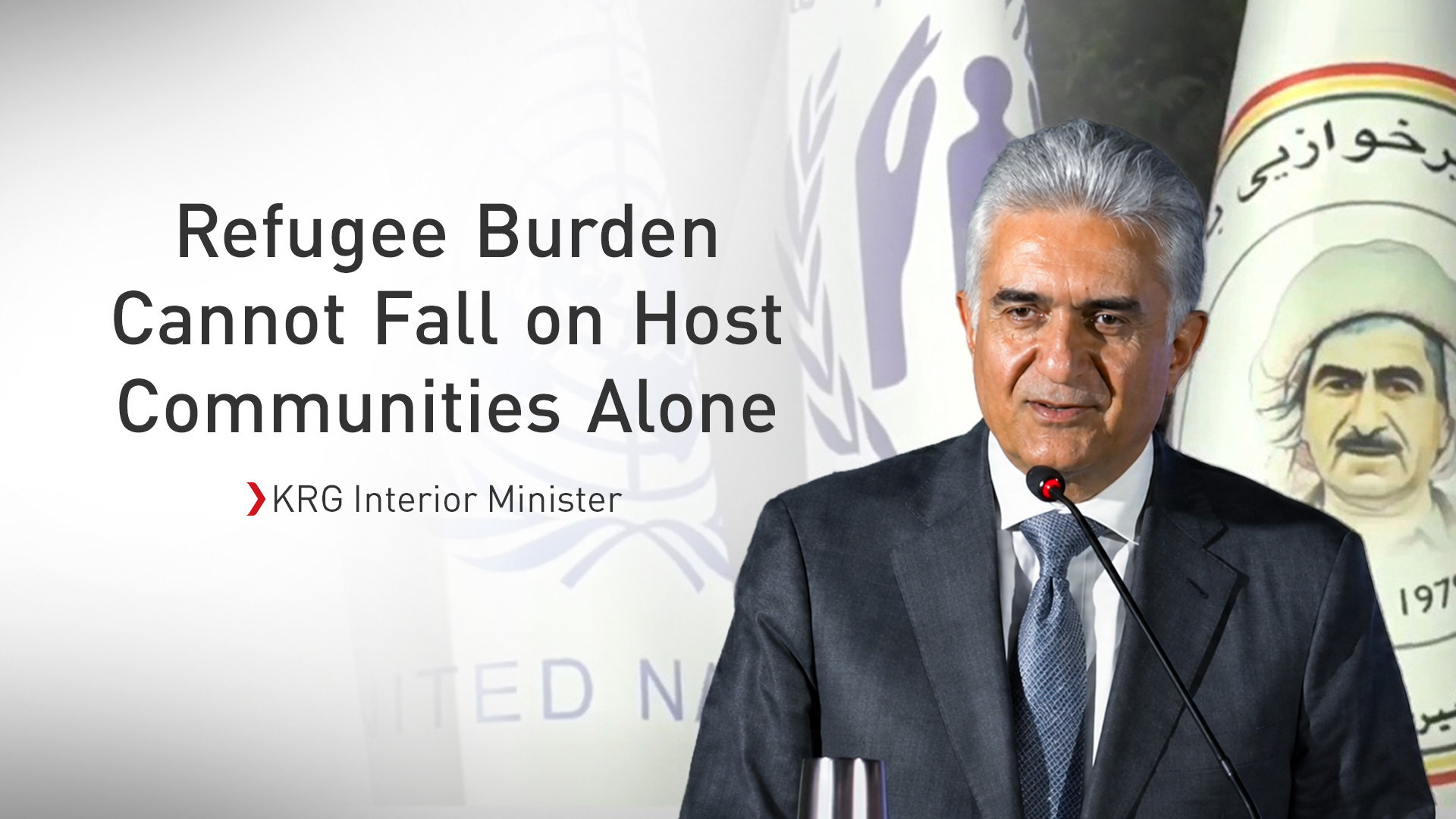
ERBIL (Kurdistan24) — Kurdistan Region Interior Minister Reber Ahmed said on Saturday that the Kurdistan Region has served as a safe and historic refuge for displaced people and refugees for decades, while calling on the Iraqi federal government and the international community to assume greater responsibility in addressing the ongoing displacement crisis.
In a statement marking World Refugee Day, Ahmed said the occasion is not merely about counting the number of displaced people worldwide but about honoring the resilience and courage of millions forced to flee their homes due to oppression, violence, and terrorism.
“For decades, the Kurdistan Region has been a geographically safe haven and a dignified refuge for all those escaping persecution,” Ahmed said.
The minister highlighted the Region’s role in hosting more than 2.5 million refugees and internally displaced persons (IDPs) over the years, describing the effort as part of a broader humanitarian policy implemented under the leadership of Kurdistan Region President Nechirvan Barzani and Kurdistan Region Prime Minister Masrour Barzani.
He said the Kurdistan Regional Government (KRG) had mobilized its institutions and resources to ensure that displaced families and refugees were not left without support despite significant economic and administrative challenges.
Ahmed noted that the Kurdistan Region currently hosts nearly one million displaced people, even as international assistance has declined in recent years. He warned that the reduction in aid has placed considerable pressure on public services, particularly in the education and healthcare sectors.
The interior minister also pointed to reforms introduced since 2023, including a comprehensive registration system for displaced people that aligns with international standards. He said the KRG has worked to facilitate rapid access to essential services and praised the efforts of the Barzani Charity Foundation in supporting displaced communities living in camps.
Ahmed called on Iraq’s new federal government to honor its commitments and allocate the necessary budget to address the needs of displaced populations. He also urged the United Nations and the broader international community not only to maintain their support but to increase investment in programs that strengthen the resilience and self-reliance of displaced people.
“Humanitarian responsibility must be shared and should not fall solely on the shoulders of host communities,” he said.
Addressing the situation in Sinjar, Ahmed said that years after the genocide committed against the Yazidi community, the Sinjar Agreement has yet to be fully implemented. He stressed the importance of enabling displaced families to return home in dignity through the provision of security, reconstruction, and basic services in their areas of origin.
“The return of displaced people must be carried out with dignity and sustainability,” he said, emphasizing that long-term stability in Sinjar remains essential for resolving one of Iraq’s most enduring displacement crises.
Ahmed concluded by reaffirming that the Kurdistan Region's doors would remain open to those seeking safety and peace, pledging that the KRG would continue to uphold its humanitarian commitment to refugees and displaced communities.