A Desperate Search in the Rubble as International Aid Pours into Shattered Venezuela
Venezuela Quake Recovery Continues: death toll has reached at least 235, with thousands more injured, but the grim accounting is far from over.
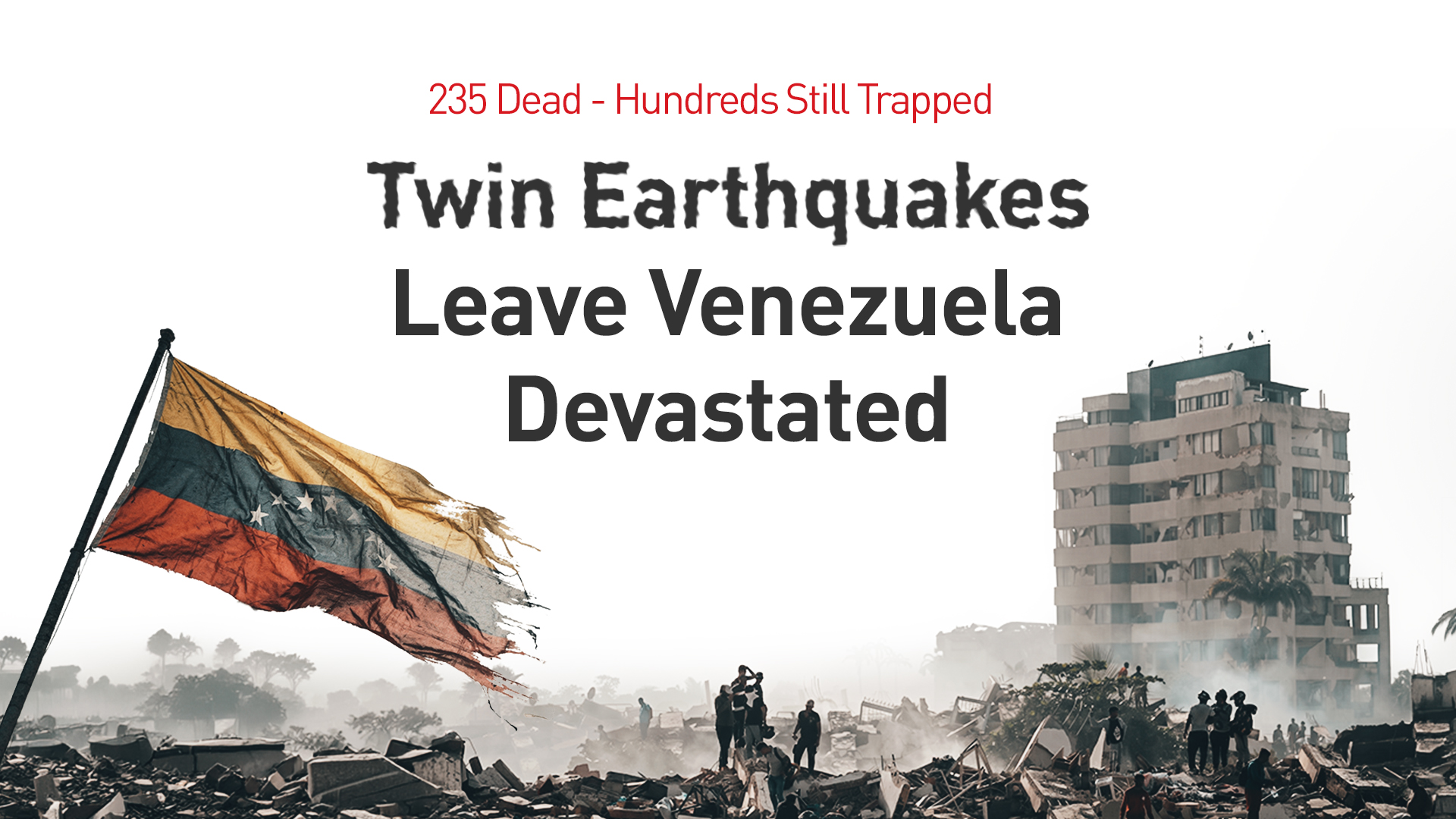
ERBIL (Kurdistan24) - The air in La Guaira is thick with dust and desperation. Heavy machinery growls through the wreckage, but occasionally, the roaring engines fall silent. Rescue workers raise their hands, signaling for absolute quiet. In the still heat, families and emergency crews strain to listen for voices buried beneath slabs of collapsed concrete.
Two days after a pair of catastrophic twin earthquakes shattered Venezuela's northern coast, the search for life has become an agonizing race against time. The official death toll has reached at least 235, with thousands more injured, but the grim accounting is far from over.
According to reporting by Agence France-Presse (AFP) journalists Margioni Bermudez and Leticia Pineda, more than 200 people were initially believed to be trapped under flattened structures.
In the worst-hit state of La Guaira, the human cost is visceral. Amparo del Giudice, a mother searching for her son, dug into a massive mound of concrete with her bare hands. "It is a lot of rock, and with bare hands it is impossible," she told AFP, her exhaustion giving way to raw despair.
In another neighborhood, residents listened helplessly as a young girl cried out from the ruins for hours.
"We need people... military personnel, to come and help so we can get her out," 48-year-old Dani Rizo pleaded, reflecting a widespread frustration over the slow initial pace of the rescue effort.
The devastation has pushed local emergency services to the breaking point.
A rescue worker, speaking anonymously to AFP, described the conditions as precarious, citing a severe shortage of trained personnel and significant technical limitations.
The crisis in La Guaira has been exacerbated by the closure of the local international airport, which sustained serious damage. The logistical bottleneck has complicated the arrival of aid, even as interim president Delcy Rodriguez declared the area a disaster zone.
The desperation on the ground has occasionally spilled over, with AFP reporters witnessing residents looting a local supermarket amidst the chaos.
Yet, beyond the immediate epicenter of destruction, a massive international relief operation is rapidly taking shape. Following a formal request for assistance from Venezuela's interim government, the United States has launched a "whole-of-government" response.
U.S. Marine Corps Major General Kevin J. Jarrard arrived in Caracas on Friday to coordinate the Department of War's support.
According to a separate AFP report detailing the international response, Jarrard serves as the senior official on the ground for U.S. Southern Command (SOUTHCOM), which is assisting relief operations alongside the State Department.
The U.S. commitment is substantial, involving the deployment of two warships, transport planes, and helicopters to provide specialized mobility services, assess damage, and deliver aid, backed by a mobilization of $150 million.
The American intervention carries profound geopolitical weight, occurring mere months after U.S. forces ousted former president Nicolas Maduro in January.
The relief effort is highly multinational. Rescue specialists have arrived from El Salvador, Switzerland, and Mexico, touching down at a military air base west of Caracas.
Offers of support have poured in from across the globe, spanning traditional allies and geopolitical rivals alike, including France, Spain, Portugal, China, India, Brazil, and even Iran. The United Nations and Vatican humanitarian agencies have also pledged significant assistance.
The tragedy underscores the deep geological vulnerability of Venezuela's northern coast, which sits precariously on the boundary between the Caribbean and South American tectonic plates.
While the region suffered deadly quakes in 1967 and 1997, Wednesday's 7.5-magnitude tremor was the most powerful to strike the area since 1900.
The sheer force of the seismic event was felt far beyond Venezuela's borders, prompting evacuations in Bogota, Colombia, and registering across northern Brazil.
In the capital, Caracas, the psychological toll of the disaster remains palpable. Many residents, terrified of aftershocks, spent the night sleeping in their cars or on the streets.
For those whose loved ones remain unaccounted for, the wait is agonizing. Rita Gomez, 60, traveled to the capital after seeing images on social media of her daughter's collapsed apartment building.
Standing before the ruins as heavy machinery finally arrived, she clung to the hope that defines the early, desperate hours of any earthquake recovery. "There is a lot of cooperation from the neighbors," she told AFP. "We are trusting in God that they will find her alive."
As the critical 72-hour survival window begins to close, the focus will increasingly shift from rescue to recovery. But for now, amidst the broken concrete of La Guaira and Caracas, the frantic, painstaking search for life continues.
|
Summary As the death toll from Venezuela's twin earthquakes reaches 235, families and rescue workers are desperately searching through rubble. An international relief effort, coordinated heavily by the U.S. military and global partners, is arriving to assist communities overwhelmed by the destruction. |