Hezbollah rejects US-backed Israel-Lebanon framework as Israeli strike hits south
Hezbollah Secretary-General Naim Qassem calls the agreement a "surrender of sovereignty" as Israel launches its first airstrike since the trilateral deal
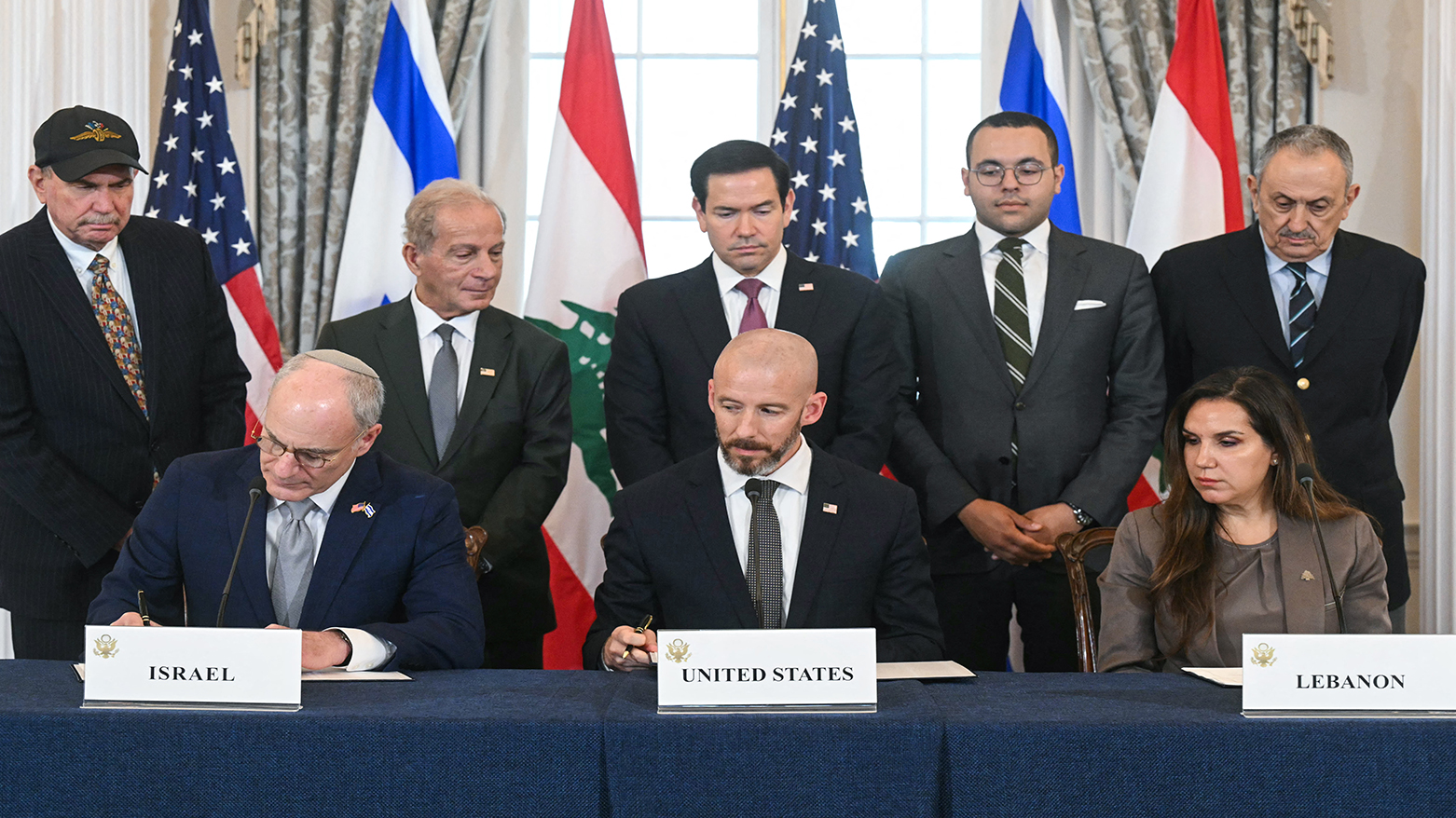
ERBIL (Kurdistan24) — Hezbollah Secretary-General Naim Qassem on Saturday rejected the newly signed U.S.-brokered framework agreement between Israel and Lebanon, describing it as a "humiliating" surrender of Lebanese sovereignty, as Israel carried out its first airstrike in southern Lebanon since the accord was announced.
In a statement, Qassem declared the agreement "null and void," accusing Lebanese authorities of legitimizing Israel's military presence in the country.
"The framework agreement in Washington is humiliating, shameful, and a surrender of sovereignty. This agreement is null and void, and the provisions of the Iranian-American memorandum of understanding must be implemented," he said, calling the deal a "grave blunder."
His remarks came hours after the Israeli military said it had conducted an airstrike targeting suspected militants in the Nabatieh area of southern Lebanon. The Israeli military said the strike targeted "suspected terrorists who posed a threat to IDF soldiers," adding that the results were still being assessed.
The strike was the first reported Israeli attack in Lebanon since Israel, Lebanon, and the United States signed a trilateral framework agreement in Washington on Friday aimed at laying the groundwork for a broader peace accord between the longtime adversaries.
At the signing ceremony, U.S. Secretary of State Marco Rubio described the agreement as an initial step toward ending decades of conflict.
"It begins to put in place a framework for lasting peace and security," Rubio said. "It's the beginning of the beginning. There's a lot of work ahead."
According to the text of the agreement, Israel and Lebanon declared their intention to "conclusively end the conflict, address its underlying causes, and thereby formally conclude any state of war between them."
However, deep disagreements remain over the future of southern Lebanon and Hezbollah's armed presence.
Qassem has repeatedly insisted that any agreement must include a complete Israeli withdrawal from Lebanese territory, rejecting any arrangement that allows Israeli troops to remain inside Lebanon.
Israeli Prime Minister Benjamin Netanyahu, by contrast, said Friday that the agreement permits Israeli forces to remain in a designated security zone in southern Lebanon until Hezbollah is disarmed.
Netanyahu also said the Israeli military would gradually transfer control of certain areas to the Lebanese army, including territory outside the security zone south of the Litani River and another area north of the river. He added that Lebanese civilians displaced from the security zone would not yet be allowed to return to their homes.
The agreement also states that Israel's military operations in Lebanon are "solely a consequence of the attacks, threat posed by, and hostile intent of non-state armed groups, particularly Hezbollah."
It further says that eliminating those threats—including through the disarmament of non-state armed groups and additional bilateral security arrangements—would remove the need for future Israeli military operations or a continued military presence in Lebanon. The document also emphasizes that Israel "has no territorial ambitions in Lebanon."
Lebanon was drawn into the broader regional conflict on March 2 after the Iran-backed Hezbollah movement launched rocket attacks against Israel, saying it was retaliating for the killing of Iran's Supreme Leader, Ayatollah Ali Khamenei, in U.S.-Israeli strikes.
Israel responded with an extensive air campaign and a ground offensive in southern Lebanon, where Israeli forces seized territory and carried out widespread demolitions of homes and infrastructure.
The framework agreement signed on Friday followed five rounds of U.S.-mediated negotiations between Israeli and Lebanese officials. While the accord seeks to establish a pathway toward a permanent peace arrangement, Hezbollah's outright rejection of the deal and Israel's insistence on maintaining troops inside southern Lebanon underscore the significant obstacles that remain before any lasting settlement can be achieved.