Hezbollah Says It Reserves Right to Defend Its Homeland After Israeli Attacks
Lebanese Parliament speaker says proposed framework fails to protect Lebanon's rights as Israel continues military operations in the south
ERBIL (Kurdistan24) — Hezbollah on Monday said it reserves the right to defend Lebanon after accusing Israel of repeatedly violating a ceasefire with fresh military strikes, as opposition mounted against a U.S.-backed framework agreement aimed at ending hostilities and paving the way for peace between Lebanon and Israel.
In a statement, the Iran-backed group said Israel's latest attacks constituted "a blatant violation of the ceasefire" that Hezbollah had respected, adding that it was monitoring the situation and "reserves its right to defend its homeland and its people."
The warning came a day after the Israeli military destroyed what it described as a major Hezbollah tunnel in southern Lebanon, despite a trilateral framework agreement signed Friday by Lebanon and Israel under U.S. sponsorship.
Israeli operation targets Hezbollah tunnel
The Israeli army said the tunnel, located near the southern Lebanese village of Majdal Zoun, stretched more than 200 meters and reached a depth of over 25 meters.
In a joint statement, Israeli Prime Minister Benjamin Netanyahu and Defense Minister Israel Katz said the underground facility contained hundreds of weapons and multiple launch shafts intended to target Israel and its civilians.
The statement added that Israel had informed both the United States and the U.S. representative in Lebanon before carrying out the demolition.
An AFP reporter in the coastal city of Tyre saw smoke rising from the area following the explosion, while residents in nearby towns reportedly left their homes after local media warned of an imminent Israeli detonation.
Lebanon's state-run National News Agency (NNA) reported several Israeli strikes on Sunday, including around the southern city of Nabatieh. The Lebanese Health Ministry said two people were wounded by an Israeli stun grenade in southern Lebanon.
The Israeli military also said one of its soldiers was killed during fighting in southern Lebanon and later announced it had killed a Hezbollah fighter who had engaged Israeli forces.
Political opposition grows
The military developments coincided with growing political resistance inside Lebanon to the U.S.-brokered agreement.
Lebanese Parliament Speaker Nabih Berri, a key Hezbollah ally, rejected the framework, saying it failed to safeguard Lebanon's national interests.
"This agreement will not pass, and it will not be implemented in its current form," Berri said in a statement issued through the Amal Movement.
He described the proposal as "an agreement of dictates, not an agreement that preserves Lebanon's rights," and vowed to oppose it politically.
Berri also compared the proposal to the ill-fated May 17, 1983 agreement between Lebanon and Israel, calling the current framework "ten times worse."
The agreement would condition a full Israeli withdrawal from Lebanese territory on the Lebanese government's disarmament of Hezbollah by establishing "pilot zones" to be secured by the Lebanese Armed Forces.
Lebanese President Joseph Aoun told U.S. President Donald Trump on Saturday that Beirut would "assume its responsibilities" in implementing the agreement.
Israeli Prime Minister Benjamin Netanyahu hailed the framework as a historic step toward peace and a strategic setback for Iran, while Defense Minister Israel Katz insisted Israeli forces would remain in Lebanon as long as Hezbollah retained its weapons.
Hezbollah rejects disarmament
Hezbollah has consistently opposed negotiations with Israel and has rejected the agreement outright. The group's leader, Naim Qassem, said Saturday that Hezbollah considered the framework "null and void" and described it as "a surrender of sovereignty."
Hezbollah lawmaker Hassan Fadlallah warned Sunday that the Lebanese authorities' handling of the agreement risked fueling domestic unrest.
"What the authorities have done amounts to sedition aimed at pushing the country into chaos and shifting the conflict from one with the enemy to an internal conflict," Fadlallah said.
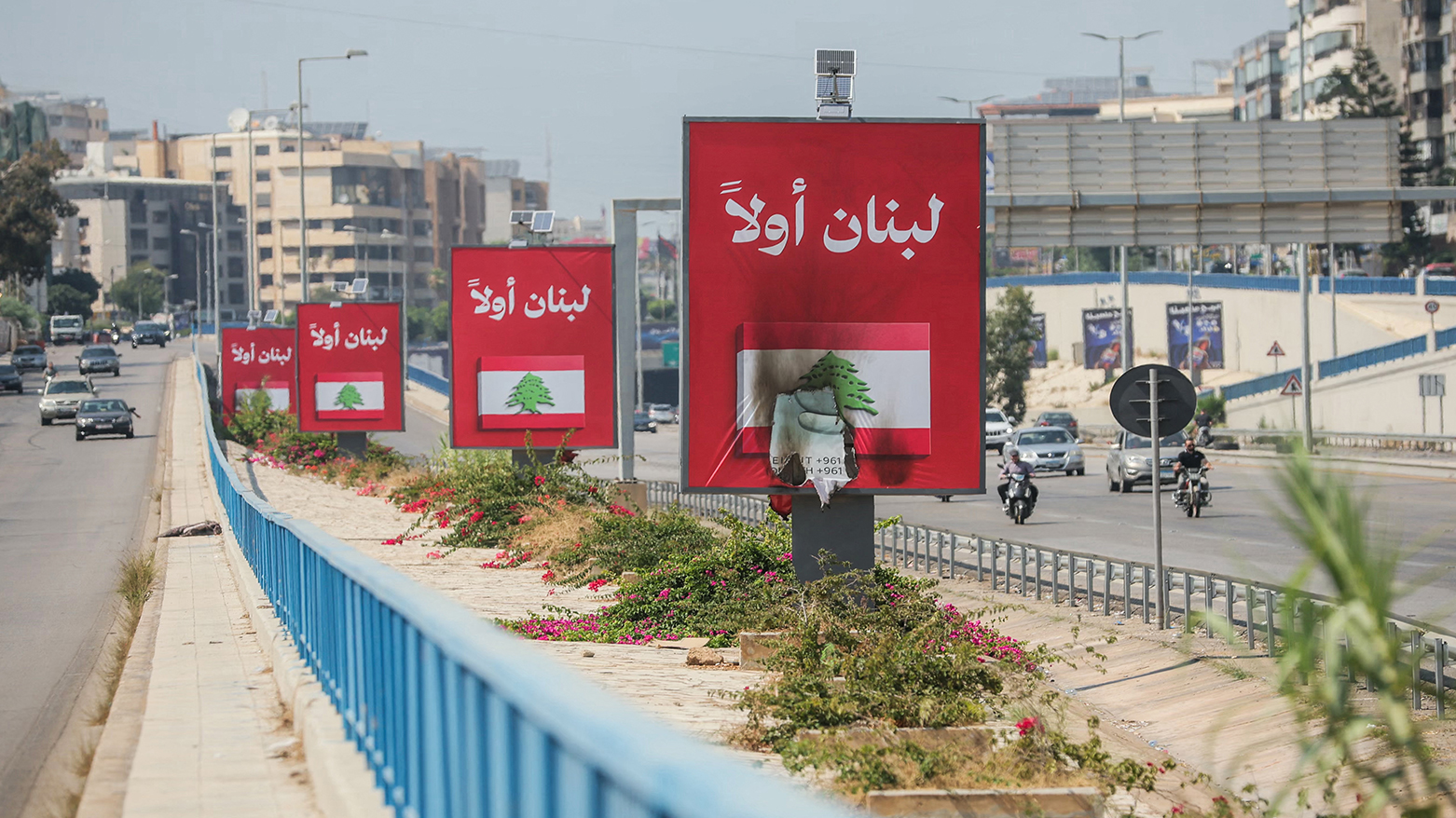
The political tensions were also visible in Beirut, where an AFP correspondent reported that signs reading "Lebanon First" were burned along the airport road after authorities removed previous billboards thanking Iran.
Regional dimension
The latest dispute comes after Hezbollah entered the broader Middle East conflict in March by launching rockets at Israel following the killing of Iran's supreme leader in joint U.S.-Israeli strikes. Israel responded with an extensive air campaign and a ground offensive in Lebanon.
Hezbollah has repeatedly urged the Lebanese government to coordinate its position with Iran's negotiations with the United States, while Tehran has insisted that any comprehensive ceasefire in the region should also address the situation in Lebanon.
In a phone call with Berri, Iranian Parliament Speaker Mohammad Bagher Ghalibaf said Tehran's objective remained ending the war in Lebanon, facilitating the return of displaced residents, and securing the withdrawal of Israeli forces from Lebanese territory.
The exchange highlighted Iran's continued engagement in discussions over Lebanon as diplomatic efforts to stabilize the country's southern border face opposition from Hezbollah and its allies.