Hegseth's plan to slash US troops in Europe was blocked by Rubio before it reached NATO
Defense Secretary was prepared to announce sweeping additional troop cuts at NATO headquarters in Brussels, but the proposal was nixed after senior officials, including Secretary of State Rubio, intervened
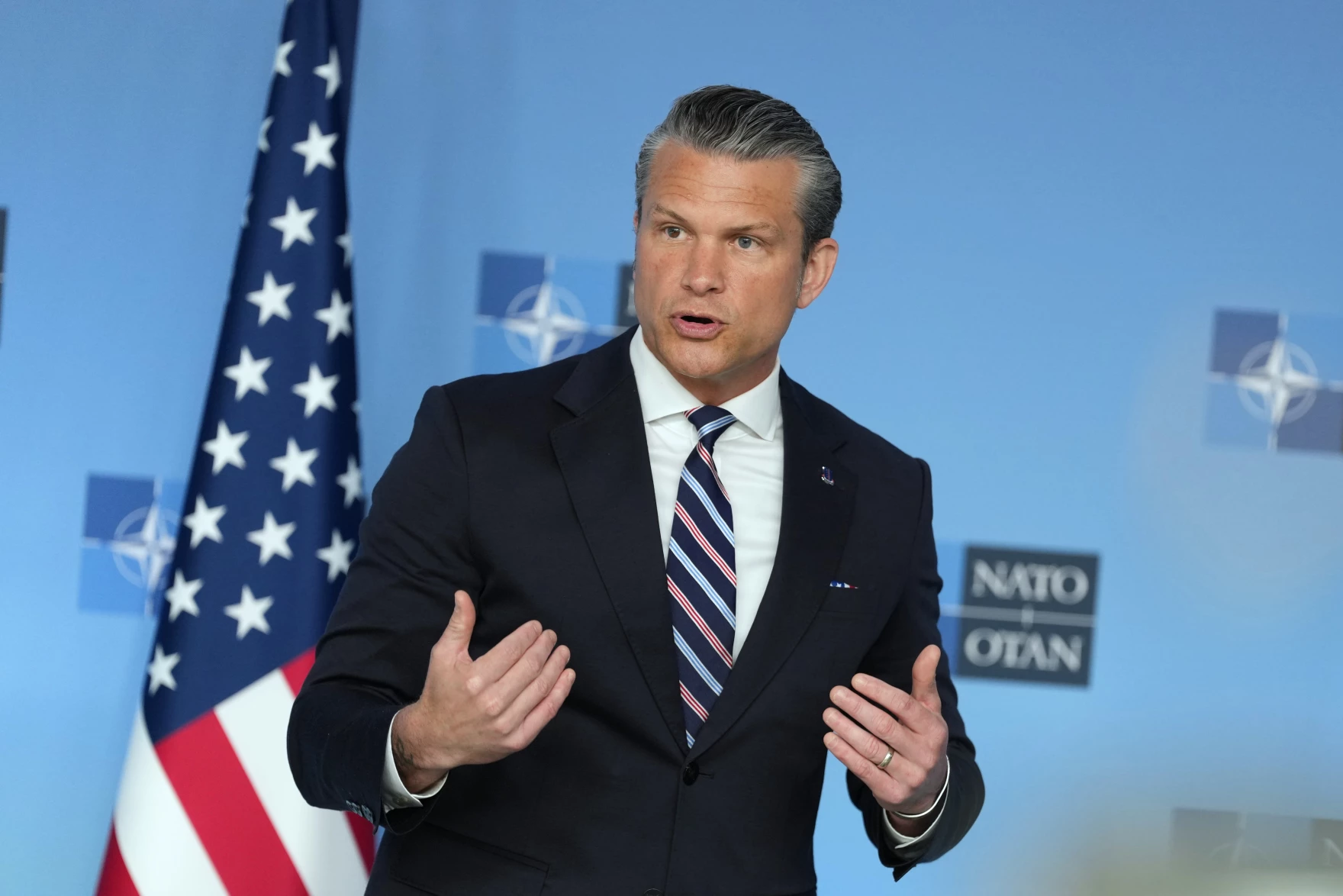
ERBIL (Kurdistan 24) - Defense Secretary Pete Hegseth prepared a far-reaching plan to announce significant additional cuts to US forces in Europe, intending to deliver the bombshell proposal personally to NATO's top military chiefs in Brussels, but the plan was blocked before it could take effect after it was shared with Secretary of State Marco Rubio and other senior administration officials, the Wall Street Journal reported Wednesday.
The Wall Street Journal disclosed that Hegseth had been planning to travel to Brussels to announce that the United States was preparing additional cuts to its forces in Europe that would go beyond the already significant reductions already enacted, including the cancelled deployment of an armored brigade to Poland and the earlier withdrawal of an infantry brigade from Romania. The proposal was nixed after Rubio, who also serves as President Trump's national security adviser, and other senior officials reviewed it and moved to block it.
A Pattern of Escalating Reductions
The shelved plan sits within a broader pattern of US force reductions in Europe that has unfolded throughout the Trump administration's second term. As Air and Space Forces Magazine reported on June 18, 2026, the Pentagon had already reduced the assets the US would commit to NATO in a conflict, including fewer aerial refueling planes, fighter jets, and strategic bombers, capabilities that Europe either lacks entirely or needs to significantly expand.
The Pentagon removed a brigade from Romania last year and recently halted the deployment of an armed brigade to Poland. On June 3, 2026, the US announced it would no longer provide an aircraft carrier and support ships, aerial refueling planes, and dozens of fighter jets in a crisis scenario, a shift that has forced NATO to develop contingency planning without those assets.
Brussels Visit Produced a Review Instead
Rather than the bombshell troop cut announcement Hegseth had originally planned, his June 18, 2026, visit to NATO headquarters in Brussels resulted in the launch of a six-month review of America's military presence in Europe. Hegseth told allied defense ministers the review would examine "America's core posture and basing in Europe" and warned that the assessment would produce clear winners and losers among the alliance's 32 member states. "It's a review that some countries will fail, and others will pass with flying colors," he said, according to AP News on June 18, 2026.
Hegseth framed the review under what the Trump administration has dubbed NATO 3.0, a policy framework that seeks to transfer primary responsibility for the non-nuclear defense of Europe to European allies, with the United States retaining the lead role only in nuclear deterrence.
Rubio's Intervention and Intra-Administration Tensions
The blocking of Hegseth's original proposal by Rubio and senior officials reveals a significant fault line within the Trump administration over the pace and scope of US disengagement from Europe. While Hegseth has consistently pushed for more rapid and dramatic reductions, reflecting a hawkish America-first posture on burden sharing, more senior figures appear to have concluded that the proposed announcement carried too much diplomatic and strategic risk to proceed as planned.
The intervention also comes amid growing friction between the Pentagon and Republican lawmakers, who have inserted provisions into the draft 2027 National Defense Authorization bill intended to prevent further troop reductions in Europe at a time when the Russian threat shows no sign of diminishing, as Air and Space Forces Magazine confirmed on June 18, 2026.
European Allies Increasing Spending Despite US Pressure
The push for European reductions comes even as NATO allies have dramatically accelerated their own defense investments. European NATO members and Canada invested a combined $574 billion in defense in 2025, representing a 20 percent increase in real terms over 2024, according to Deutsche Welle. At the 2025 NATO Summit in The Hague, member states committed to increasing defense spending to 5 percent of gross domestic product by 2035, with 3.5 percent designated for core defense needs, according to NATO's official website.
Hegseth also used his Brussels visit to criticize European allies for what he described as a "shameful" refusal to grant US forces access to military bases for operations against Iran, a grievance that has sharpened tensions between Washington and several European capitals. Spain, in particular, declined to allow the use of its facilities for US operations against Iran, even as Britain permitted US bombers to fly missions from one of its bases.
Whether the shelved plan represents a permanently abandoned proposal or simply a deferred announcement that could resurface in a modified form after the six-month review concludes remains an open question, one that European governments and NATO planners will be watching closely as the alliance approaches its next annual summit, with Trump expected to attend.
| BRIEF: The Wall Street Journal revealed Wednesday that Defense Secretary Hegseth prepared a plan for sweeping additional US troop cuts in Europe to be announced at NATO headquarters, but the proposal was blocked after Secretary of State Rubio and senior officials reviewed it. A six-month review of US posture in Europe was launched instead. |