Trump Calls US-NATO Relationship ‘Ridiculous’ Ahead of Alliance Summit
Trump said the relationship between the United States and NATO is "not reciprocal" and complained that America's allies "were not there for us," renewing his longstanding criticism that European members rely too heavily on Washington for their security.
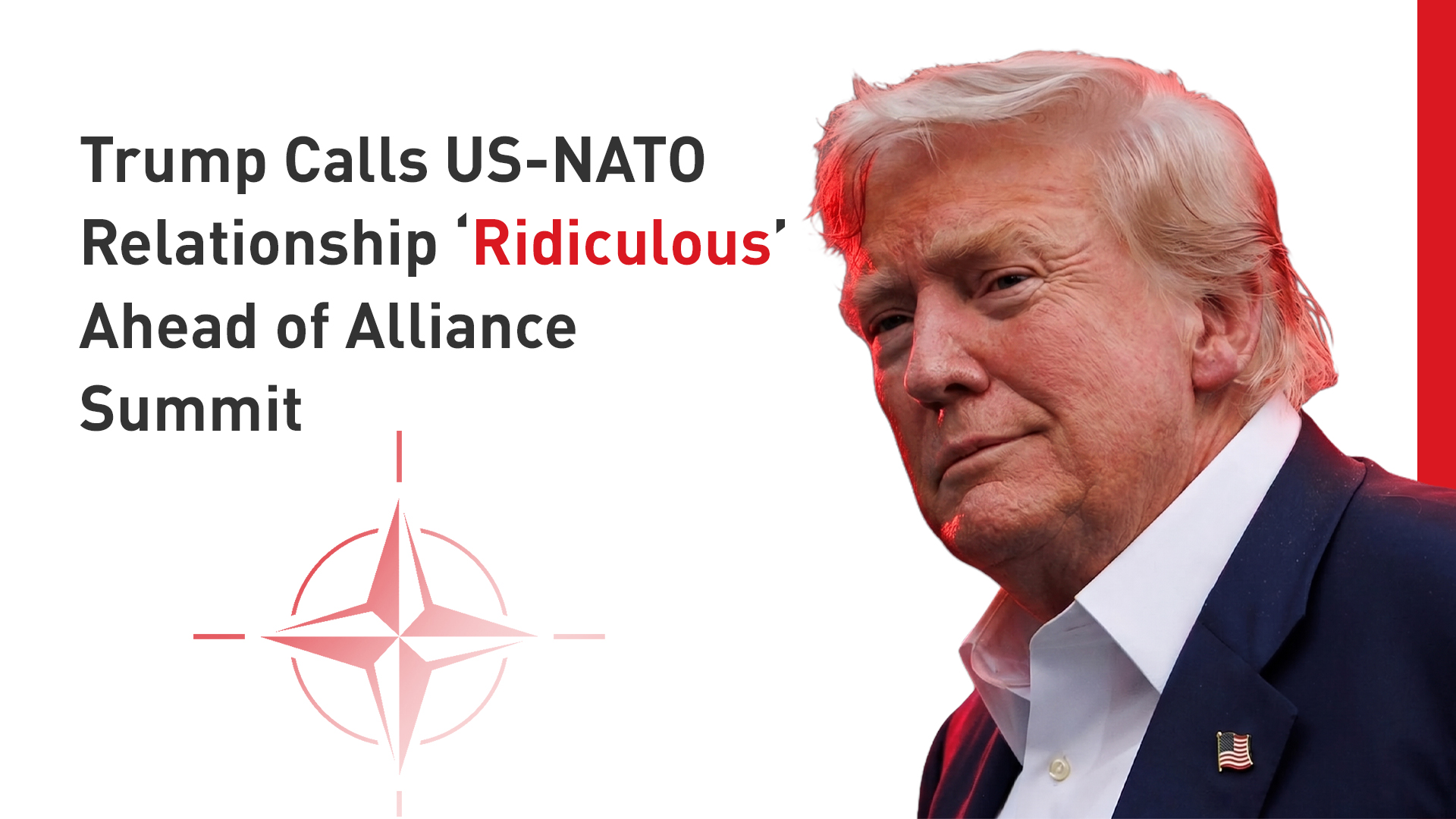
ERBIL (Kurdistan24) — U.S. President Donald Trump on Thursday criticized the United States' relationship with the North Atlantic Treaty Organization, describing it as "ridiculous" and arguing that Washington continues to shoulder an unfair share of the alliance's defense burden just days before NATO leaders gather for a summit in Ankara.
In a post on his Truth Social platform, Trump said the relationship between the United States and NATO is "not reciprocal" and complained that America's allies "were not there for us," renewing his longstanding criticism that European members rely too heavily on Washington for their security.
Trump has repeatedly criticized European allies over their response to the recent conflict involving Iran, accusing several countries of restricting the use of military bases by U.S. forces during the crisis. He has also continued to press European governments to assume greater responsibility for their own defense while the United States reduces its military commitments abroad.
His Truth Social post included a chart comparing defense spending among NATO members, highlighting that the United States spends significantly more on defense than many other allies.
The remarks come less than a week before NATO leaders from the alliance's 32 member states are scheduled to meet in the Turkish capital, Ankara, on July 7-8, where defense spending and the alliance's future priorities are expected to dominate discussions.
Founded in 1949, NATO is a transatlantic military alliance established to provide collective defense against external threats. Led primarily by the United States, the alliance played a central role in deterring the Soviet Union during the Cold War and has remained a cornerstone of European security for decades.
Under sustained pressure from Trump, NATO leaders agreed last year to increase defense-related spending to five percent of gross domestic product (GDP) by 2035, a significant rise from previous targets aimed at strengthening the alliance's military capabilities. Trump's latest comments underscore continuing divisions over burden-sharing ahead of the high-profile summit in Ankara.