U.S. Expands Naval Presence With USS Boxer Deployment as Iran Diplomacy Continues
The USS Boxer has joined a growing U.S. naval buildup in the Middle East, expanding American military capabilities as Washington continues negotiations with Iran.
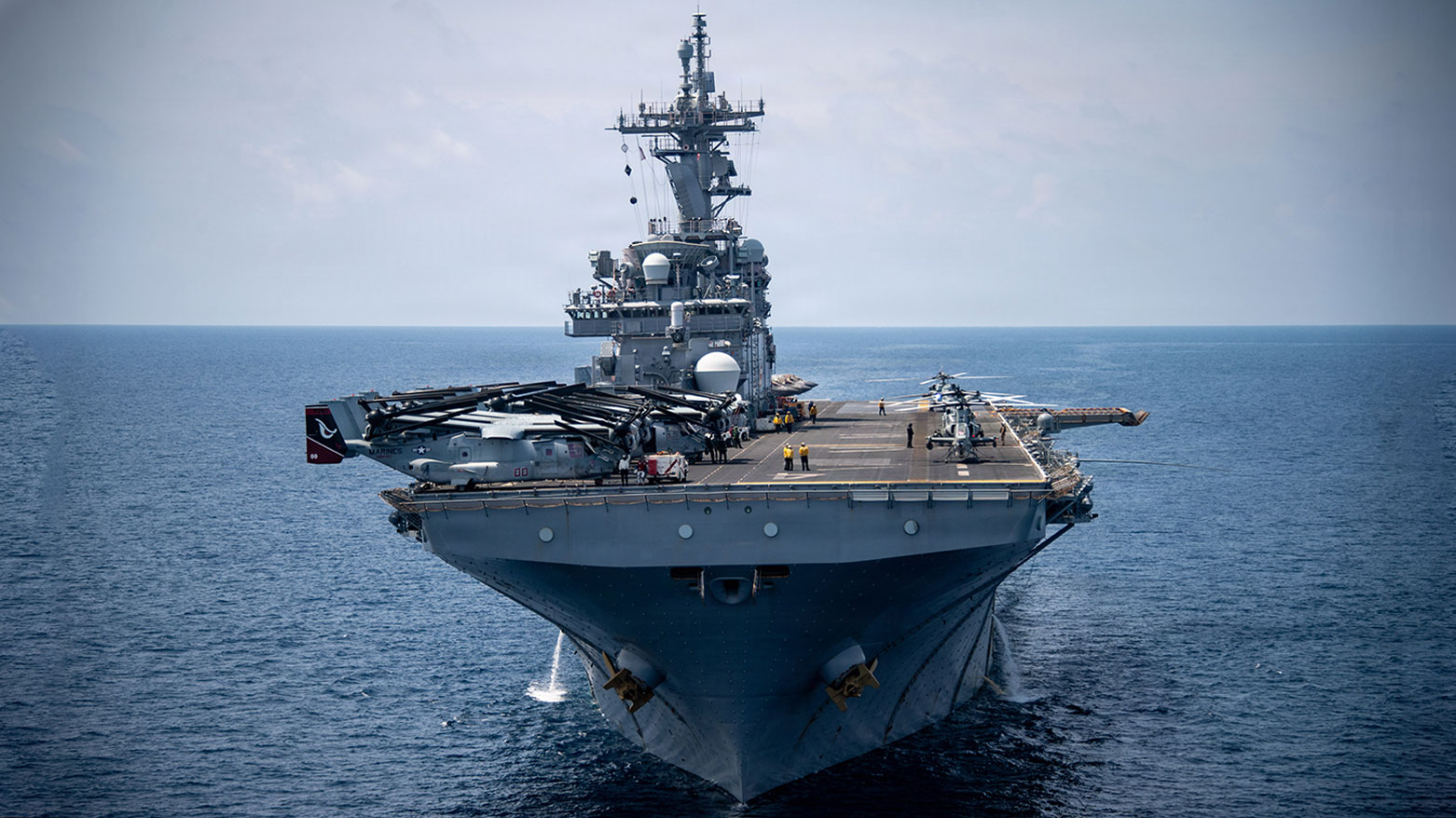
ERBIL (Kurdistan24) - The arrival of the USS Boxer Amphibious Ready Group in the Middle East has significantly expanded the U.S. military presence across the region, underscoring Washington's strategy of reinforcing deterrence even as diplomatic efforts with Iran continue following last month's ceasefire.
According to Stars and Stripes, reporting by Alison Bath, the deployment brings another amphibious force into an already crowded operational theater, reflecting a U.S. approach that combines sustained military readiness with negotiations aimed at preventing renewed conflict.
While talks with Tehran remain underway, the latest reinforcement signals that Washington is preserving a broad range of military options should diplomacy fail to produce a lasting agreement.
The deployment highlights a dual-track policy that has defined U.S. strategy since hostilities subsided in June.
Even as negotiators pursue discussions on Iran's nuclear program, regional security and the future of the Strait of Hormuz, the Pentagon continues to strengthen its force posture across the Middle East, maintaining what analysts describe as a credible deterrent against further escalation.
According to U.S. Central Command (CENTCOM), the amphibious assault ship USS Boxer and the amphibious transport dock USS Portland, carrying the embarked 11th Marine Expeditionary Unit, entered the region after transiting the Indian Ocean.
They join the USS Comstock, another vessel in the Boxer Amphibious Ready Group that has operated in the Middle East since early May.
The deployment coincides with the continued presence of the USS Tripoli Amphibious Ready Group, accompanied by the 31st Marine Expeditionary Unit in the Arabian Sea, according to U.S. Naval Institute (USNI) News.
Together, the two expeditionary groups substantially expand the Marine Corps' amphibious capabilities available to U.S. commanders across the region.
USNI News estimates that the latest deployment brings at least 24 U.S. Navy warships into the Middle East, including the aircraft carriers USS Abraham Lincoln and USS George H.W. Bush, alongside roughly 15 destroyers.
The tally excludes logistics vessels, support ships and additional destroyers stationed in the eastern Mediterranean.
CENTCOM also said approximately 50,000 U.S. service members are currently operating throughout its area of responsibility, illustrating the scale of the American military posture despite the ongoing diplomatic process.
According to Stars and Stripes, negotiations between Washington and Tehran resumed after the June ceasefire and are intended to transform the fragile truce into a permanent settlement.
The discussions encompass Iran's nuclear program, broader regional security arrangements and the future of maritime access through the Strait of Hormuz.
The report, citing The Wall Street Journal, said U.S. negotiators traveled to Doha this week for indirect talks with Iranian representatives.
Those discussions followed renewed military exchanges near the Strait of Hormuz, where attacks on commercial shipping and U.S. military installations prompted retaliatory American strikes against Iranian military positions.
Although the confrontation threatened to unravel the ceasefire, both sides ultimately agreed to continue diplomatic engagement.
The Strait of Hormuz remains one of the most difficult issues confronting negotiators. Before the conflict erupted, the strategic waterway carried roughly one-fifth of global petroleum consumption, making uninterrupted navigation vital to international energy markets.
According to Stars and Stripes, the United States continues to insist that international shipping should pass freely through the strait, while Iran maintains it has the authority to impose transit charges.
The report also notes that The New York Times described differing interpretations of a proposed Iranian-Omani framework, with Omani officials portraying any fees as voluntary while Iranian officials characterize them as mandatory.
Commercial shipping has yet to recover to pre-conflict levels despite the ceasefire.
The multinational Joint Maritime Information Center reported that vessel movements through the Strait of Hormuz remain well below historical averages, although maritime traffic continues under international monitoring and U.S.-facilitated transit operations.
The center also maintains that the security threat level remains elevated, warning that the potential for deliberate disruption has not disappeared even as overall risks have eased since the latest U.S.-Iran understanding.
The arrival of the USS Boxer and its accompanying vessels illustrates that Washington's regional strategy remains anchored in both diplomacy and deterrence.
While negotiations continue to seek a lasting resolution to one of the Middle East's most consequential security crises, the expanding U.S. naval presence demonstrates that military preparedness remains an integral component of that effort.
|
Summary The USS Boxer has joined a growing U.S. naval buildup in the Middle East, expanding American military capabilities as Washington continues negotiations with Iran. The deployment underscores a dual strategy of deterrence and diplomacy amid continued security concerns in the Strait of Hormuz. |