Feraşîn Highlands Thrive as Rich Pastures Boost Livestock and Dairy Output
Abundant rainfall has revitalized Northern Kurdistan's Feraşîn Highlands' pastures, improving grazing conditions, increasing milk production, and supporting seasonal livestock farming and traditional cheese and yogurt production across the mountain region.
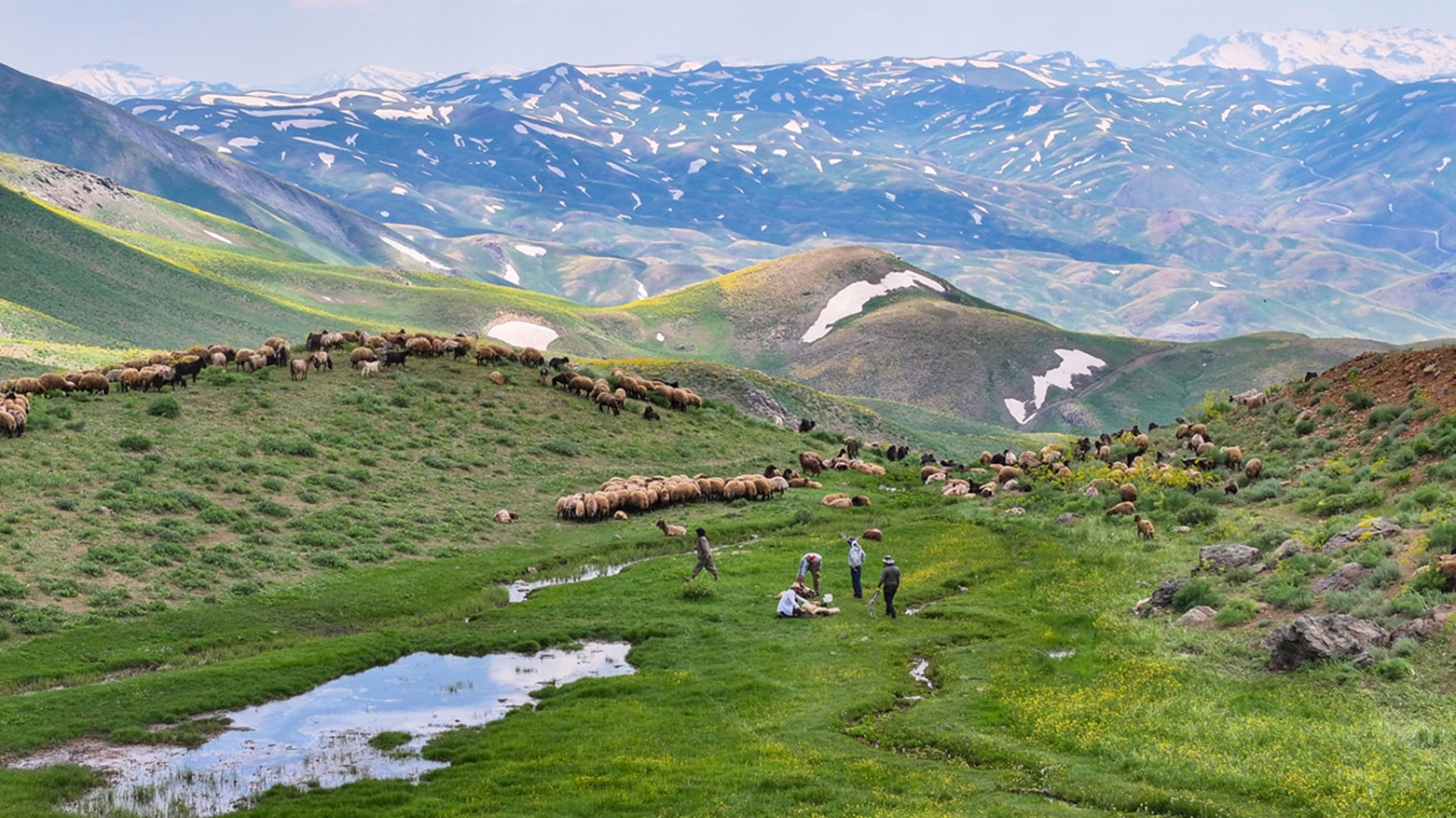
ERBIL (Kurdistan24) - Favorable weather has transformed Northern Kurdistan's Feraşîn Highlands (also known as Yeşilöz highlands) into an especially productive summer pasture this year, as abundant rainfall has replenished mountain grasslands and water sources, improving grazing conditions and boosting dairy production for livestock breeders who depend on the region's seasonal migration.
According to Anadolu Agency (AA), the highland, rising about 2,625 meters above sea level in the Beytüşşebap district of Şırnak, Northern Kurdistan (southeast of Türkiye) has experienced particularly vigorous vegetation growth after receiving heavier-than-usual rainfall.

The improved landscape has provided livestock with richer forage, translating into higher milk yields and reinforcing the area's importance to the rural economy.
Situated where the provinces of Şırnak, Hakkari and Van meet, the Feraşîn Highlands have long served as one of the region's principal summer grazing grounds.

Each year, breeders travel from surrounding districts and cities to spend the warmer months on its expansive meadows, drawn by reliable water supplies, cool temperatures and natural pasture that support large flocks throughout the season.
This year's favorable conditions have further enhanced that annual cycle.

AA reported that renewed springs and streams, together with more abundant vegetation across the high-altitude grasslands, have improved animal nutrition, allowing herds to produce more milk during the peak grazing period.
For livestock breeders, those gains extend well beyond farm productivity.

Milk collected from sheep grazing in the mountain pastures forms the basis of traditional cheese and yogurt production, providing the principal source of income for many families who spend months living and working in the highlands.
İsmet Arslan, a local breeder, told AA that the Feraşîn Highlands offer an ideal environment for raising livestock, reflecting the area's long-standing reputation among pastoral communities.
The seasonal movement to the mountains remains central to that way of life.

Nuri Baykara, who has worked in livestock farming for three decades, said he travels from Şırnak's İdil district each year to reach the Feraşîn pastures.
According to AA, his latest journey began in late May and took nearly a month before his animals reached their summer grazing grounds, illustrating the commitment required to maintain traditional pastoral practices.
Once established in the highlands, daily routines revolve around caring for the animals and processing their milk.

Gulîzar Yıldız, who works as a traditional dairy producer, told AA that sheep are milked twice each day.
The fresh milk is then transformed into locally made cheese and yogurt, products that remain the financial foundation of many households during the grazing season.
The twice-daily rhythm reflects a long-established agricultural tradition in which natural conditions directly shape economic outcomes.

Healthier pasture supports healthier livestock, while stronger milk production enables families to produce more dairy products for sale.
Beyond its agricultural value, the Feraşîn Highlands continue to represent an enduring link between the region's landscape and its rural economy.
The seasonal migration of breeders, the reliance on mountain pastures and the production of traditional dairy goods remain closely interconnected, sustaining livelihoods that have developed over generations.

As this year's abundant rainfall continues to nourish the high-altitude meadows, the Feraşîn Highlands once again demonstrate how favorable environmental conditions can strengthen livestock farming, preserve traditional food production and reinforce the resilience of pastoral communities across the region.


|
Summary Heavy rainfall has transformed the Feraşîn Highlands into a productive summer pasture, improving livestock grazing and increasing dairy production. Traditional cheese and yogurt production continue to sustain pastoral livelihoods, highlighting the region's importance to seasonal livestock farming and the rural economy, according to Anadolu Agency (AA). |