US and Saudi Arabia Conduct Joint Strikes on Iran-Aligned Militia Targets Across Eastern Iraq
CENTCOM and Saudi Armed Forces hit multiple logistics and weapons sites in response to over 30 IRGC-directed drone attacks in 72 hours, as Washington warns Tehran's proxies to cease attacks or face further military action
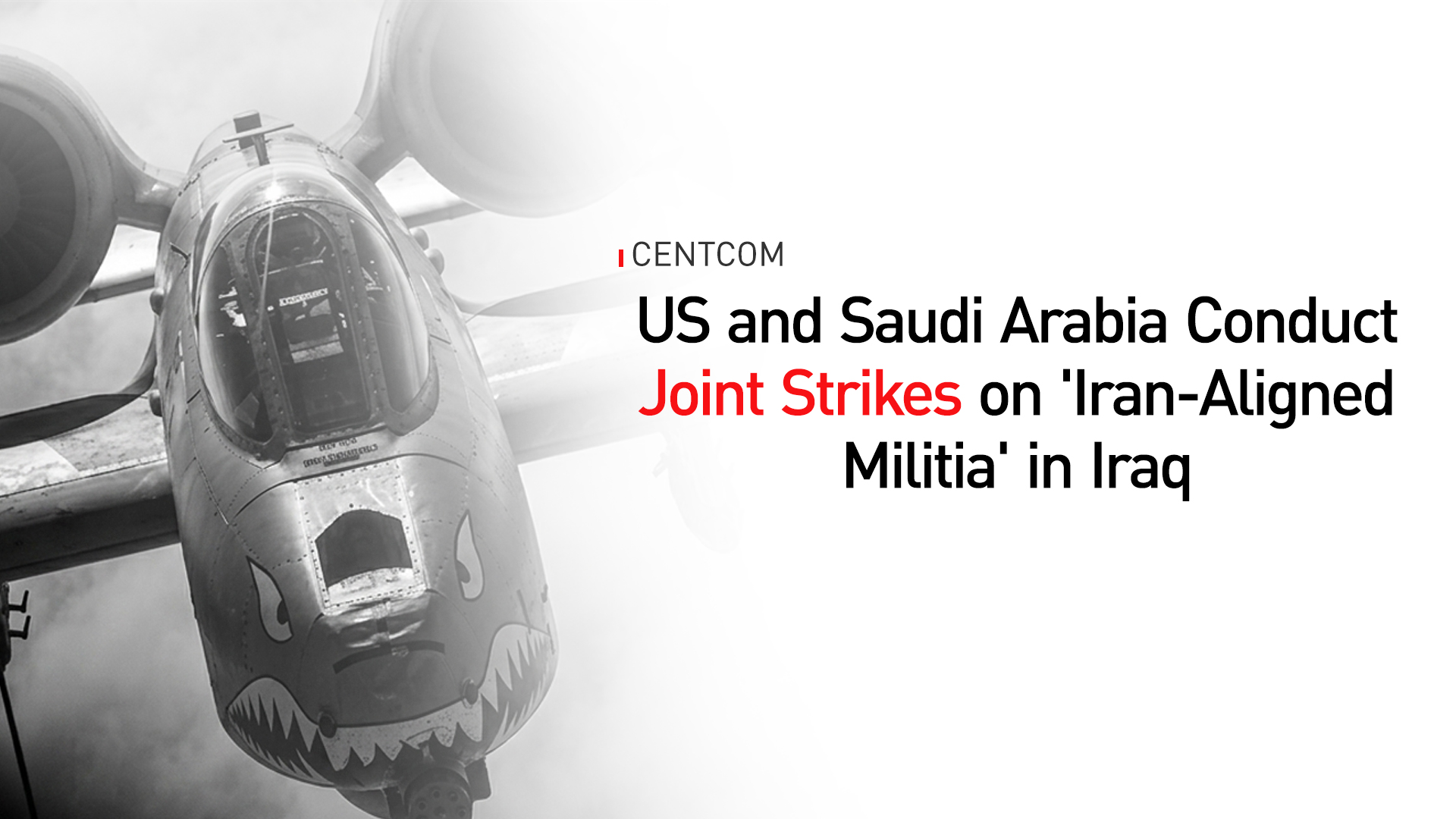
WASHINGTON, D.C. (Kurdistan 24) - US Central Command and the Saudi Arabian Armed Forces conducted joint precision strikes against Iran-aligned militia targets across eastern Iraq on Tuesday, in one of the most significant combined American-Saudi military operations inside Iraqi territory since the start of the broader regional conflict, targeting what CENTCOM described as terrorist logistics and weapons sites operated under direct IRGC direction.
CENTCOM confirmed in a statement Tuesday that US and Saudi fighter aircraft struck multiple targets across eastern Iraq in direct response to more than 30 IRGC-directed aerial drone attacks launched against US forces and Saudi energy infrastructure over the preceding 72 hours. The command said all unwarranted attacks against US forces were unsuccessful, and described the joint strikes as a strong response to what it characterized as an escalating pattern of Iranian proxy aggression.
"The IRGC and its terrorist proxies must cease these attacks to avoid further US military response," CENTCOM warned in its statement.
— U.S. Central Command (@CENTCOM) July 29, 2026
The joint nature of the operation is itself strategically significant. Saudi Arabia's direct military participation in strikes on Iraqi soil alongside American forces marks a notable expansion of Riyadh's active role in the regional conflict, reflecting the kingdom's growing willingness to take offensive action against IRGC-aligned groups that have repeatedly targeted its energy infrastructure throughout the war. Saudi Arabia had previously paused oil shipments from its Gulf export terminals of Ras Tanura and Juaymah on March 9, 2026, after Iranian attacks disrupted tanker traffic through the Strait of Hormuz, diverting a substantial portion of its exports through the East-West pipeline to the Red Sea terminal of Yanbu, making the protection of its energy infrastructure a matter of direct national security priority.
The targets struck Monday in eastern Iraq are consistent with the operational geography of Iran's proxy network in the country. Eastern Iraq, particularly the areas bordering Iran along the Diyala and Wasit governorates, has served as a primary staging and logistics corridor for IRGC-aligned militia groups throughout the conflict, providing supply lines, weapons storage, and launch positions for drone and missile attacks directed at US forces and Gulf state infrastructure.
CENTCOM's statement placed Monday's operation within a broader documented pattern of Iranian proxy aggression that predates the current escalation cycle. From February through April 2026 alone, CENTCOM said there were more than 600 attempted attacks on US citizens and facilities by Iran-aligned terrorist militias in Iraq, a figure that underlines the sustained and systematic nature of the campaign being directed by the IRGC against American targets in the country.
The strikes also come on the same day the IRGC launched multiple ballistic missiles in a surprise attack on US forces across the Middle East at 5:45 p.m. Eastern Time, with all missiles successfully intercepted by US air defense systems. The convergence of a surprise ballistic missile barrage from Iranian territory and coordinated drone attack campaigns by IRGC proxies inside Iraq on the same day reflects a deliberate Iranian strategy of simultaneous multi-vector pressure against American forces across the region, using both direct Iranian military action and the proxy network in Iraq as complementary instruments of the same campaign.
Monday's joint strikes take place against the backdrop of intensifying diplomatic and military activity in Washington. President Trump hosted Israeli Prime Minister Benjamin Netanyahu at the White House earlier Monday for their first face-to-face meeting since the two leaders launched the joint war against Iran on Feb. 28, 2026, with the agenda covering the Iran war, Lebanon's framework agreement, and Abraham Accords expansion. Both leaders subsequently attended the memorial service for Senator Lindsey Graham at Washington National Cathedral.
The targeting of Saudi energy infrastructure by IRGC-directed drones adds a dimension to Monday's operation that goes beyond the protection of American forces. Saudi Arabia's oil export capacity has been one of the primary economic variables shaping global energy markets throughout the conflict, and any sustained degradation of that capacity carries consequences for oil prices and energy security that extend well beyond the immediate battlefield.
CENTCOM's explicit identification of the strikes as a "strong response" and its direct warning to the IRGC and its proxies to cease attacks signals that Washington and Riyadh view Monday's joint operation not as a one-off retaliatory strike but as the opening of a more assertive posture toward Iran's proxy network inside Iraq, one that holds militia targets accountable for IRGC-directed aggression in ways that previous rounds of the conflict have not consistently applied.
| BRIEF: US Central Command and Saudi Arabian Armed Forces conducted joint precision strikes on Iran-aligned militia targets across eastern Iraq on Monday in response to more than 30 IRGC-directed drone attacks in 72 hours against US forces and Saudi energy infrastructure. CENTCOM warned the IRGC and its proxies to cease attacks or face further military action. |