Iran FM: Quadrilateral Tehran Summit Agrees Sustainable Security Requires No Foreign Military Presence
The Tehran meeting of Iran, Saudi Arabia, Pakistan, and Türkiye produced agreement to continue consultations and marks a significant step, but Araghchi says durable cooperation requires trust, mutual sovereignty respect, and confronting Israeli aggression as a fundamental necessity
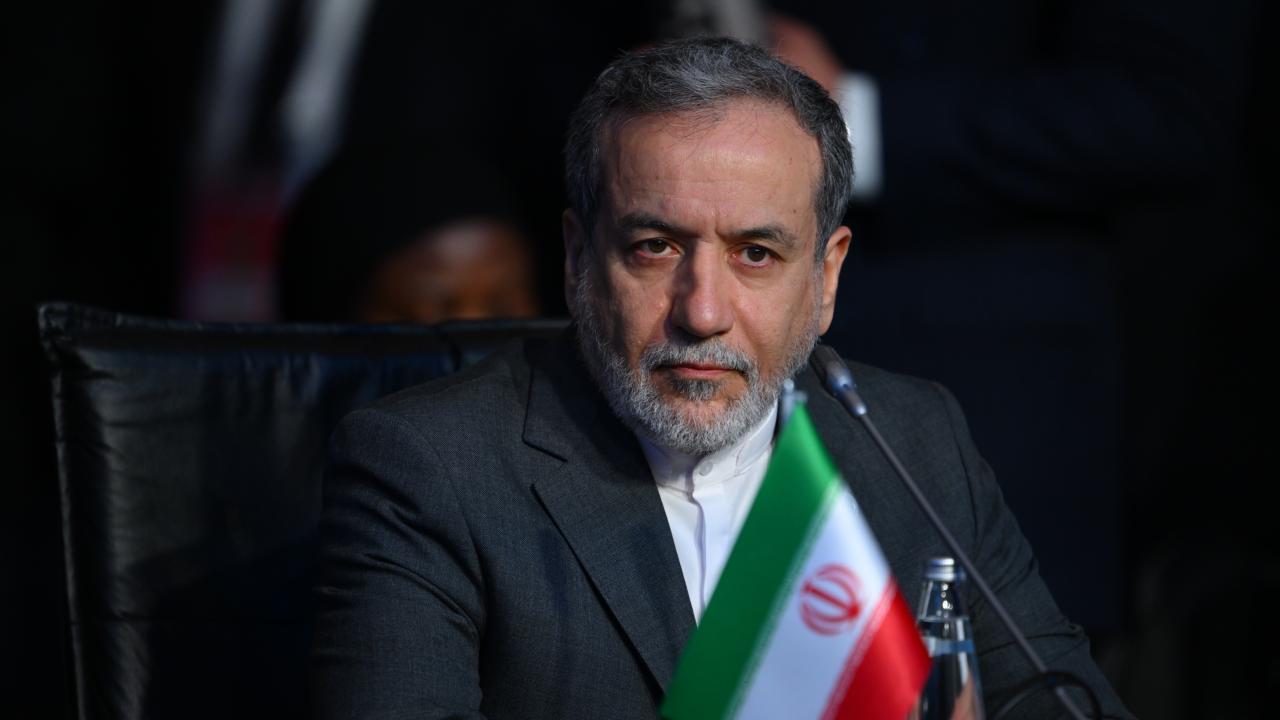
ERBIL (Kurdistan 24) - Iranian Foreign Minister Abbas Araghchi released a statement Wednesday on the quadrilateral security meeting held in Tehran between Iran, Saudi Arabia, Pakistan, and Türkiye, saying the gathering produced agreement to continue consultations, that sustainable security must be achieved through regional nations without foreign military presence or interference, and that confronting Israeli aggression is a fundamental necessity for defending national sovereignty.
"The recent meeting in Tehran involving the Islamic Republic of Iran, Saudi Arabia, Pakistan, and Türkiye provided a valuable opportunity to advance dialogue on regional peace and security and to collectively address threats and challenges," Araghchi said. "The agreement to continue these consultations marks a significant step forward."
He outlined the conditions for lasting cooperation: "Transforming this opportunity into enduring cooperation requires agreement on core principles, the building of trust, mutual respect for national sovereignty, and concrete, practical commitments."
Araghchi articulated Iran's core position on regional security directly. "From the perspective of the Islamic Republic of Iran, sustainable security must be achieved through the participation of regional nations, without the military presence or interference of extra-regional powers. This approach is rooted in the principle that regional states bear the responsibility for determining their own destiny."
He added that confronting the malign activities and aggression of the Israeli regime is a fundamental necessity, essential for defending the independence and sovereignty of nations and preventing the expansion of conflict, and that Iran's neighbors are its priority.
The quadrilateral meeting, proposed by Pakistani Army Chief General Munir during his recent Tehran mediation visit and welcomed by Iran, brought together four countries that represent the full spectrum of regional stakeholders in the US-Iran conflict: Iran as one of the two warring parties, Saudi Arabia as the primary Gulf state under Houthi and Iranian pressure, Pakistan as the primary US-Iran mediator, and Türkiye as a NATO member with active regional diplomatic engagement.
The agreement to continue consultations establishes the quadrilateral framework as a standing regional security mechanism rather than a one-time meeting. Araghchi's framing of foreign military presence as incompatible with sustainable security is a direct articulation of Iran's condition for regional stability at a moment when the US has over 50,000 troops in the Middle East and is warning Gulf states to prepare for a post-midterm military campaign.