Houthis Deny Responsibility for Drone Strike on US-Linked Ship at Egypt's Damietta Port
Group rejects reports linking them to the unprecedented Mediterranean attack as analysts warn the strike signals expanding risks to US interests and regional shipping
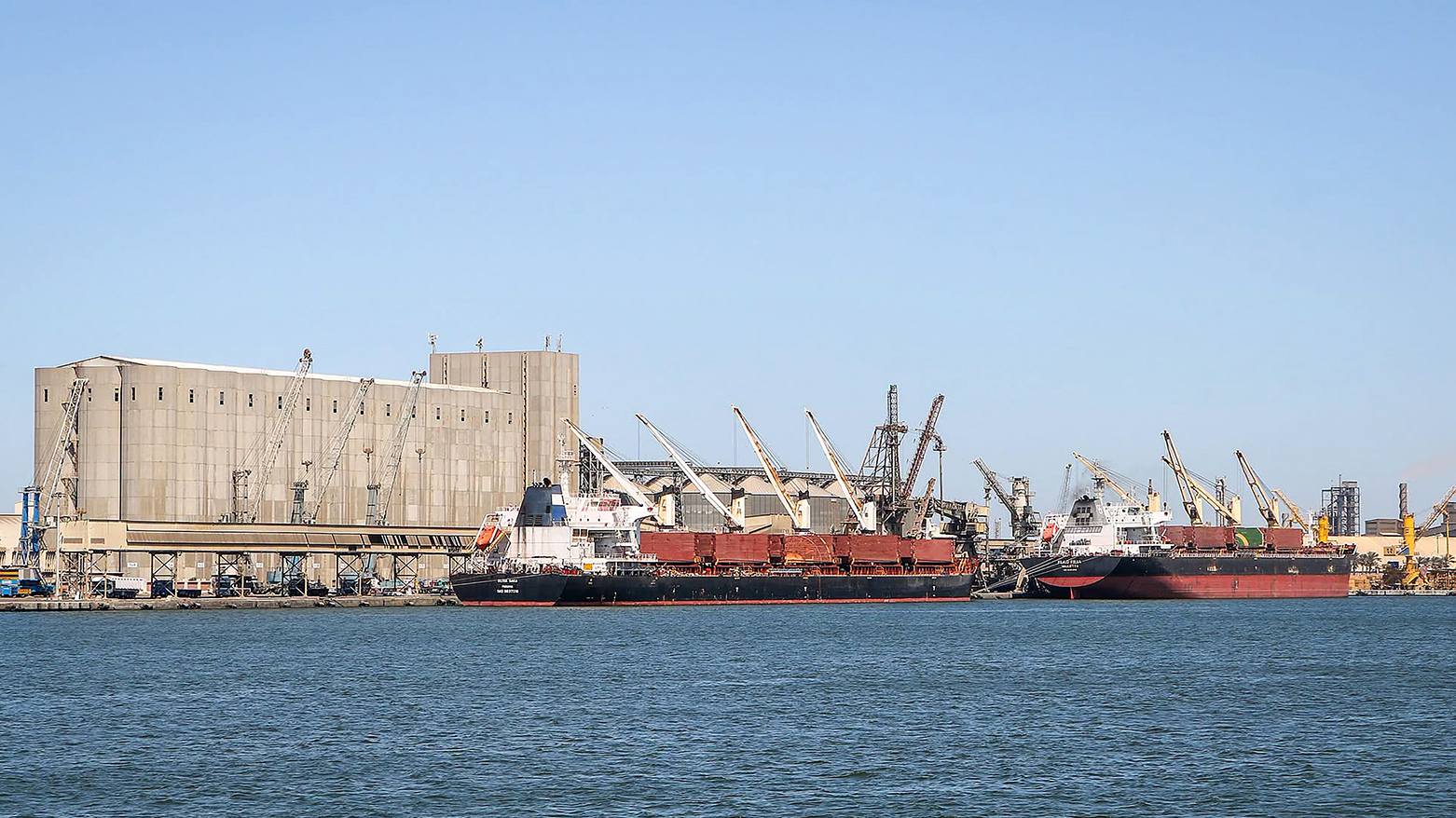
ERBIL (Kurdistan24) — Yemen's Houthi rebels on Thursday denied responsibility for the drone strike that hit a U.S.-owned-and-operated gas storage vessel at Egypt's Mediterranean port of Damietta, dismissing reports linking the group to the attack as fighting between the United States and Iran continues to spill across the region.
According to the Houthi-affiliated Saba news agency, an official in the movement's foreign affairs office said reports alleging Yemen had targeted a ship at Damietta Port were false.
"Rumours claiming Yemen targeted a ship in Damietta Port in the Arab Republic of Egypt are unfounded," the official said.
The denial came a day after a drone struck the American-owned and operated Energos Winter floating storage and regasification vessel while it was docked at Damietta Port alongside the Greek-owned GasLog Salem tanker, causing fires aboard both vessels.
No group has claimed responsibility for the attack, and Egyptian authorities have not publicly assigned blame.
The strike marked the first attack on Egyptian territory since the latest U.S.-Iran conflict erupted and represented a significant geographic escalation, extending the conflict's reach from the Gulf and Red Sea into the Mediterranean.
Security analysts say the attack appears designed to send a broader strategic message by demonstrating that American-linked assets remain vulnerable well beyond the traditional conflict zones.
"The attack may have been calibrated to damage a United States-linked asset without killing Egyptians," Andreas Krieg, a professor at King's College London, told AFP, adding that Cairo would nevertheless view the incident with serious concern.
The attack occurred more than 1,300 kilometers (about 800 miles) from Iran and roughly 2,000 kilometers (1,240 miles) from Yemen, raising questions about how the drone reached its target.
HA Hellyer, a senior associate fellow at the Royal United Services Institute, said the distance makes a direct strike launched from Iranian territory unlikely, though he noted that Iran's regional allies—including the Houthis in Yemen or Iran-backed militias in Iraq—could potentially have carried out such an operation.
Krieg also suggested that a drone launched from Lebanon's Mediterranean coast could theoretically avoid Israeli and Egyptian airspace before approaching the Egyptian port from the sea.
Other analysts, however, cautioned against assuming any specific group was responsible. Cairo University political science professor Mustapha Kamel Al-Sayyid argued that Lebanon's Hezbollah would likely avoid provoking Egypt, which possesses the Arab world's largest military.
Analysts also believe the strike may have been intended to pressure Egypt, which has spent months maintaining communication channels with both Washington and Tehran while helping facilitate diplomatic efforts aimed at reducing regional tensions.
"I would not automatically interpret this as an attack on Egypt itself," Krieg said, arguing instead that the operation was intended to demonstrate that "United States assets are vulnerable beyond the Gulf."
He added that the incident serves as "a warning that neutrality does not guarantee immunity" for Egypt.
Hellyer warned that if an Iranian-aligned group were responsible, the attack could ultimately undermine Tehran's regional relationships.
"Cairo and others would see an attack by any Iranian-aligned group on Egyptian territory as a formidable escalation," he told AFP, adding that such a development would carry significant long-term diplomatic costs for Iran.
The incident also raises fresh concerns about maritime security in the Mediterranean, which has increasingly served as an alternative shipping corridor as commercial traffic shifted away from the Gulf following disruptions in the Strait of Hormuz.
Since the war intensified, more vessels have relied on the Suez Canal and Egyptian energy infrastructure after repeated Houthi attacks on commercial shipping near the Bab al-Mandeb Strait complicated transit through the Red Sea.
Former Damietta Port Authority chief Major General Ayman Salah said Egypt has increasingly relied on Damietta as an alternative energy import hub as instability has affected Gulf shipping routes.
Egypt's maritime sector—including the Suez Canal, one of the country's largest sources of foreign currency revenue—has already suffered significant economic losses since Houthi attacks on Red Sea shipping began in late 2023, making any expansion of hostilities into the Mediterranean a new source of concern for regional trade and energy security.