Iraqi Deputy Parliament Speaker Says Government Does Not Control War Decisions
Farhad Atrushi warns armed groups remain outside state authority and predicts continued attacks on the Kurdistan Region if they are not brought under control
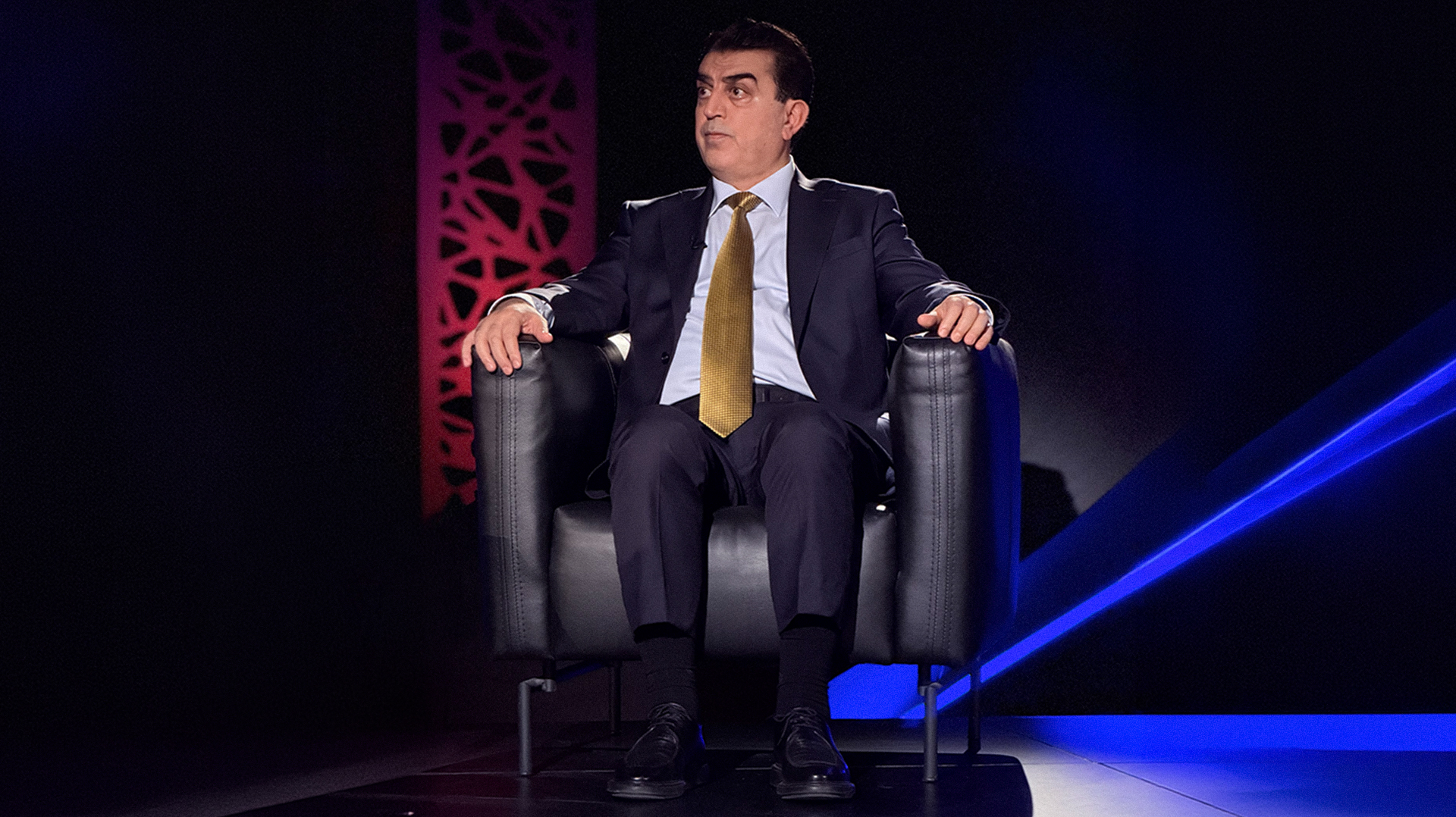
ERBIL (Kurdistan24) — Iraqi Deputy Parliament Speaker Farhad Atrushi said on Thursday that decisions on war and peace in Iraq are not fully under the control of the federal government, warning that armed groups continue to operate independently and are likely to maintain attacks on the Kurdistan Region unless they are brought under state authority.
In an exclusive interview with Kurdistan24, Atrushi said Iraq's position amid the region's escalating conflicts remains unclear and cautioned that the country has become one of the biggest victims of regional instability.
"Amid these wars and regional tensions, Iraq's position is unclear," Atrushi said. "Iraq has faced more problems and challenges than any other country and has become a victim. The situation is unfavorable, and if Iraqis do not work together, it will deteriorate further."
Atrushi argued that the Iraqi government does not have complete authority over decisions related to war, saying armed groups continue to launch attacks against other countries without state approval.
"The decision for war in Iraq is not 100% in the hands of the government; it is in the hands of armed groups," he said.
He noted that he has been urging both the Kurdistan Regional Government (KRG) and the Kurdistan Democratic Party (KDP) to support the federal government's efforts to ensure that weapons remain exclusively under the authority of the state.
According to Atrushi, any decision to wage war against another country or external party should be approved by parliament.
"Weapons outside the authority of the government and corruption are leading the country toward a dangerous path," he said. "Armed groups use weapons to protect their own corruption, whereas a country's strength lies in having weapons solely under state control and eradicating corruption."
Atrushi said Prime Minister Ali Al-Zaidi's government has received backing from political parties, as well as support from the Coordination Framework, the United States, and European countries, for its anti-corruption campaign. However, he described the process as difficult, revealing that the prime minister has faced threats because of his efforts.
"Ali Al-Zaidi has declared that he is prepared to sacrifice his life in the fight against corruption," he said.
Addressing reports of a list of lawmakers accused of corruption, Atrushi said he had not seen the document, noting that only Parliament Speaker Mahmoud al-Mashhadani had reviewed it.
According to Atrushi, the speaker informed parliamentary leaders that the list contains the names of 19 lawmakers—five from previous parliamentary terms and 15 from the current sixth parliamentary session.
He added that Iraq's judiciary has also requested the lifting of parliamentary immunity from more than 30 individuals accused of corruption.
On the continued drone attacks targeting Erbil, Atrushi warned that they are likely to persist if the current security situation remains unchanged.
"If the situation continues as it is, then yes, the attacks will continue because the armed groups are numerous, remain uncontrolled, and continue to operate," he said, adding that differences among the groups make them difficult to contain.
Atrushi also noted that some armed factions are at odds with influential Shiite cleric Muqtada al-Sadr, while al-Sadr himself strongly supports Prime Minister Al-Zaidi's government.
Turning to Iraq's economy, Atrushi said the country's financial situation remains fragile and has been negatively affected by regional instability. He warned that declining state revenues represent one of the government's biggest challenges and could develop into a major crisis if left unaddressed.
On the fuel shortage in the Kurdistan Region, Atrushi said he had asked Iraq's oil minister to allocate 3 million liters of gasoline per day to the region to ease the crisis. He also requested an increase in the 50,000 barrels of oil currently allocated to the Kurdistan Region and said he had formally submitted the proposal to Prime Minister Al-Zaidi.
Commenting on former Parliament Speaker Mohammed al-Halbousi's visit to Erbil, Atrushi said the meetings with President Masoud Barzani and Kurdistan Region Prime Minister Masrour Barzani were significant.
He said the KDP is seeking to reorganize its political relationships in Baghdad, while Halbousi aims to normalize ties with the party, recalling President Barzani's efforts since 2003 to unify Iraq's Sunni political forces and preserve political balance.
Atrushi also addressed the Kurdistan Region's monthly transfer of 120 billion Iraqi dinars in domestic revenues to Baghdad, saying efforts are ongoing to reduce the amount but acknowledged that reaching an agreement would not be easy.