Iraq, Türkiye Sign Deal to Boost Oil Exports Through Ceyhan Pipeline
Al-Zaidi Says Agreement Guarantees Minimum 750,000 Barrels Per Day and Paves Way for Broader Cooperation in Energy, Electricity, and Water Resources
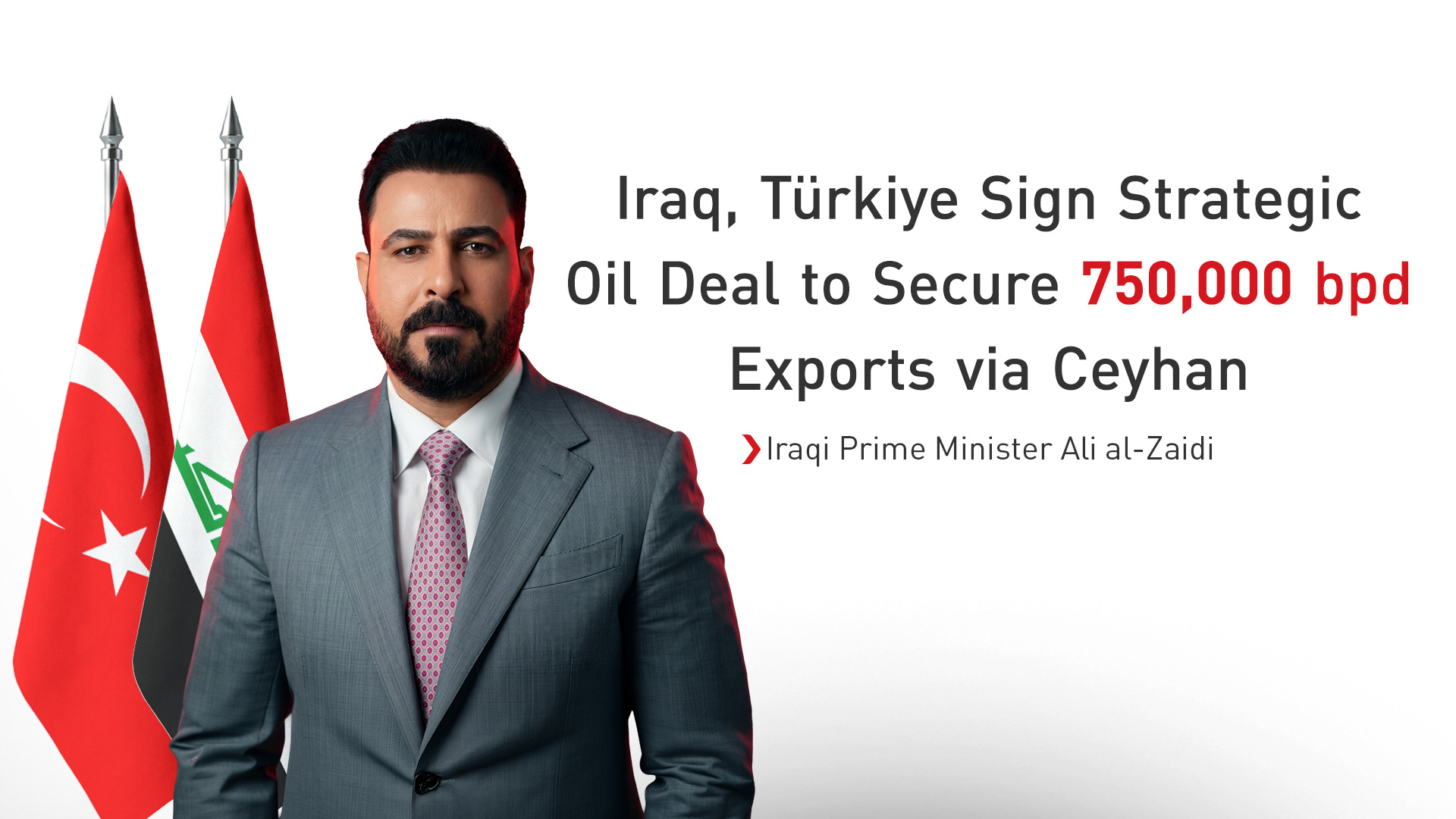
ERBIL (Kurdistan24) — Iraqi Prime Minister Ali al-Zaidi announced on Saturday that Iraq and Türkiye have signed an agreement to resume the transport and loading of Iraqi crude oil through the Iraq-Türkiye pipeline to the Turkish port of Ceyhan, describing the deal as a "strategic achievement" that will strengthen energy exports and bilateral economic cooperation.
In a statement published on his X account, al-Zaidi said the agreement provides for the transportation of Iraqi crude through the Iraq-Türkiye pipeline at a minimum rate of 750,000 barrels per day.
He said Iraqi and Turkish companies will begin carrying out the operational aspects of the agreement, marking a significant step toward restoring the key export route.
"The two sides signed an agreement today on the transport and loading of Iraqi crude oil through the Iraq-Türkiye pipeline to the port of Ceyhan, with a minimum capacity of 750,000 barrels per day," al-Zaidi wrote.
The prime minister added that Baghdad and Ankara will also work under a "carefully planned roadmap" to finalize a broader framework agreement covering several strategic sectors.
According to al-Zaidi, the planned framework will include cooperation in the fields of oil, electricity, water resources, and other areas aimed at advancing shared economic interests while supporting development and regional stability.
The announcement signals renewed momentum in Iraq-Türkiye energy cooperation, with the Ceyhan export route serving as one of Iraq's most important channels for shipping crude oil to international markets.
The agreement follows the expiration of the previous Iraq-Türkiye crude oil transportation agreement on July 26, after which Baghdad and Ankara held negotiations that culminated in a new one-year accord.
According to Iraqi Oil Minister Bassem Mohammed Khudair, the agreement ensures the continued use of the Iraq-Türkiye pipeline and the uninterrupted export of Iraqi crude through the Mediterranean port of Ceyhan.
Both governments also intend to negotiate a new long-term framework agreement over the coming year to replace and modernize the 1973 Iraq-Türkiye pipeline accord. Khudair said the objective is to expand the pipeline's export capacity beyond the current level, with the long-term goal of increasing shipments to more than 1 million barrels per day.
Turkish Energy and Natural Resources Minister Alparslan Bayraktar said the one-year agreement was signed between BOTAŞ, Iraq's State Organization for Marketing of Oil (SOMO), and the Iraqi National Oil Company (INOC) following talks with the Iraqi delegation in Ankara.
He described the Iraq-Türkiye pipeline as a strategically important energy corridor that enables the safe and uninterrupted flow of Iraqi crude to global markets via the port of Ceyhan, emphasizing its longstanding role in supporting regional and global energy security, particularly during periods of volatility in international oil markets.
The latest Iraq-Türkiye energy agreement comes days after bp announced a major expansion of its partnership with Türkiye's state-owned energy company, Türkiye Petrolleri Anonim Ortaklığı (TPAO), in Iraq's oil sector.
On July 28, bp said TPAO would acquire a 15% stake in BP Energy Company of Kirkuk Limited (BP ECKL), the joint venture leading the rehabilitation and redevelopment of several giant oil and gas fields in the disputed province of Kirkuk.
The agreement was signed during Iraqi Prime Minister Ali al-Zaidi's recent official visit to Türkiye and builds on a strategic memorandum of understanding signed between bp and TPAO in February 2026.
The transaction further strengthens international cooperation in Iraq's energy sector following ConocoPhillips' previously announced acquisition of a 42% stake in the venture.
Once both deals are completed, bp will retain a 43% interest in BP ECKL, while ConocoPhillips will hold 42% and TPAO 15%. bp Chief Executive Officer Meg O'Neill described Kirkuk as a "world-class resource base" capable of supporting Iraq's long-term energy ambitions, saying the expanded partnership with TPAO and ConocoPhillips positions the consortium for the next phase of redevelopment in one of the country's largest hydrocarbon basins.
The broader framework agreement is expected to deepen bilateral cooperation beyond the energy sector and strengthen long-term economic ties between the two neighboring countries.