Iran Vows to Continue Military Response, Accuses U.S. of Violating Peace Agreement
Foreign Ministry Says Tehran Will Defend Its Sovereignty Against 'Illegal Aggression' and Blames Washington for Escalating Regional Tensions
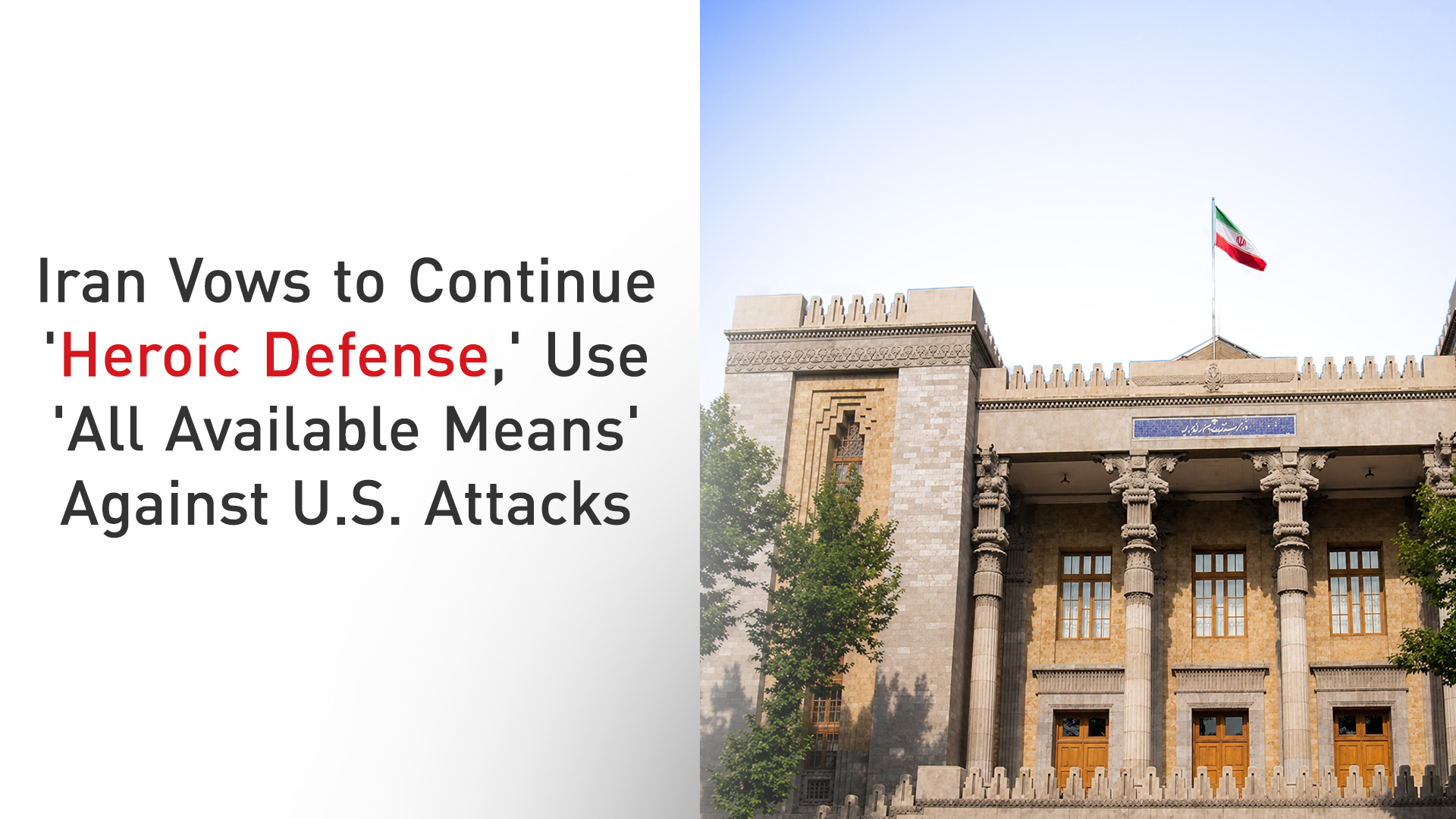
ERBIL (Kurdistan24) — Iran's Foreign Ministry on Saturday declared that Tehran will continue military operations against what it described as illegal U.S. aggression, accusing Washington of violating the June 18 peace agreement and pledging to use "all its tools" to defend the country's sovereignty.
In a lengthy statement, the ministry praised Iran's armed forces for what it called their "heroic defense" of the country and reaffirmed the Islamic Republic's determination to continue resisting U.S. pressure and military action.
"The defensive strikes of our country's brave armed forces continue with full power," the ministry said, arguing that Iran is exercising its inherent right to self-defense under international law.
The statement alleged that the United States has continued to violate the June 18 peace agreement by maintaining a naval blockade of Iranian ports and commercial shipping, conducting attacks inside Iran, and increasing economic pressure and what it called unlawful threats.
Tehran claimed the naval blockade and U.S. military operations constitute acts of aggression under international law and violate the United Nations Charter. It said Iran would employ all available means to defend itself against what it described as continued American attacks.
The Foreign Ministry also criticized the United Nations Security Council for failing to act against the United States, arguing that Washington's actions over the past 15 months amount to threats to international peace, breaches of international security, and acts of aggression. It also faulted U.N. Secretary-General António Guterres for what it called an inadequate response.
Tehran blames Washington for renewed conflict
Iran rejected U.S. justifications for its military campaign, dismissing claims that the operations were aimed at preventing Iran from acquiring a nuclear weapon or countering an imminent threat.
Instead, Tehran argued that the real objective of the United States and Israel is to pressure Iran into abandoning its independent policies and national sovereignty.
The statement also revisited decades of tensions between the two countries, accusing successive U.S. administrations of interfering in Iranian affairs since the 1953 coup that overthrew Iran's elected government.
According to the Foreign Ministry, the latest phase of U.S. military operations began on July 8 under the pretext of responding to incidents involving three commercial vessels in the Strait of Hormuz.
Tehran dismissed those allegations as fabricated and accused Washington of using them to justify breaching the peace agreement and challenging Iran's authority over the strategic waterway.
Iran further alleged that U.S. naval forces used commercial vessels as cover for military movements and deliberately routed ships through what it described as an unauthorized southern navigation corridor in the Strait of Hormuz.
The ministry also claimed a U.S. Central Command frigate transited the disputed route under the cover of a liquefied natural gas carrier, calling it evidence that Washington intended to exploit the peace agreement to prepare hostile military operations against Iran.
Warning to regional countries
The Foreign Ministry condemned countries that it said assisted U.S. military operations by providing territory and logistical support, while insisting that Iran seeks friendly relations with neighboring Gulf states.
Tehran urged regional governments not to allow their territory or facilities to be used for military operations against Iran, saying its retaliatory strikes target only the sources of U.S. attacks and should not be interpreted as aggression against neighboring countries.
The statement concluded by reaffirming Iran's commitment to continue what it described as an "authoritative defense" under the leadership of Supreme Leader Ayatollah Seyed Mojtaba Khamenei.
It said the Islamic Republic would rely on its armed forces, diplomacy, and public support to confront what it called the "American-Zionist coalition," while portraying its military campaign as a defense of both Iran's sovereignty and the principles of international law.