Iraqi Foreign Minister Reaffirms Commitment to Justice for Ezidi Genocide Victims on 12th Anniversary
Fuad Hussein praises Peshmerga's role in defeating ISIS, says Baghdad and Erbil are working together to rebuild Sinjar and uncover fate of missing Ezidis
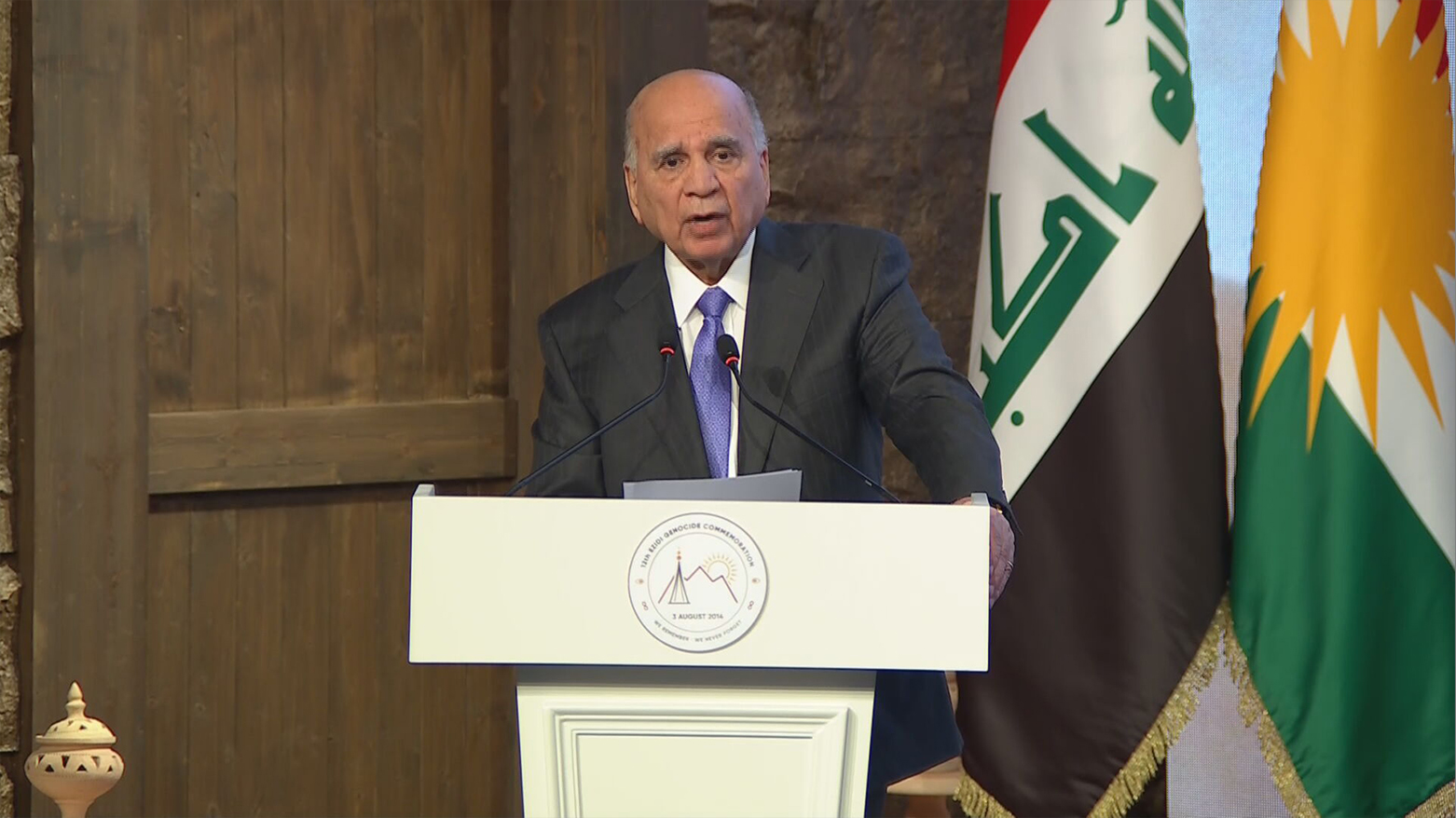
ERBIL (Kurdistan24) — Iraqi Deputy Prime Minister and Foreign Minister Fuad Hussein on Monday reaffirmed the federal government's commitment to delivering justice for the victims of the Ezidi genocide, rebuilding Sinjar (Shingal), and strengthening cooperation with the Kurdistan Regional Government (KRG) to heal the wounds left by the Islamic State (ISIS) atrocities.
Speaking at a ceremony in Erbil marking the 12th anniversary of the Ezidi genocide, Hussein underscored the ongoing efforts of both the Iraqi federal government and the KRG to support the Ezidi community and hold those responsible for the atrocities accountable.
Representing Iraqi Prime Minister Ali Falih Al-Zaidi, Hussein conveyed the premier's greetings to participants and thanked the KRG for organizing the commemoration. He also welcomed Kurdistan Region Prime Minister Masrour Barzani, who attended the ceremony.
In his address, Hussein described the anniversary as a solemn reminder of one of the darkest chapters in Iraq's modern history, saying the country continues to bear the scars of crimes committed over decades.
He recalled a series of atrocities committed against Iraq's communities, including the forced deportation of Feyli Kurds in 1980 and the disappearance of approximately 12,000 Feyli Kurdish youths, the genocide against the Barzanis and the disappearance of about 8,000 people, as well as the Anfal campaign and the chemical attack on Halabja.
Hussein said those crimes culminated in the rise of ISIS, which sought to destroy Iraq's diverse social fabric through systematic violence, particularly in Sinjar.
"The crimes committed by ISIS in Sinjar violated the most basic principles of humanity," he said, adding that the courage and sacrifices of the Iraqi people and the Peshmerga forces ultimately thwarted the terrorist group's ambitions.
The foreign minister paid tribute to Iraq's security forces, particularly the Peshmerga, praising their role in liberating occupied territories, defeating ISIS, and restoring stability.
He stressed that Iraq's national conscience would never forget the systematic crimes committed by ISIS against the Ezidi community.
Highlighting the government's ongoing efforts, Hussein said Baghdad has developed a comprehensive plan for the return of displaced families and the reconstruction of Sinjar.
He pointed to the implementation of the Ezidi Female Survivors Law, which provides financial compensation, land and housing, as well as psychological rehabilitation and other support for survivors of ISIS captivity.
Hussein also emphasized continued efforts to determine the fate of abducted Ezidis, exhume mass graves, and identify victims' remains in accordance with international forensic standards.
He said Iraq's Foreign Ministry is working through diplomatic channels to ensure the Ezidi genocide remains a priority on the international agenda and that those responsible are brought to justice.
"Our diplomatic missions continue working to keep this file alive internationally so that no perpetrator escapes punishment," Hussein said.
Concluding his remarks, the foreign minister described the protection of Iraq's ethnic and religious diversity as a national priority essential to preserving the country's unity.
He said the Iraqi government remains committed to promoting a culture of tolerance and peaceful coexistence to prevent similar atrocities from ever happening again.
ISIS overran Sinjar on Aug. 3, 2014, killing thousands of Ezidis, abducting women and children into slavery, and forcing tens of thousands to flee to Mount Sinjar.
The atrocities were later recognized as genocide by the United Nations and several countries, while hundreds of abducted Ezidis remain missing and many displaced families have yet to return to their homes.