Trump Says U.S. Has 'Massive' Munitions Stockpiles as Reports Raise Questions Over Missile Supplies
President rejects reports of dwindling weapons inventories, while Reuters and CNN describe concerns over precision missile and interceptor stockpiles following the Iran conflict
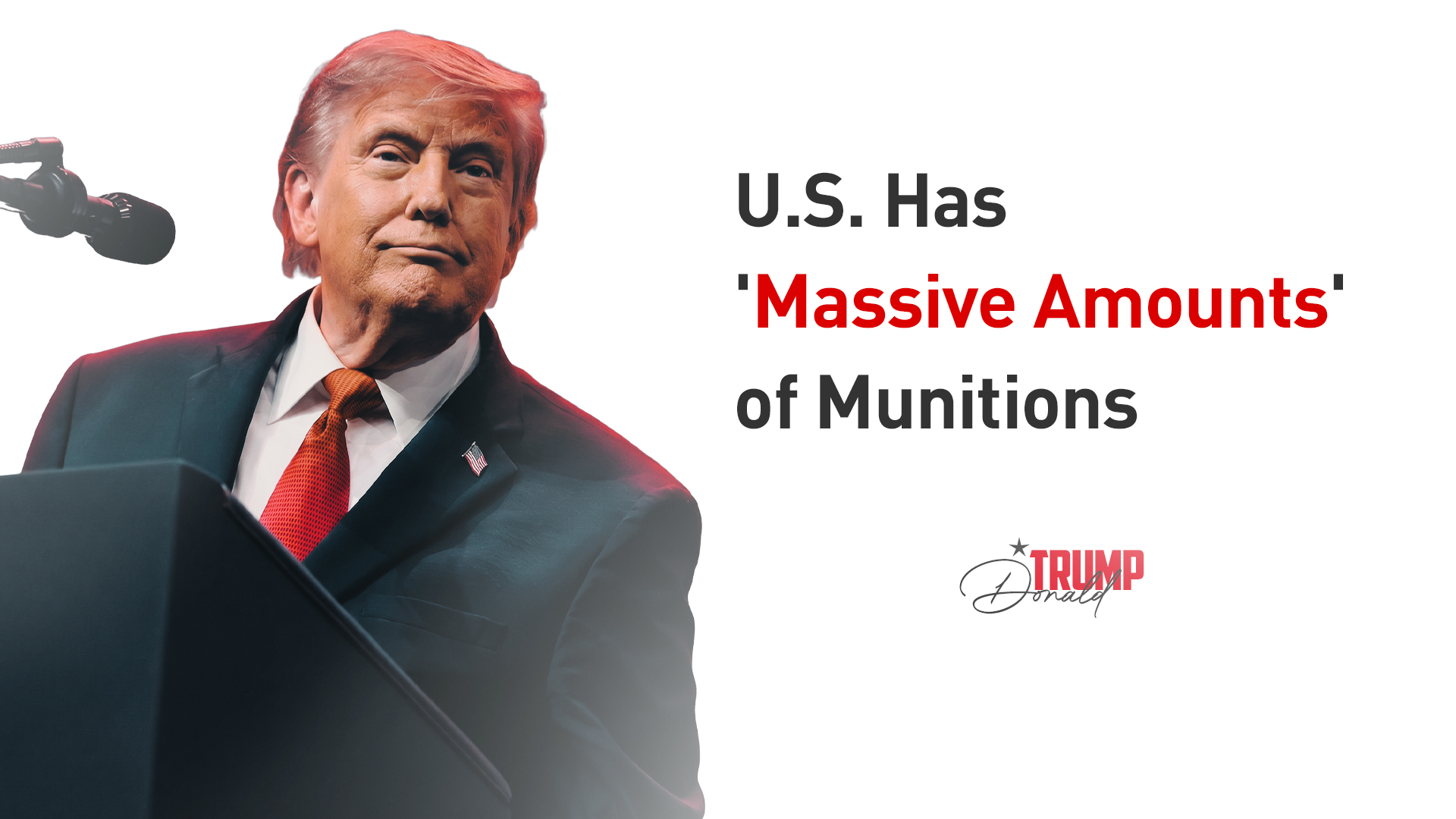
ERBIL (Kurdistan24) - U.S. President Donald Trump on Thursday dismissed reports suggesting the United States has significantly depleted key weapons stockpiles during the conflict with Iran, insisting the country possesses "massive amounts of munitions" and is rapidly expanding defense production.
In a post on Truth Social, Trump said the United States remained well supplied with military hardware despite recent media reports questioning the readiness of some precision-guided weapons inventories.
"The U.S. has massive amounts of 'munitions,' especially of certain types," Trump wrote. "Additionally, large amounts are being manufactured and shipped to the U.S. as needed."
He added that American defense contractors were "building the largest number of plants and factories in our country's history" and warned that officials responsible for leaking classified information would face legal consequences.
"The 'leakers' of these treasonous statements are being hunted down. Long term jail sentences will be sought!" Trump said.
Reports Highlight Pressure on Precision Weapons
Trump's comments came days after Reuters reported, citing multiple people familiar with internal U.S. military assessments, that Washington has consumed much of its inventory of long-range precision missiles during the months-long conflict with Iran.
According to Reuters, officials have expressed concern that the U.S. Army has used "virtually all" of its available Army Tactical Missile Systems (ATACMS) and Precision Strike Missiles (PrSM), both of which have played a central role in long-range strikes during the conflict.
Reuters also reported that nearly half of the U.S. Navy's global stockpile of Tomahawk cruise missiles has been expended, although the news agency said it could not independently verify that figure. The report cited unnamed sources who said military planners have been closely monitoring remaining inventories as Washington balances current operations with preparedness for potential future crises.
The White House, responding to Reuters' reporting earlier this week, reiterated Trump's position, saying the United States possesses "far more munitions than anyone in the world" and continues expanding production across the defense industry.
The Pentagon likewise rejected suggestions that operational readiness had been compromised.
Chief Pentagon spokesperson Sean Parnell said the U.S. military "has everything it needs to execute at the time and place of the President's choosing," adding that forces continue to maintain "a deep arsenal of capabilities" while conducting operations across multiple regions.
Missile Defense Inventories Under Scrutiny
Questions surrounding offensive weapons have been accompanied by reports of pressure on America's defensive missile systems.
According to CNN, citing multiple sources familiar with internal assessments, the U.S. military has depleted nearly 80% of its inventory of THAAD interceptors, one of Washington's premier missile defense systems designed to destroy incoming ballistic missiles.
The report also said roughly half of available Patriot interceptor missiles have been used since the conflict with Iran began, reflecting the heavy demands placed on U.S. and allied air defense operations.
CNN reported that senior military commanders have repeatedly warned administration officials that inventories of several critical missile systems have fallen sharply during the conflict, prompting broader discussions about long-term military readiness.
The Pentagon did not confirm the reported figures but maintained that U.S. forces retain sufficient capabilities to carry out any mission directed by the president.
White House spokesperson Anna Kelly similarly told CNN that the U.S. military has "more than enough munitions, ammo, and stockpiles to serve all of President Trump's strategic goals and beyond."
Balancing Current Operations and Future Readiness
Reuters reported that some officials worry prolonged consumption of advanced precision-guided weapons could complicate Washington's ability to respond rapidly to future conflicts involving major powers such as China or Russia, where long-range stand-off capabilities would likely play a critical role.
The agency reported that reliance on precision missiles during the Iran conflict has allowed U.S. forces to strike targets without exposing large numbers of piloted aircraft to heavily defended airspace. Military analysts cited by Reuters noted that these weapons remain among the Pentagon's most valuable assets because they enable accurate strikes from long distances while reducing operational risks.
Some analysts interviewed by Reuters acknowledged that production of several key munitions is now increasing but cautioned that rebuilding inventories of sophisticated missile systems could still require years because of manufacturing timelines and supply-chain constraints.
Defense Industry Expansion
Trump emphasized that expanding domestic defense production remains central to his administration's response.
In his Truth Social post, the president said U.S. manufacturers are producing weapons at unprecedented levels while simultaneously expanding industrial capacity through new factories and production facilities.
Reuters reported that major defense contractors have already begun increasing production of several critical systems, including long-range missiles and cruise missiles, as the Pentagon seeks to replenish inventories after months of sustained military operations.
Industry analysts, however, have noted that while production rates are rising, replacing complex precision-guided weapons—including advanced interceptor missiles—typically requires lengthy manufacturing cycles, meaning stockpiles may take considerable time to recover fully.
Debate Continues
The contrasting narratives underscore an emerging debate in Washington over the condition of America's military inventories.
While Trump and senior administration officials insist the United States maintains overwhelming military strength and sufficient weapons reserves, recent reporting by Reuters and CNN has highlighted concerns among some defense officials regarding the pace at which high-end munitions have been consumed during the Iran conflict.
For now, administration officials continue to argue that expanded defense manufacturing, combined with ongoing procurement programs, will ensure the U.S. military remains capable of meeting current operational requirements while rebuilding strategic stockpiles for future contingencies.