Afrin, Kobani Students Raise Concerns Over Curriculum Changes across Western Kurdistan
Students at Kobani University say the transition to Arabic-language instruction has created academic difficulties, while student groups from Afrin and Aleppo warn against changes to the Kurdish curriculum ahead of the new academic year
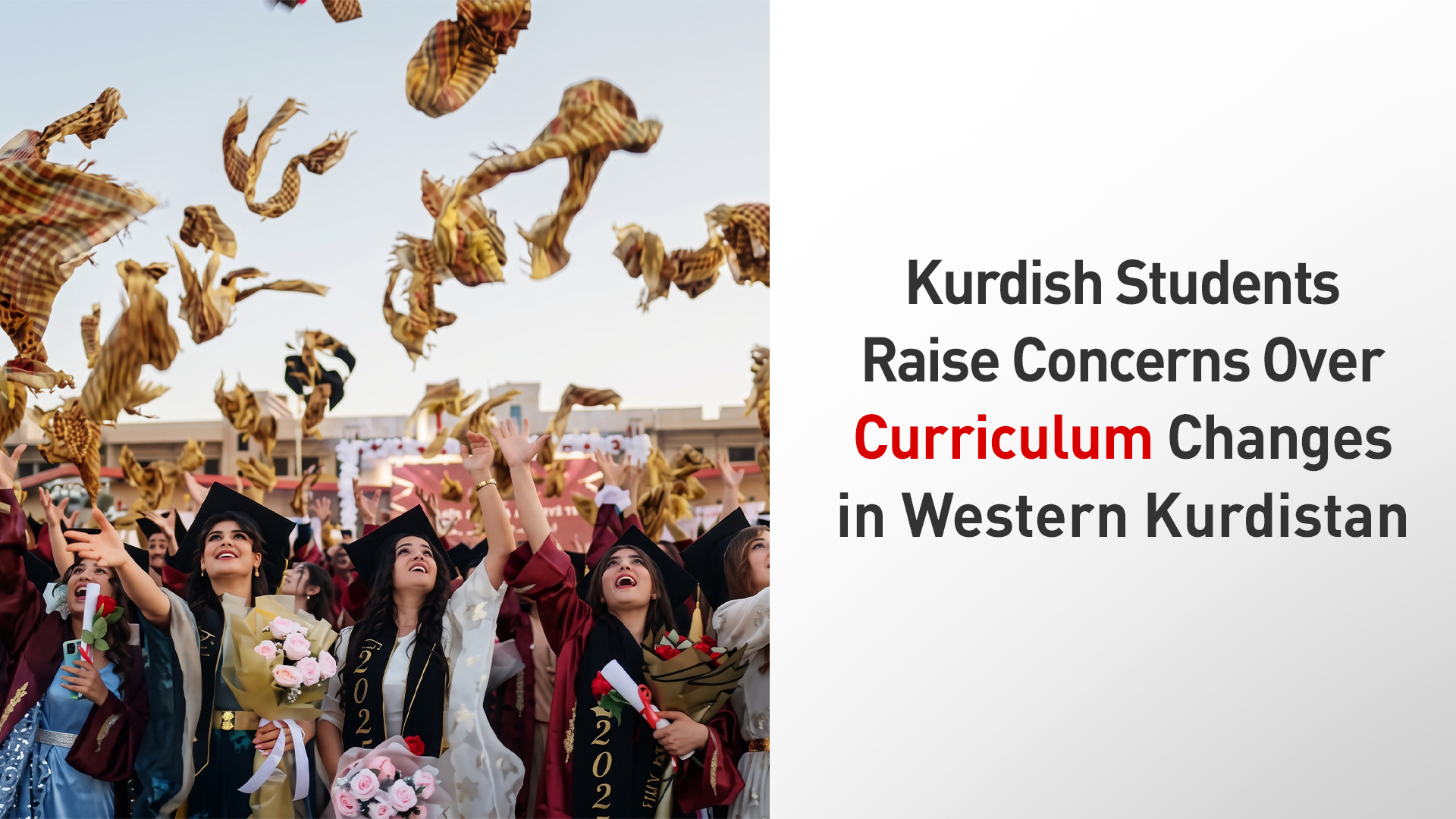
ERBIL (Kurdistan24) - A growing number of Kurdish students in Northern Syria (Western Kurdistan) say they are struggling to adapt to Arabic-language instruction at Kobani University after completing their primary and secondary education in Kurdish, while student groups from Afrin and Aleppo have separately voiced concerns over proposed changes to the education curriculum.
Students at Kobani University say the language transition has made it difficult to follow lectures and understand course materials, prompting renewed calls for university classes to be taught in their mother tongue.
Students cite difficulties with Arabic-language instruction
Many Kurdish students who completed their basic and secondary education in Kurdish say they encounter significant challenges once they enter university, where instruction is delivered in Arabic.
According to the students, they struggle to understand lectures presented in Arabic and are calling for university education to continue in Kurdish.
Mustafa Moro, a lecturer at Kobani University, acknowledged the issue in remarks to Kurdistan24.
"It is true that some students face difficulties with the Arabic language," he said. "However, some subjects and courses were originally designed in Arabic, so it is not possible to change them into Kurdish this year."
Moro added that some courses cannot be taught in another language because their terminology and concepts are primarily in Arabic or English.
According to Kurdistan24's findings, although some lecturers have expressed willingness to assist students by allowing them to answer examination questions in Kurdish, students do not consider that a fundamental solution and continue to call for lectures themselves to be delivered in Kurdish.
Kobani University began offering education in Kurdish in 2017. However, the university administration later decided that newly established departments would provide instruction in Arabic.
According to available figures, the university currently has nearly 4,000 students enrolled across 24 departments and has so far graduated six bachelor's cohorts and three master's cohorts.
Afrin and Aleppo students oppose curriculum changes
The concerns at Kobani University come as the Afrin and Aleppo Student Association issued an official statement warning against attempts to change the education curriculum.
The group said its students have studied in Kurdish under the "Autonomous Administration" curriculum from primary school through Grade 12. It argued that any attempt to impose the Syrian Ministry of Education's Arabic curriculum would violate students' rights and jeopardize their academic future.
The students called for the existing curriculum to remain in place for the 2026–2027 academic year and requested that Grade 12 be exempt from any curriculum changes until a unified education program for all of Syria is prepared that safeguards the rights of all communities.
The developments in Kobani and the concerns raised by students from Afrin and Aleppo underscore broader calls for educational continuity, with students urging that future curriculum decisions protect both their academic progress and their right to study in the language in which they have been educated.